
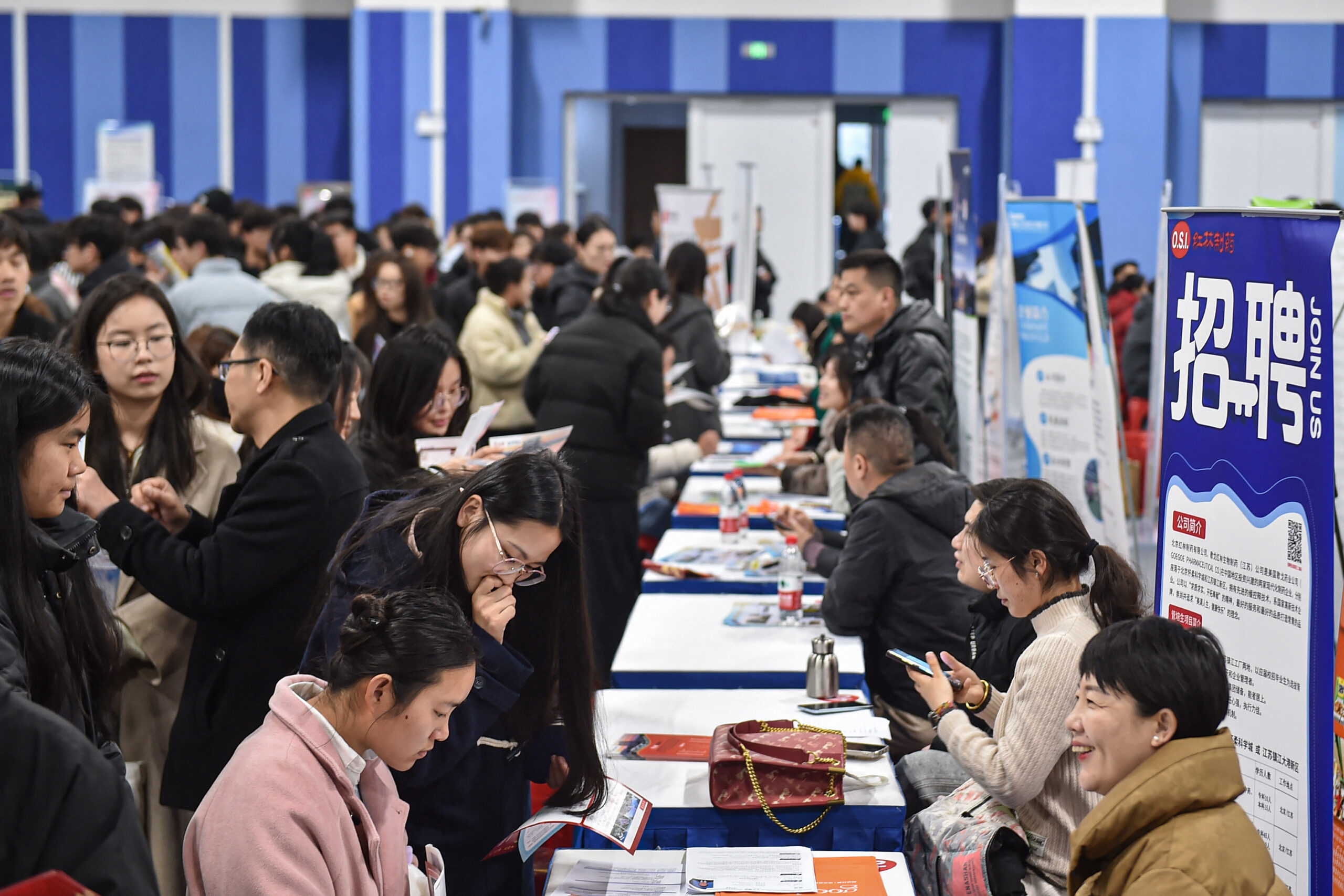
In recent times, the once proud real estate market, infrastructure projects, and domestic consumption that the Chinese Communist Party (CCP) boasted about have been on the decline, causing severe impacts on China’s employment and income situation. Many unemployed individuals are hesitant to let their families know about their job loss, opting to alleviate the pressure by “pretending to go to work.” This topic continues to generate significant attention on major social media platforms in China.
According to a report by Reuters on Tuesday, this phenomenon of “pretending to go to work” has sparked a wave of resonance on Chinese social media. Related content on Douyin (China’s version of TikTok) alone has reached an astonishing 6.1 billion views, while views on similar topics on Weibo have also reached 3.2 billion.
Moreover, the social platform Xiaohongshu (Little Red Book) has many posts teaching people how to spend their days, how to handle inquiries from relatives about work, and documenting the experiences of “pretending to go to work,” with views surpassing 70 million times.
These posts share insights on how to spend an entire day outside, such as wandering in parks, libraries, cafes, and shopping malls. Some posts serve as daily diaries, with one titled “Day 30 of Unemployment: A Month of Pretending to Go to Work” recounting the author’s experience of 80 job rejections.
Previously, this trend even gave rise to the business of paid “work simulations.” In late July 2025, a space called “The Pretend Work Unlimited Company” in Hangzhou gained popularity online. Following its success, similar spaces have emerged in other Chinese cities.
This “company” offers a 400-square-meter space with dozens of cubicles, meeting rooms, printers, and even rules posted on the wall prohibiting tardiness, sleeping at your desk, smoking, drinking alcohol, foul language, and office romances, but all of it is “fake.” “Employees” who come to work do not receive a salary; instead, they must pay a daily rent of 30 yuan to the company.
32-year-old Coco Li previously worked at a state-owned real estate enterprise in China. Over half a year ago, she resigned due to heavy workloads and lack of recognition. Once, she almost posted a photo of the lunch she prepared at home in the family group chat, but quickly stopped the conversation because her mother might ask why she didn’t go to work.
Coco Li told Reuters that her mother’s concerns “actually do not solve my problems.” Whenever her parents visit, she would wander around in parks, libraries, cafes, and shopping malls to avoid being questioned.
Miss Zhang, a 36-year-old former visual effects producer, who was laid off in August due to AI-induced job cuts, only shared her last name. She said, “I never thought that the library on a workday would be so crowded.”
Since being laid off by an internet company at the end of last year, 28-year-old Susan Sun has been hiding the fact that she was laid off from her family. In May this year, her mother and stepfather moved from their hometown to Chongqing to live with her in search of work.
However, this forces her to leave the house by 9 a.m. and only return after 6 p.m. every day to avoid her family’s inquiries. Currently, Susan Sun relies on a monthly unemployment benefit of 1,864 yuan (about 280 dollars) and remaining severance pay to make a living.
She stated that she enjoys living a simple life without working, but the only pressure comes from her parents. Her parents often advise her to save money due to the “bad economy,” which causes her a great deal of anxiety.
Critics point out that the phenomenon of “pretending to go to work” reflects the continuous weakening of China’s job market. With China’s economy increasingly dependent on exports, extremely weak domestic demand, a long-standing real estate crisis, tight finances of local governments, and the rapid popularization of automation and artificial intelligence (AI) have all had an impact on employment and income.
On Monday, the data released by the CCP for the third quarter showed that Chinese manufacturers, in response to fierce competition, have resorted to price cuts, layoffs, and transferring heavier workloads to remaining employees, leaving many struggling.
Furthermore, the New Employment Forms Research Center under the Ministry of Human Resources and Social Security of the CCP released a report titled “2025 China Blue-collar Employment Study,” claiming that China’s flexible employment population will reach 280 million by 2025, with an increase of 40 million from 2024, projected to rise to 320 million by 2026.
Official CCP data indicates that the total employed population in 2025 was 725 million, a decrease of about 9.35 million from 734 million in 2024. Some analysts suggest that after deducting the additional flexible employment personnel, there were at least nearly 50 million formal job positions lost in 2025.
However, critics also question the broad scope of the official employment statistics. The CCP’s National Bureau of Statistics has redefined “flexible employment,” considering anyone who engages in “compensated labor for at least 1 hour per week” as employed, including a vast number of gig workers, delivery drivers, and ride-hailing drivers, thus masking the true unemployment situation.
Some have likened this phenomenon to the scenes during the Asian financial crisis in the 1990s when many South Korean and Japanese salary workers concealed their unemployment status and chose to wander around.
Assistant Professor of Sociology at the University at Buffalo, Yige Dong, believes that compared to Japan and South Korea in the 1990s, China’s social safety net is relatively weak, and unemployed individuals may ultimately find it harder to continue pretending.
She mentioned that at some point, “individuals may be more inclined to seek resources through all available channels, including borrowing money from family and relatives.”
On the other hand, Diana Fu, Associate Professor of Chinese Politics at Cornell University, believes that “pretending to go to work” allows some unemployed individuals to not only maintain their dignity but also possibly alleviate some of their discontent, which could contribute to the CCP’s stability and control.