
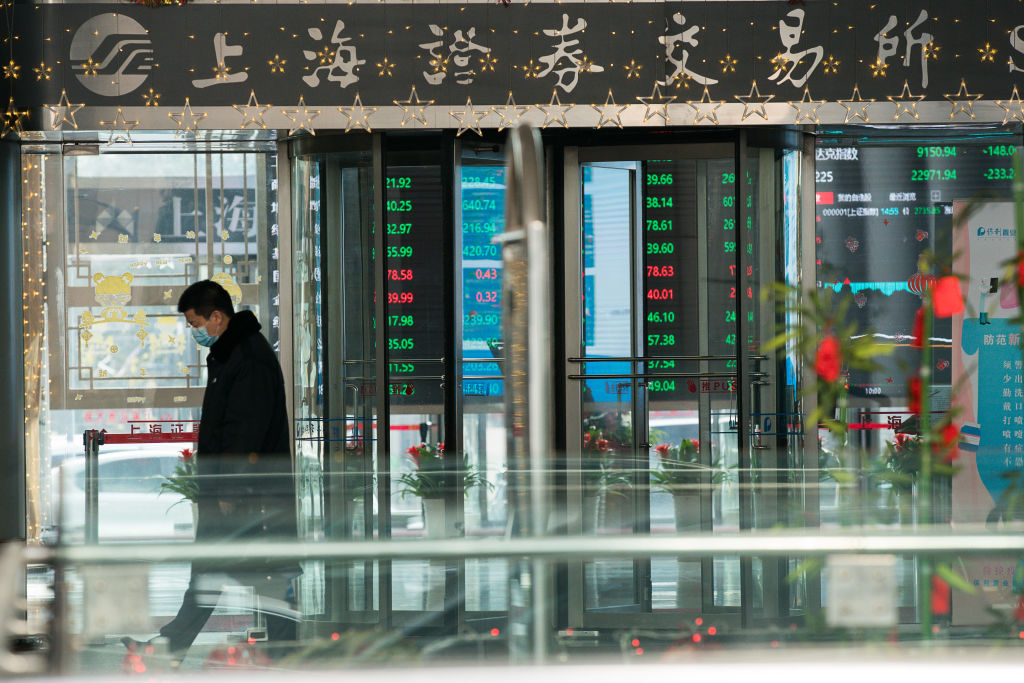
Recently, the Chinese stock market has been experiencing continuous fluctuations. On October 14th, A-shares once again showed a trend of declining volume and falling prices, with the total transaction volume in the Shanghai and Shenzhen stock markets decreasing by 261.5 billion yuan compared to the previous trading day. The ChiNext Index and the ChiNext 50 Index both dropped by over 3%. Nearly 4,500 stocks in the market experienced declines, accompanied by a contraction in trading volume, reflecting a cooling of market trading sentiment and overall downward pressure.
By the closing bell, the Shanghai Composite Index fell by 0.88% to 3767.23 points, representing a cumulative decline of 11.54% since its high point of 4258.86 points in May this year. The Shenzhen Component Index dropped by 1.97% to 12,110.59 points. The ChiNext Index fell by 3.1% to 2866.76 points, slipping below the 2900-point mark, while the ChiNext 50 Index dropped by 3.29% to 1380.26 points.
The total transaction volume in the Shanghai and Shenzhen markets amounted to 1.41 trillion yuan, a decrease of 261.5 billion yuan from the previous trading day, indicating a lack of willingness for capital inflow. With a widespread decline in individual stocks, a total of 4,496 stocks in the market faced declines, while only 979 stocks saw gains.
In terms of sector performance, the technology sector continued to lead the decline, with sectors such as wind power equipment, organic silicon, lithography machines, batteries, storage chips, complete vehicles, and power grid equipment experiencing prominent drops. On the other hand, sectors like oil and gas exploration services, gaming, and coal mining and processing saw significant increases.
On October 14th, the stock market’s movements once again became the focus of attention for financial bloggers.
Financial blogger “Oil Fund Brother” posted, “The lack of willingness for off-market funds to enter, coupled with significant features of stock game playing. Most retail investors who are trapped just stay put, without panic selling or new capital inflow, leading to a continuous contraction in trading volume.”
Huatai Securities Co., Ltd. manager “Stock Matters” analyzed in a blog post, “Almost 4500 stocks are in a widespread decline, dragging A-shares down. If this continues, it will be really distressing! Why did A-shares fall again today?” and provided three reasons.
Firstly, tech stocks are the strongest in the bear market. Since mid-September, tech stocks have entered a new round of declines, pulling down the entire market.
Secondly, trading volume hit a new low for the year. The continuous decline in A-shares recently has left holders heavily trapped, with many unable to move; coupled with off-market funds being cautious to enter, this has directly led to insufficient liquidity in A-shares.
Lastly, market sentiment has hit rock bottom. The stock market has a sentiment value, and investors who seriously observe this value know that recently, A-shares’ sentiment value has been hovering between low and freezing points.
Financial blogger “Fish Investment” posted, “Looking at the yearly K-line chart, all three major indices are falling, with the Shanghai Composite down 5%, the Shenzhen Component and ChiNext falling by around 10%. From late September to early October, it’s been a continuous decline. Now, even the bull market sentiment has disappeared. Why this wave of intense decline is happening, it’s really difficult to understand. We can only control our positions, wait for the situation to clear up.”