
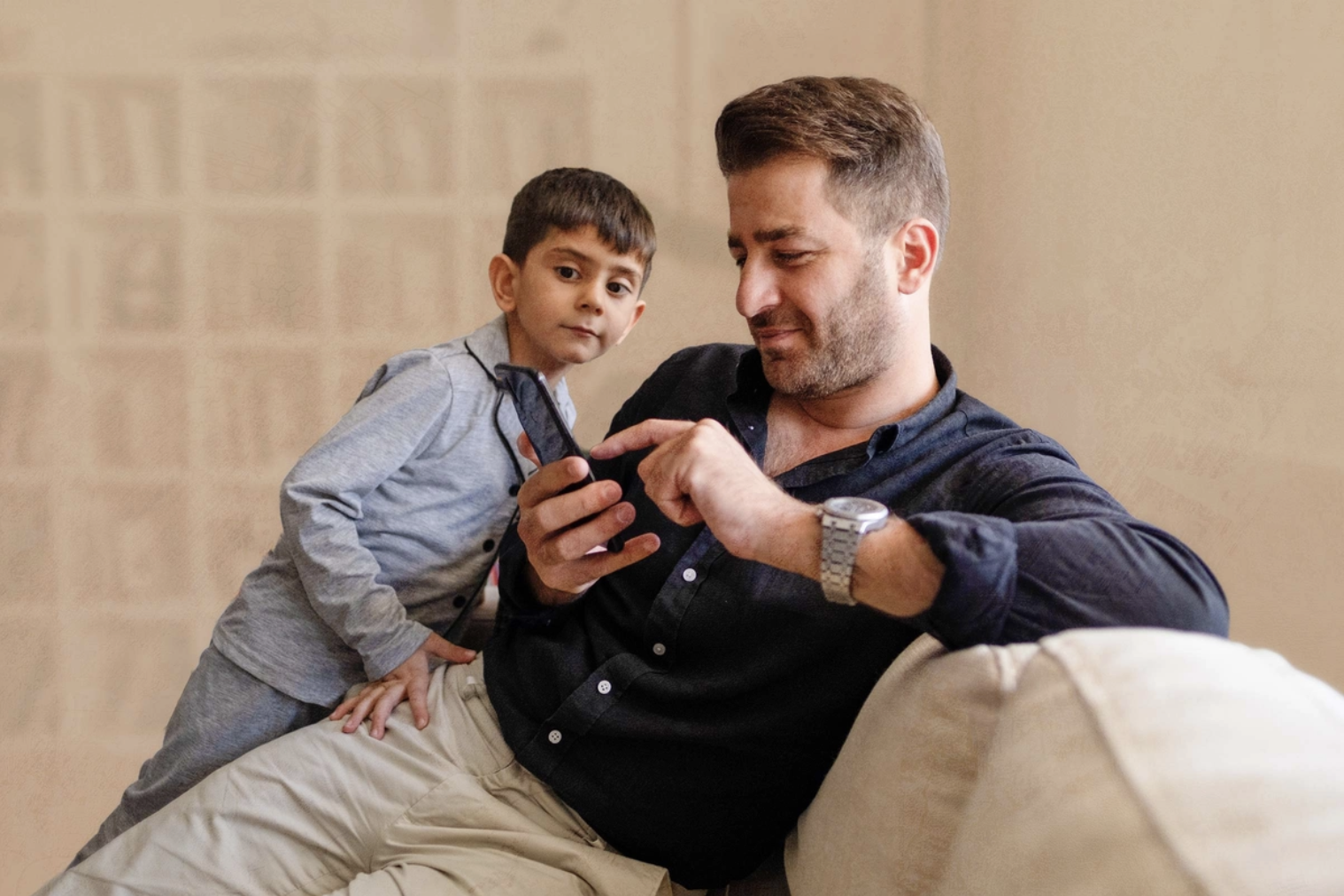
Are you sure you care deeply about your children? Your kids might not feel the same way. A survey conducted by the Pew Research Center revealed that nearly 70% of parents admitted that their phone distracts them at least some of the time while spending time with their children. This kind of distraction could have an impact on the relationship between adolescents and parents, and even shape their personalities into adulthood.
Teenagers notice when parents are “multitasking” and this could lead to anxious attachment or avoidant attachment styles, which could potentially persist into adulthood.
A study published in Frontiers in Psychology explores whether parents’ use of electronic devices is related to teenagers’ attachment styles.
Children with secure attachment typically believe that their parents are emotionally available to accompany and respond to them, whereas children with insecure attachment do not have this perception.
The study found that adolescents who frequently experience disruptions caused by caregivers using electronic devices are more likely to exhibit anxious or avoidant attachment styles.
Individuals with anxious attachment often fear rejection and frequently seek validation and comfort from others, while those with avoidant attachment tend to feel uncomfortable with emotional intimacy and may keep their distance from others.
Children start learning “what relationships should look like” from their earliest interactions with their parents.
Attachment theory posits that when parents consistently accompany their children and respond promptly to their needs, children gradually develop a sense of security.
When parents are often distracted by electronic devices, teenagers may perceive their parents as less emotionally accessible.
Repeated experiences of feeling ignored, unheard, or unimportant may influence teenagers’ views on relationships and lead to the formation of insecure attachment styles.
Parents may not be aware of how children perceive their use of phones. Media psychologist, addiction counselor, and first author of the study, Don Grant, who has collaborated with families for over 20 years, often found that parents believe they are focused on their children, only to realize that their children feel neglected.
Grant said, “Attachment is entirely child-driven.” It depends on “how the child sees the parent’s behavior, the parent’s attention, and the parent’s response when the child seeks attention and satisfying their needs, and whether this response is consistent.”
Licensed psychotherapist, family counselor, and author of “Raising Healthy Teenagers,” Tom Kersting, mentioned that the impact of parents’ phone use does not necessarily begin in adolescence. He noted that parents’ use of electronic devices may have started during the child’s early years, which is a critical period for building parent-child relationships. “In other words, they only become aware of this emotional distance when they are mature enough to notice it.”
Adolescence is a stage of gradually gaining independence and autonomy, but teenagers still require guidance, comfort, and support from parents, making parental attachment crucial for healthy development.
Various factors could affect attachment security, including parental neglect, substance abuse, mental health issues, prolonged family conflicts, work addiction, and physical abuse.
In recent years, researchers have begun to explore whether technology-related distractions could hinder children from receiving the parental responses and emotional support needed to build security.
Research using terms like “technoference” and “phubbing” describes situations where electronic devices interrupt conversations and other interpersonal interactions.
Some researchers even refer to parental “phubbing” as a form of a “new social neglect.”
A 2020 study found a correlation between parents’ “phubbing” of their children and unhealthy phone use among the children, while other studies found links between “phubbing” and lower life satisfaction among teenagers.
A study observing parent-child play found that distractions from phone screens or other objects lead to fewer signals and communication attempts from parents to the child. Children become less willing to engage socially.
Researchers suggest that even very young children can perceive when parents are distracted.
In response, they may disengage, displaying less attention, fewer positive emotions, and less active communication with their parents.
A review of 13 studies in 2023 found that adolescents who felt frequently distracted by their parents’ phones had poorer mental health. They may feel unseen, unheard, and lack sufficient support.
The impact of insecure attachment could extend far beyond the relationship between children and parents.
A study involving nearly 1,700 children found that those who felt emotionally neglected by their parents at age 11 were more likely to develop mental health issues by age 15. Insecure attachment is also associated with higher rates of anxiety, depression, and other emotional problems.
One possible explanation is that insecure attachment may shape individuals’ negative expectations of relationships, making them more prone to perceiving threats, regulating emotions, and seeking support from others.
Attachment is often discussed in early childhood, as many of the foundations of secure and insecure attachment are formed during this period.
However, researchers generally believe that attachment is not completely fixed but exhibits dynamic changes. Positive and negative experiences during adolescence and into adulthood may continue to influence a person’s attachment style.
Grant mentioned, “Environment, circumstances, and life events could lead a teenager from a secure to an insecure attachment style. It could go the other way as well.”
This implies that parents should not assume that the strong parent-child relationship established in childhood will necessarily be maintained permanently.
Just as responding consistently to a child’s needs can strengthen the attachment relationship, repeated emotional distancing may gradually weaken this bond.
Grant hopes that all parents become more aware of the impact of using electronic devices on family relationships. However, he believes that millennial parents may particularly need to pay attention.
Millennials are the first true “digital native” generation, growing up during the rapid development of the internet, smartphones, and social media.
As a result, many millennials have been in contact with digital devices for a significant portion of their lives and may be more prone to habitual phone use behavior.
Grant noted that many millennial parents may not realize how often they are dividing their attention between their children and electronic devices.
Today, many millennials are already parents, and Grant hopes that these research findings will prompt them to intentionally use electronic devices.
Attachment relationships can be weakened or reinforced. Continual responses, attention, and emotional support can help rebuild and maintain a secure parent-child relationship over time.
Parents can start by observing their behavior patterns:
– Do they often check phone notifications when talking to their children?
– Do they pick up their phones when bored or silent?
– Are they only “half-listening” when children want to share something?
Establishing some “phone-free moments,” such as during meals, family activities, or bedtime chats, can help parents focus more on their children and enhance daily interactions.
Grant suggests that parents develop the following healthy electronic device usage habits:
– Set boundaries for using electronic devices, especially for parents working from home.
– Schedule phone-free times during meals, family activities, and commuting.
– Minimize unnecessary phone interruptions when spending time with children.
Grant mentioned that entirely avoiding using electronic devices is not practical. Many parents need to work from home, rely on phones for work communications, or have multiple responsibilities to manage daily.
He noted that children do not necessarily demand constant attention from parents. They simply want to know that they are seen and heard.
If unable to stop immediately, Grant advised parents to tell their children that they will respond when they are available and make sure to follow through.
Most importantly, Grant encourages parents to have open conversations with children about the impact of phone use on them. He suggests that parents directly ask children if they have felt ignored, unheard, or unimportant when parents use their phones.
Parents can work with their children to establish healthier electronic device usage habits and let children know that when the phone becomes a distraction, they can remind parents directly.
Truly focusing on children can be simple sometimes: by putting down the phone during important conversations, maintaining eye contact with the child, asking follow-up questions, and demonstrating genuine interest in the child’s thoughts and experiences.
Technology can also be a tool for improving parent-child relationships. For example, parents and teenagers can watch or share online content together, discuss online experiences, or explore shared interests.
Grant emphasized that being honest with children is crucial. Parents can say to children, “I didn’t know before, but now I do. I will improve my behavior.”
Author Bio:
Rachel Ann T. Melegrito, before pursuing writing, worked as an occupational therapist focusing on cases related to the neurological system. She has also taught university courses on foundational sciences and occupational therapy. She earned a master’s degree in child development and education in 2019. Since 2020, she has written a substantial amount of health-related content for various publications and brands.