
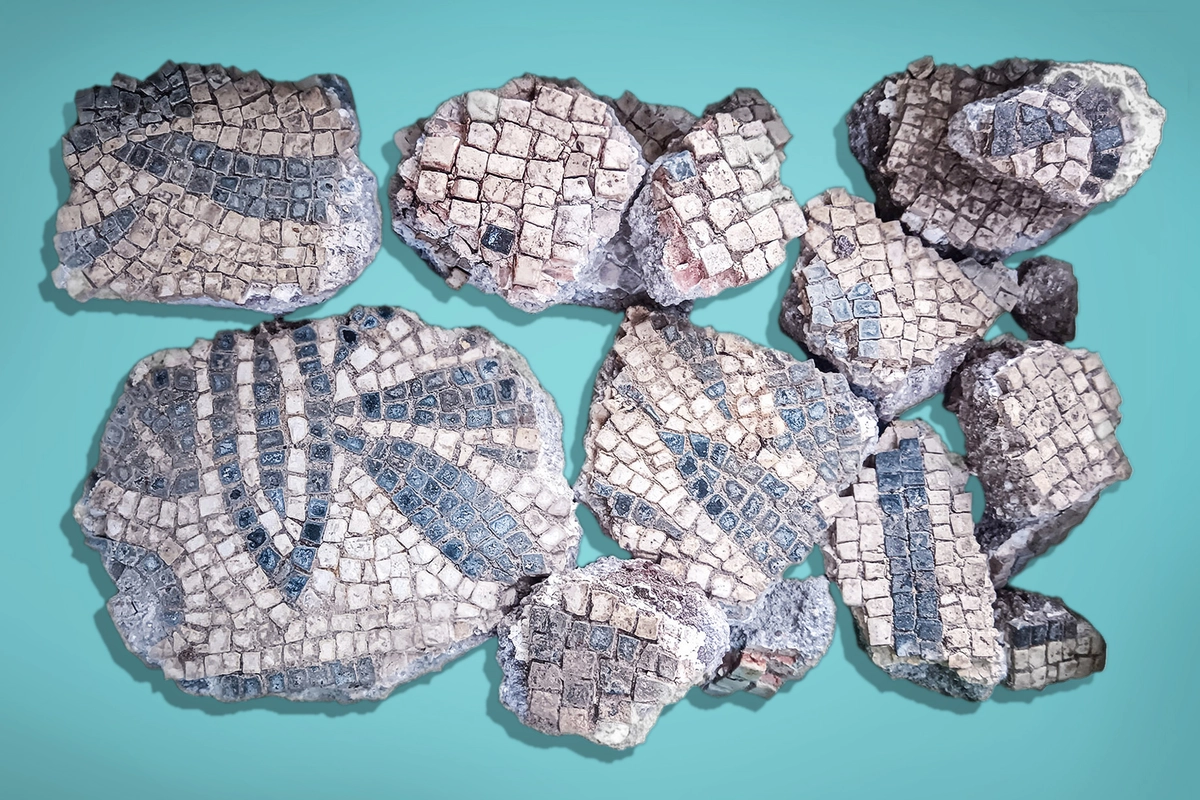
When the excavator’s shovel cut into the hillside of Villa Celimontana, the initial phase of the project seemed mundane. This lush Roman-style garden is just a few streets away from the Colosseum, a popular spot for both tourists and locals to stroll. Workers had set out to rebuild the historic retaining wall of the villa, but soon unearthed a collection of colorful artifacts from the soil, dating back nearly two thousand years.
From late 2024 to 2025, what started as structural repairs around the villa’s terraced walls turned into an active archaeological excavation. Researchers delved into the dimly lit chambers of eight ancient rooms, once adorned with lavish mosaic floors and fresco decorations, now reduced to colorful rubble and fragments.
By early 2026, archaeologist Alessia Contino of the Special Superintendency of Rome had catalogued and created highly detailed 3D models of these artifacts. Through cross-referencing the patterns on the mosaics with findings from other sites, a stunning hypothesis emerged: the excavated rooms might have belonged to the “Vigiles,” an elite Roman night watch and firefighting squad. This location appeared to be a fire station they once manned, surprisingly luxurious in its decor.
Archaeologists painstakingly cleared centuries of compacted deposits to fully unearth five of the eight rooms, with the remaining three partially exposed. The complex’s footprint extended well beyond the boundaries of the modern villa grounds, reaching into areas obstructed by giant cypress trees, hindering further excavation.
Yet, where they could dig, the discoveries were awe-inspiring. Layer by layer, the archaeological team revealed a vivid, high-resolution mosaic floor depicting a group of unique marine creatures—dolphins, fish, lobsters, and crabs swirling around a mixing bowl, the design intricately detailed. Above the floor, remnants of a bright ceiling fresco lay scattered, painted in rich hues of red and blue, confirming the site’s opulent past. More astonishingly, when a crack appeared in this ocean-themed mosaic, archaeologists stumbled upon a much older mosaic puzzle hidden beneath it. This rare “double layer” structure, preserving traces of different historical periods, was a remarkable find in archaeology.
The intact “time capsules” left behind offer tales of a vastly different era in the Roman Empire. While the decorative elements strongly suggest a noble residence (domus), the strategic city location hints at another possibility—it may have been a military barracks for the Vigiles’ Fifth Cohort. If this conflicting narrative is validated, it could reshape perceptions of one of the most significant military complexes of ancient Rome.
Scientific lead Simona Morretta noted in a press release that the excavation provided invaluable data, with the most nuanced and complex phase only just beginning. Through analyzing the architecture, materials, and environmental context, various explanatory hypotheses will be verified to understand the building’s true function.
Few archaeological finds surprise as much as the discovery at Villa Celimontana. The Vigiles were not ordinary firefighters, let alone privileged aristocrats. They were once freed slaves, earning Roman citizenship through hard and perilous night patrols, using buckets of water, vinegar-soaked blankets to extinguish fires, and siege engines to dismantle structures in the path of spreading flames, creating firebreaks; a vital task due to most of ancient Rome’s buildings being wooden.
After its construction as an outpost, this building underwent transformations over time, evolving from a luxurious barracks to a vast and resplendent cultural site during the Renaissance, becoming a gathering place for Rome’s elite:
Originally built around the 2nd century, it underwent significant spatial renovations in the 3rd century, including floor replacements. Abandoned in the 5th to 6th centuries, any practical functions vanished over time, eventually transitioning into a site for appreciating art and cultural pursuits among the upper echelons of society.
In the 17th century, the estate was transformed into Villa Mattei, featuring an open-air museum with botanical gardens to showcase the family’s priceless Roman marble statues, fountains, and a genuine collection of Egyptian obelisks. Over the centuries, this area transitioned from a private retreat of the elite into Villa Celimontana, where the public could escape from bustling streets and enjoy music during festivities.
Daniela Porro, Director of the Special Superintendency of Rome, highlighted that history never fails to astound, with funds from the National Recovery and Resilience Plan securing not only the reinforcement of an ancient wall but also a significant archaeological discovery, opening new perspectives for research and value exploration.
Currently, the newly discovered and partially excavated historical relics within the villa remain strictly off the tourist path. However, authorities plan to allow public access to these fragile rooms, meticulously surveying them for precise mapping, enabling global exploration of these spaces through ultra-high-resolution 3D models.
Today, on a warm summer night, as the melodies of live instruments resonate within Villa Celimontana, locals strolling through can freely imagine themselves walking on a path both familiar and slightly unfamiliar. Nearly two millennia ago, a Vigiles chief clad in rugged uniform once set foot here.