
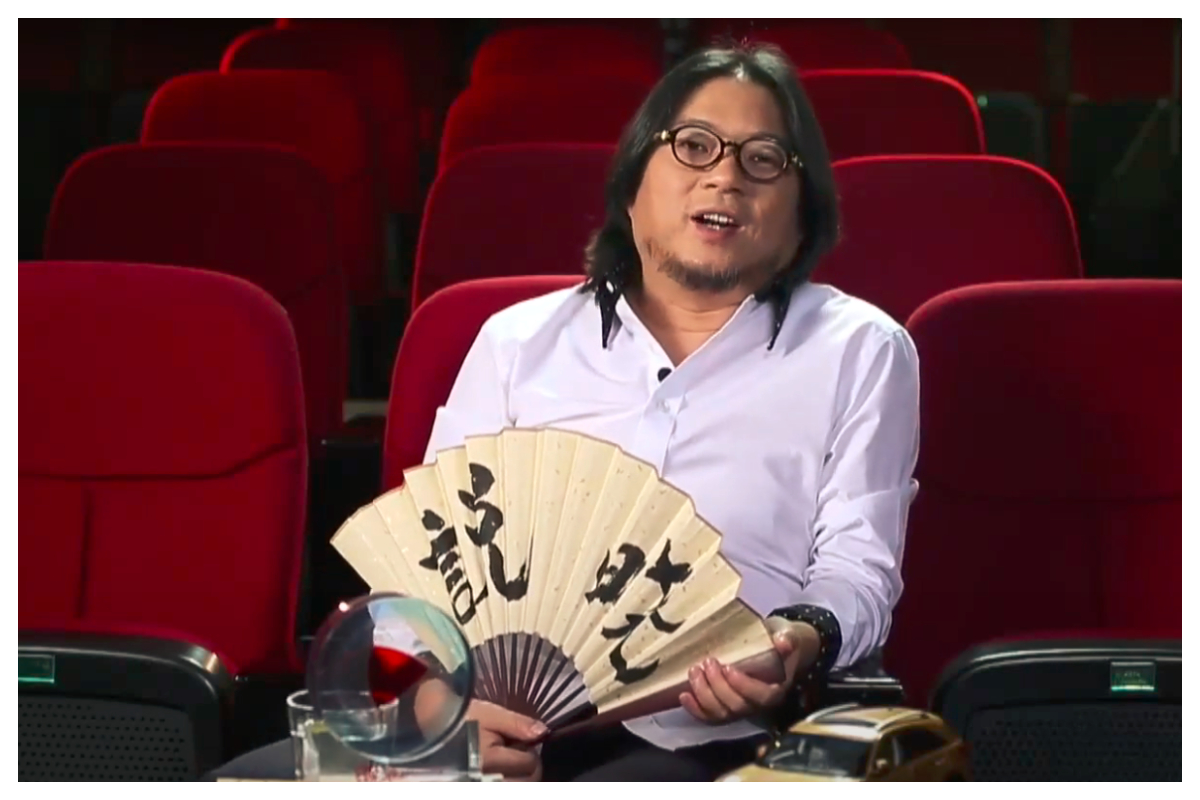
In recent news, renowned director and music producer Gao Xiaosong, who was almost blacklisted five years ago along with celebrities like Zhao Wei, has been attempting a low-key comeback through offline cultural activities. This move has not only sparked strong resistance from some netizens but also faced harsh criticism from official institutions and state media.
According to reports from Sohu, the “Wave Film Week,” organized by 12 leading film and cultural enterprises including China Film Co., Ltd. and Alibaba Pictures, was recently held in Anaya, Qinhuangdao, Hebei Province. In the “Wave Dialogue” section, Gao Xiaosong made a public appearance as a guest host and moderated a salon titled “Hearing Time in Films.” Photos from the event showed that he had not only cut his iconic long hair but also appeared noticeably thinner.
This marks the first time in five years since Gao Xiaosong was publicly criticized that he has appeared as a guest at a large offline event. The audience responded with applause, taking photos and posting on social media, welcoming the return of “Teacher Gao.”
Reports suggest that Gao Xiaosong’s approach is a carefully planned “gradual, curved comeback test.” By avoiding mainstream TV stations and online live broadcasts, he selectively targets niche offline cultural salons with a limited audience, attempting to gradually increase his presence using industry resources and relying on loyal fans for a “soft comeback.”
Following this news, some netizens took to social media to protest, questioning why the organizers invited a “disgraced artist” who had been officially denounced as a guest. The Chinese Academy of History and several state media outlets once again published articles sharply criticizing Gao Xiaosong, accusing him of not publicly admitting wrongdoing or showing any remorse but instead attempting to quietly return and profit through cultural exchanges, behavior they deemed unacceptable.
Five years ago, on August 26, 2021, works of entertainment celebrities like Zhao Wei and Zhang Zhehan were suddenly removed from platforms, with their notable works being delisted. Subsequently, it was discovered that Gao Xiaosong’s program “Xiaosong’s Stories” on a mainland video platform was also unavailable. Two days later, on August 28, the Chinese Academy of History released a lengthy article directly accusing Gao Xiaosong of committing “seven sins.” This article, titled “Gao Xiaosong: #Misinformation in Chitchat, Historical Nihilism#, destined to be buried by history!” stated, “In recent years, Gao Xiaosong has made a series of misleading statements on the internet, even openly attacking and defaming our People’s Liberation Army.” The authorities categorically labeled Gao Xiaosong’s actions as “systematic and ongoing historical nihilism export.”
Many netizens expressed their opinions in the comments, with some pointing out controversial statements made by Gao Xiaosong, such as his belief that civilians could visit the Yasukuni Shrine.
That evening, Gao Xiaosong launched and served as the curator for the Xiaoshu Bookstore (Beijing), which closed indefinitely after being open for only four months. Although Gao Xiaosong did not provide a reason for the closure, various signs led to speculation about the reasons for his blacklist.
Gao Xiaosong began broadcasting his comprehensive humanistic talk show “Xiaoshuo” in March 2012. Serving as a director, screenwriter, and host, he had made comments on history, social culture, such as “Indian society is peaceful, and the crime rate in slums is very low,” and “The United States is the most respected country for soldiers worldwide.”
Following his official condemnation, Gao Xiaosong faced a severe and comprehensive ban across all major platforms – his core programs “Chit-Chat” and related audio-video content were all blocked and deleted. Even his Weibo account was deactivated, displaying a message that the user no longer existed.
In 2015, Gao Xiaosong served as the chairman of Alibaba Music and later as the chairman of the Alibaba Entertainment Strategic Committee, responsible for expanding overseas markets under “Ali Big Entertainment.” He also composed the theme song for the short film “Gong Shou Dao” starring Jack Ma. Following a series of incidents, Gao Xiaosong quickly resigned from “Ali Big Entertainment” and completely disappeared from the public eye.
After being absent for five years, Gao Xiaosong attempted a cautious comeback through offline activities but still faced strong resistance from official channels, reflecting the Chinese Communist Party’s unwavering control over the entertainment industry, public historical narratives, and public figures.