
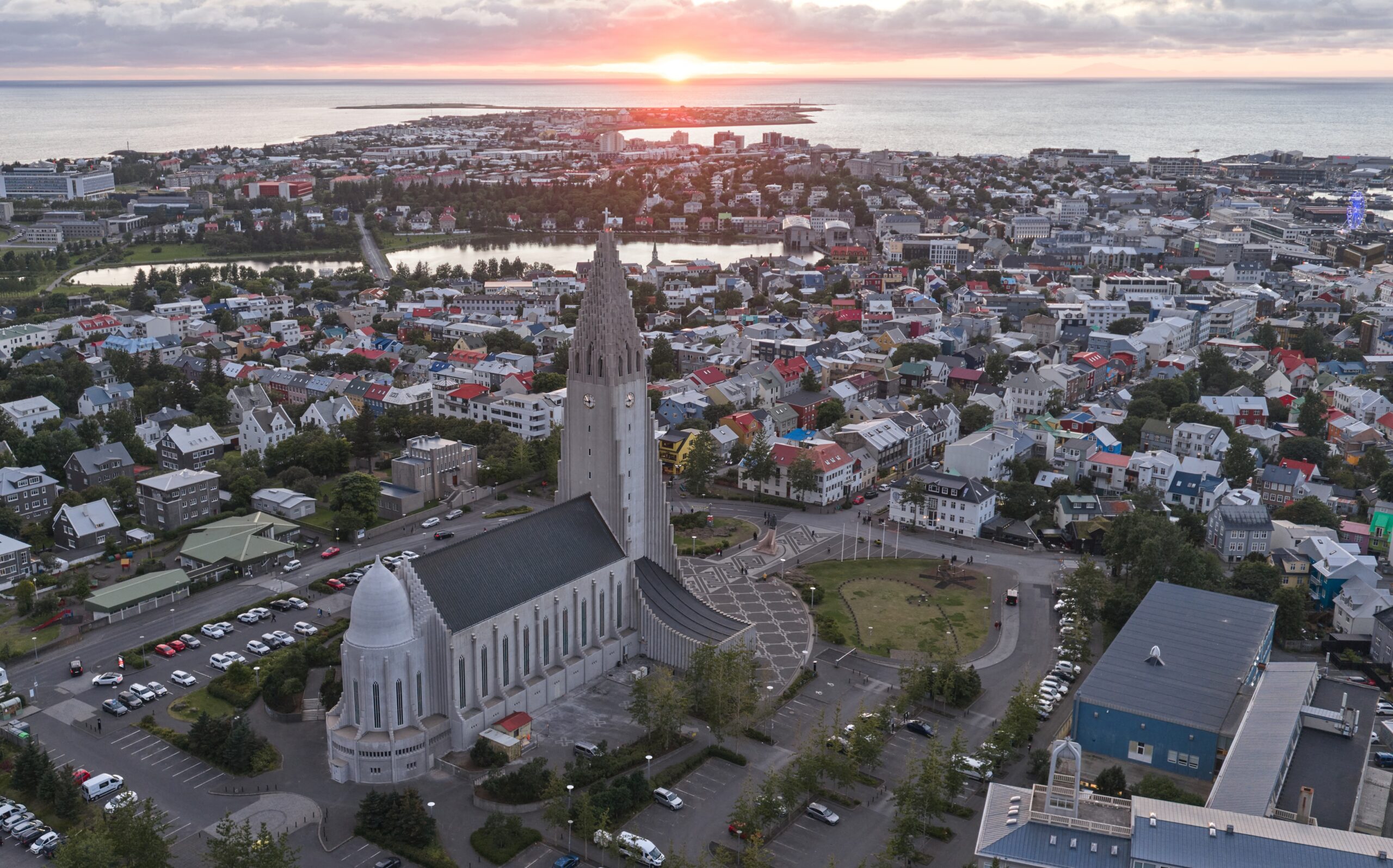
On Monday, October 5, U.S. Secretary of State Marco Rubio visited Iceland to discuss economic and security cooperation. The Icelandic Foreign Minister expressed a desire to further deepen defense cooperation with the United States. With Russia increasing military activities in the Arctic and China attempting to expand regional influence, Iceland’s strategic position is attracting growing attention.
The U.S. State Department stated that Rubio would discuss “economic and security cooperation” with Icelandic officials in Reykjavik. This visit comes just two weeks after the U.S. signed a new security agreement with Denmark and Greenland on September 22. Washington has been steadfastly enhancing Arctic security cooperation with allies, underscoring the increasing importance of Arctic and North Atlantic security.
Icelandic Foreign Minister Thorgerdur Katrín Gunnarsdóttir told Bloomberg in an interview last Friday that Iceland hopes to strengthen commercial, energy, defense, and security cooperation with the United States.
She said, “External threats exist, so strengthening our unity is crucial.” She further stated, “We hope to advance commercial cooperation, energy cooperation, and most importantly, defense and security cooperation.” Emphasizing the importance of Marco Rubio’s visit to Iceland, she highlighted the significance of the visit.
Iceland is a founding member of NATO but does not have its own military or permanent foreign troops stationed. The U.S. had a military base in Keflavik until its closure in 2006.
Regarding Iceland’s role in NATO, Gunnarsdóttir mentioned, “We will continue to act as NATO’s eyes in the North.”
As discussions deepen on defense and security cooperation between the U.S. and Iceland, the potential for an expanded U.S. military presence in Iceland becomes one of the focal points of this visit.
Situated in the North Atlantic, Iceland is strategically located on important maritime routes between North America and Europe, maintaining longstanding security cooperation with the U.S. and NATO.
Former diplomat Robert Gerber, who served at the U.S. Embassy in Iceland, told Radio Free Europe/Radio Liberty (RFE/RL) that Russian military aircraft have in the past flown towards Iceland, circled the island, and returned as a means to test NATO fighter jets’ scramble speed.
“The threats there are real and have been present for a long time,” Gerber said. He pointed out that submarine activities in the North Atlantic and Arctic regions pose continuous security challenges.
Gerber believes that undersea telecommunication cables connecting North America and Europe could also emerge as a critical area for further U.S.-Iceland security cooperation. Iceland’s Coast Guard ships, helicopters, and search and rescue capabilities could play a role in crises in the Arctic.
RFE/RL noted that Russia has been bolstering its military deployments along the Arctic coastlines, while China is seeking to expand its presence in Iceland through ports, research, and other projects. As the Arctic ice melts and new sea routes open up, countries’ focus on local waterways and resources continues to rise.
Before Rubio’s visit to Iceland, the U.S. had recently signed a new security agreement with Denmark and Greenland on September 22. According to the agreement, Washington can establish two additional military bases in Greenland to further enhance security arrangements in the Arctic region.
Since Iceland declared independence in 1944, it has not maintained a military of its own, relying on NATO for security and upholding a bilateral defense agreement signed with the U.S. in 1951.
Following his Iceland trip, Rubio will head to Athens, Greece, to lead the U.S. delegation at the 6th U.S.-Greece Strategic Dialogue, discussing defense cooperation, regional security, and energy issues. He will then proceed to Lisbon, Portugal, to engage with local officials on defense, economic, and technological cooperation.