
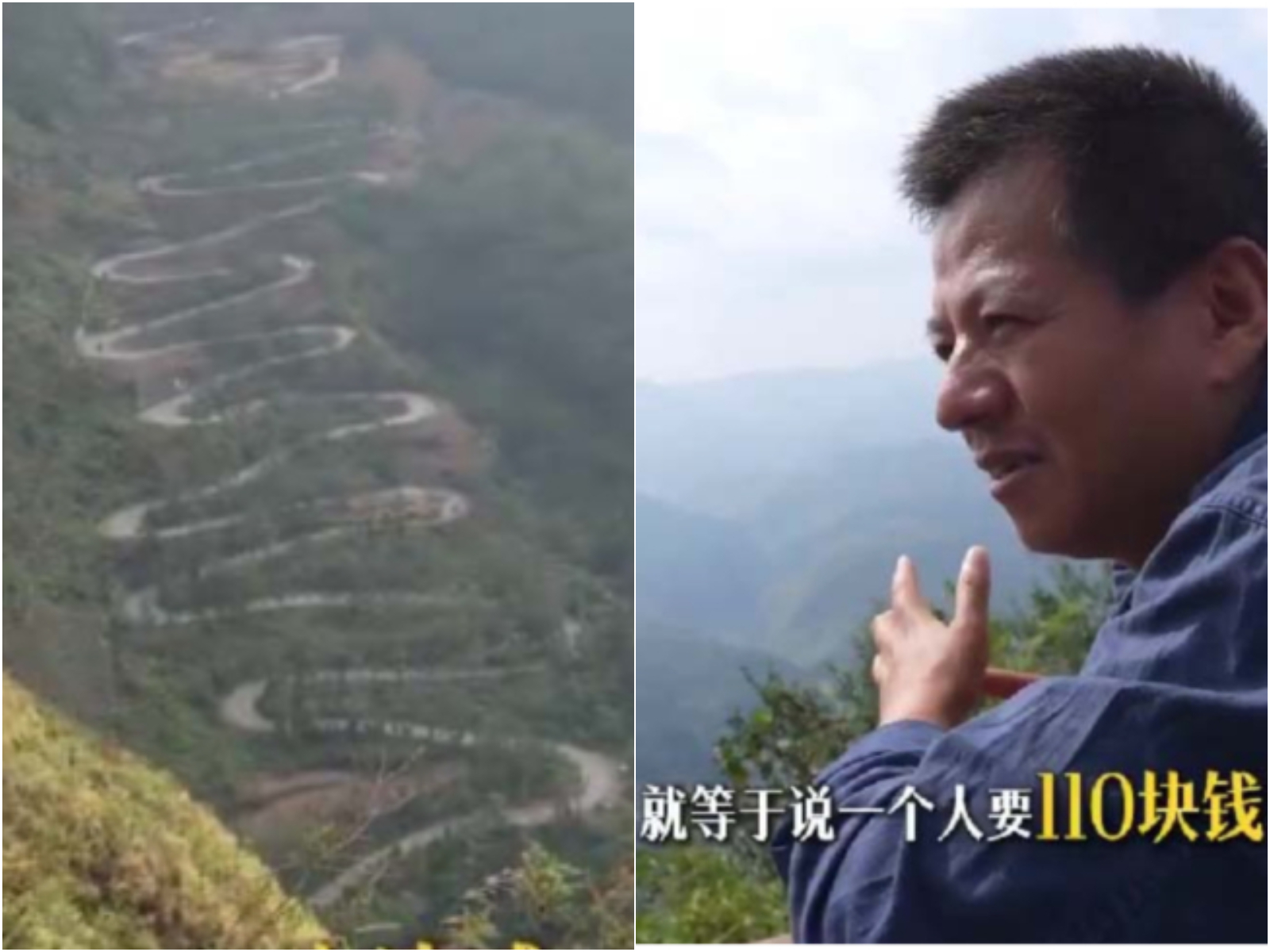
On October 1st, a blogger posted a video on social media criticizing the unreasonable fees at the famous anti-Japanese War site “Twenty-Four Turns” in Qinglong County, Guizhou Province, sparking a heated discussion. The blogger pointed out that visitors were required to pay a 60 yuan entrance fee (RMB) and an additional 50 yuan for the sightseeing car, totaling 110 yuan per person. Many netizens expressed discontent, calling the fees chaotic and stating that profiting from the resources of the anti-Japanese War was morally wrong. Some suggested that there were too many idle people looking for opportunities to make money.
The public information shows that “Twenty-Four Turns” is located on the southern outskirts of Qinglong County. It was constructed by the Republic of China government in 1935 and opened to traffic in September 1936. During World War II, it served as a vital route for the transport of international aid supplies for China. Despite officially being known as the “Twenty-One Turns” due to modifications made by the 1880th Engineer Battalion of the US Army in 1943, it remains a 4A-grade tourist attraction in China. Despite only having “Twenty-One Turns” remaining, the name “Twenty-Four Turns” is still in use today.
In response to public criticism, on October 3rd, the Qinglong County government issued a statement clarifying that “Twenty-Four Turns” no longer serves as a main traffic artery, but is now categorized as a key protected cultural heritage site and a 4A-grade tourist attraction. According to regulations, the entrance fee was set at 60 yuan per person and 50 yuan for the sightseeing car. Visitors are free to walk around the original site of the “Twenty-Four Turns”.
However, this response did not quell the public’s anger. Netizens continued to criticize the situation, questioning the selective enforcement of rules within the scenic area. They pointed out discrepancies such as allowing sightseeing cars while prohibiting self-driving vehicles, arguing that these restrictions were solely for profit-making purposes under the guise of cultural heritage protection.
On October 4th, in another announcement on their official WeChat account, the Qinglong County government denied the claim that the toll fees were related to the anti-Japanese War road. They clarified that the fee-charging area was actually located on the opposite side of the “Twenty-Four Turns” anti-Japanese War road at a viewpoint and exhibition hall approximately 9 kilometers away, emphasizing their independence from each other.