
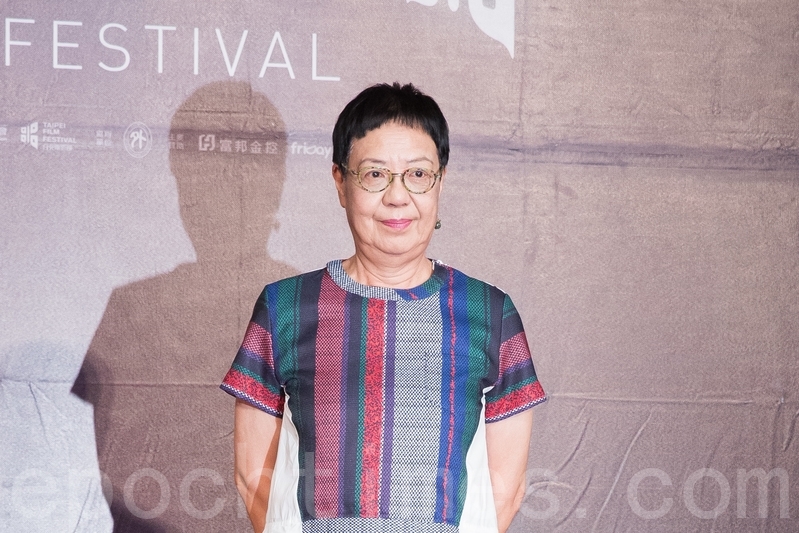
The film “The First Incense,” starring Mainland Chinese actress Ma Sichun and Taiwanese artist Eddie Peng, has been embroiled in controversy over its casting choices. Director Ann Hui recently publicly admitted at the Pingyao International Film Festival that there were errors in casting. She acknowledged that the female lead Ma Sichun “did not meet the requirements of the role inside and out,” taking on the primary responsibility.
Adapted from Eileen Chang’s renowned work, “The First Incense” tells the tragic story of the innocent girl Ge Weilong (portrayed by Ma Sichun) as she descends into debauchery amidst the entanglement of material desires and emotional conflicts.
During a master class at the Pingyao Film Festival, Ann Hui bluntly stated that Ma Sichun “did not meet the requirements of the role inside and out.” She revealed that Ma Sichun had returned to the set from Cannes with severe swelling due to not sleeping for 36 hours consecutively, causing the costume department to continuously adjust the size of her outfits. Ann Hui blamed herself for not decisively halting production at the time as a director should have, waiting for the actor to recover. She also admitted that Ma Sichun had endured two years of online attacks, which she deemed unfair.
Simultaneously, Ann Hui praised Eddie Peng’s acting skills and dedication but believed that his robust muscular physique clashed with the pale, melancholic, and slightly decadent image of the mixed-blood prodigal son character he portrayed, “Qiao Qijiao.” In 1940s Hong Kong, nobody would have a muscular physique from working out, making this a serious casting oversight.
Furthermore, Ann Hui confessed that she rarely checked social media, underestimating the “power of netizens,” which led to her failing to gather audience opinions before filming began. Additionally, she and screenwriter Wang Anyi were too reverent towards Eileen Chang, reluctant to cut down the half-literary, half-candid dialogues from the original work, which exacerbated the actors’ lack of literary dialogue skills and further magnified these shortcomings, resulting in a dual setback of critical acclaim and box office performance for the film.
Director Ann Hui’s repeated use of terms like “swollen” and “very fat” to describe Ma Sichun’s condition during filming at the Pingyao International Film Festival sparked massive public backlash and polarized comments.
According to reports by The Paper, Ma Sichun had previously experienced weight gain and swelling due to depression and medication side effects, which was not a secret in the entertainment industry. Ann Hui repeatedly emphasizing Ma Sichun’s being “very fat” and “very swollen” in public forums objectively brought the actor’s physical flaws back into public scrutiny, contributing to a “second look” at female actors and implicit body shaming.
Many netizens opined that casting is a director’s absolute veto power. The director who faced online opposition and failed to call for a halt promptly on set years ago is still the director today. While Ann Hui verbally claimed responsibility saying “I should be accountable,” she seemed to shift blame to Ma Sichun’s “appearance and lack of lines” for the film’s failure, prompting accusations of indirectly scapegoating and betraying the actor.
Critics also dug up Ann Hui’s previous similar recollections of working with actors like Tang Wei, mocking her for “revisiting a bad film every few years, but always blaming the actors in the end.”
Some industry insiders believe that very few Chinese directors are willing to publicly admit to the failure of their work. They view Ann Hui’s evaluation as drawing attention due to her wording, but its core intention is to reflect on her decision-making mistake as a director for not “calling a halt decisively” on set, demonstrating a rare candid and sincere attitude within the industry.