
Thirty-seven years ago that summer, my life was completely changed. That year, I was still young, full of anticipation for the future and freedom, but little did I know that I would soon be engulfed in the gears of an authoritarian and violent machine.
After the tragic events of the “June Fourth” incident in 1989, a sense of terror engulfed the entire country. That unforgettable string of numbers, “19890604”, is forever imprinted in the memories of our generation. Shortly after, I was arrested for the second time in my life for supporting the student movement. Now, in my old age, reminiscing about the past, the torture and the atrocities I endured in the detention center are still as vivid as if they happened yesterday, piercing me to the core.
It was eight months I spent in the Zhangwan District Detention Center in Shiyan City, Hubei Province, a hellish experience filled with torture, hunger strikes, and the annihilation of humanity.
I was taken away from a hospital. That day, I walked into the doctor’s office, and the door behind me slammed shut with a loud noise. Behind the door were three policemen, two tall and one short, with cold and disdainful eyes, as if they were looking at a dead person. At that time, I was ill, so I said to them, “What you are doing is immoral.” They coldly replied, “Your illness won’t kill you, go.”
I tried to stay calm and made one last request: “Don’t you still have a bit of humanity? Give me some time to say goodbye to my family.”
Before being taken away, I happened to have an appointment with a high school classmate. At that time, he was the director of the new car trial workshop at Dongfeng Motor Corporation, with his office on the third floor. The police escorted me to his office. When he saw what was happening, his eyes showed a mix of fear and hesitation. Being part of the system, he was afraid of implicating himself and worried about facing repercussions when history is overturned. I bid him farewell: “Take care of things at home from now on.”
Later, the police took me to my parents’ house to change clothes. I was well aware of the rules in the detention center: all zippers, belts, waistbands, and shoelaces on clothes would be cut off to prevent prisoners from “committing suicide.”
Upon seeing me, my mother burst into tears, while my father remained unusually composed. As I walked into my dad’s room, he immediately understood everything. I didn’t change into new clothes but intentionally put on the old clothes I left the last time I was released – the zipper on the clothes had already been cut off. While the police weren’t paying attention, I quickly took out a box of “7777” brand cigarettes produced in Hubei and stuffed them into my pants. It was the only form of “hard currency” used in the detention center at that time.
I had thought I would be sent back to the familiar No. 2 cell, but to my surprise, I was put into No. 6 cell instead.
The No. 6 cell was small, divided into two halves by a roughly one-meter-wide aisle. At the end of the aisle was a space about one square meter in size, containing a toilet and a tap. On both sides were large beds, holding nearly forty people in the cramped space.
It was April at the time, the weather turning warm, but as soon as I stepped into the cell, I felt a chilling sense of horror.
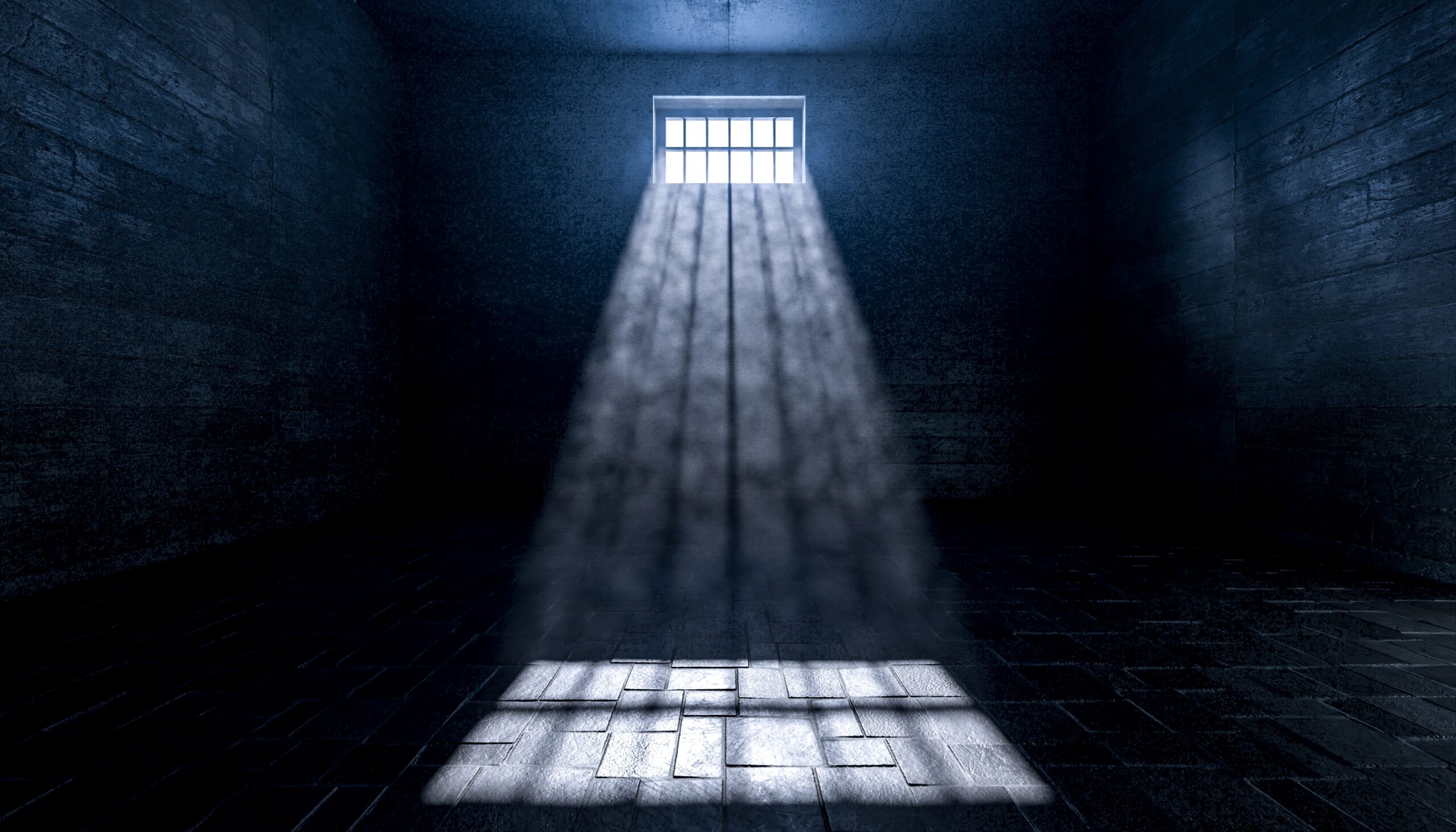
The cells were about three stories high, surrounded by mottled, blackened high walls with only a tiny window and a low-wattage light bulb at the top. The dim light made the room incredibly dark. The prisoners inside mostly had yellowish or bluish faces from long-term lack of nutrition and sunlight, with swollen eyes and a sickly, gloomy look in their eyes.
What was most terrifying was their gaze – a depthless silence. When you locked eyes with them, you couldn’t feel they were living beings; they seemed like empty shells devoid of souls.
The iron door slammed shut. The “head honcho” in the cell, accompanied by several others, moved in to conduct the routine interrogation on me. I hurriedly said, “No, no, I know the rules.” With that, I pulled out the pack of “7777” cigarettes from my pants. In an instant, everyone’s eyes lit up, rushing to snatch a cigarette. I, being far from the cell door, didn’t get a chance, but with that pack of cigarettes, I avoided some physical punishments and got a bed in the middle of the cell.
In the detention center, newcomers without money or cigarettes often faced extremely cruel “initiation rituals.” The prisoners would first strip the newcomer’s clothes under the guise of “checking for lice” and then wash them with freezing cold water. This would be followed by the “three on the belly, four on the back”: the inmates would take turns delivering three punches to the victim’s abdomen and four to their back. With nearly forty people delivering seven punches each, that added up to nearly three hundred punches! The recipient was not allowed to make a sound.
Next, there was “bowing for the hometown”: the victim had to press their forehead against the wall, lean back with their body supported only by their toes and the backs of their hands until they could no longer bear it, falling heavily to the ground.
There, it seemed like all manner of evil thoughts in the human psyche were unleashed, with barely any traces of kindness to be found.
After enduring long and agonizing three months in the detention center, I decided to go on a hunger strike to protest against the inhumane detention.
However, the detention center authorities were already prepared for my hunger strike. By the fifth day without food, the iron door suddenly burst open, and five burly men rushed in. Leading them was a discipline officer named Fan Sichun, said to be a retired soldier. Four prisoners carried a huge wooden “cross” frame, known in the detention center as “the board,” or “the big one.”
They pinned me tightly to the wooden board, stretching out my arms and locking them into iron holes at the ends of the crossbar, while my feet were locked in heavy iron shackles through iron holes underneath the board. In this way, I was secured flat on the “cross.”
The sensation of hunger strike was terrifying. The first day was uncomfortable, the second day excruciating. By the fourth day, the world around me became unusually quiet, others’ voices seeming to come from a distant horizon. By the fifth day, the hunger pangs vanished, and everything turned pitch black, with hallucinatory sounds filling my ears, like being trapped in hell.
It was at that moment when the detention center’s doctor and several burly men lifted me along with the board to the floor. A guard named Cai held two iron bars used to pry open tires in his hand, smirking, saying, “If you don’t open your mouth, I’ll use this to pry open your teeth! When your teeth fall out, let’s see what you’ll do!”
He then forcefully pried open my teeth with the iron bars, then inserted a long tube into my throat from a funnel, pumping rice gruel mixed with glucose forcefully into my stomach. The pain was indescribable; I wanted to vomit but couldn’t, my stomach churning violently. The guard smirked, saying, “I’ll come every five to six days to feed you, you won’t die but you’ll suffer! We have plenty of ways to handle you.”
This torture continued for a full two weeks.
While fixed to the “board,” I couldn’t move freely, needing two prisoners to carry the board to the gutter on the wall where I could relieve myself. Unable to move for an extended period, my blood circulation was poor, resulting in unbearable itching all over my skin, needing others to scratch me.
I called the “board” in the detention center the “modern-day cross,” as it seemed to me as a tool used by the authoritarian regime to trample on human dignity and destroy humanity.
Fifteen days later, I was finally taken off the “board,” but the heavy ankle shackles remained unremoved. A rough horseshoe-shaped ankle shackle was made for me by the detention center at the blacksmith’s, then hammered and chiseled onto my ankles with a mallet. The iron spikes pierced into my flesh, causing intense pain. The iron chain on the ankle shackle only had four rings but was as thick as a ship’s chain, making it impossible to walk while wearing it. I tore up a broken blanket into strips, tied them around my ankles, then secured the chain around my neck with a rope. To go to the toilet, I could only bend over, hold the chain, and move step by step with great difficulty.
Even more cruel was when they put “reverse” handcuffs on me. The more you moved with those handcuffs on, the tighter they became. After just one day, my palms swelled abnormally, painful enough to keep me up all night, with the iron cuffs embedded in my flesh.
Out of sympathy, a fellow inmate in the same cell, Zhao Fuping, suspected of an explosion case, during the night under the covers, using a small piece of wood he pried off, helped me loosen the handcuffs bit by bit, providing temporary relief for my injured hands. But I had to restore the handcuffs to their original state before daybreak.
During my eight months in the Shiyan Detention Center, I witnessed many tragic incidents unfold before my eyes.
In the women’s cell, there was a shocking suicide by hanging incident that shook the entire facility. The detention center strictly prohibited prisoners from possessing ropes, allowing them only to keep half of a toothbrush. However, a desperate female inmate managed to create an unbelievable suicide tool.
When served thin rice gruel, they would scoop out the sticky porridge, mix torn bits of tissue paper into it, knead it repeatedly into a paste, then mold it into small clumps, sticking them on hooks on a smooth, twenty-foot-high wall. After drying in the sun for a few days, these paper paste clumps became very hard, suitable for hanging clothes. That young woman, a first-time inmate, eventually hung herself using the ropes made from the clothes, ending her young life.
Apart from suicide, the torture methods in the detention center were diverse and brutal, such as the “Qin Qiong Sword Carry,” where a person’s hands were handcuffed behind the back, with the handcuff distance shortened as much as possible. An officer would step on the prisoner’s back, forcibly tightening the handcuffs, suspending the person’s weight on their shoulders, often dislocating their arms.
There was also “hand and foot linked”: connecting one person’s handcuffs with another person’s ankle shackle with a short chain. One person would walk, forcing the other to crawl on the ground or even crawl while using the toilet.
There was the wire hanging torture, where I witnessed a prisoner being tied up with thin wires, hung upside down on the detention center’s iron railing. The fine wires deeply embedded into their flesh, causing severe bodily reaction…
The prison guards had openly told us: “We are just warehouse keepers, responsible for keeping you in check until higher-ups come to take you away. We don’t have the right to release you.” There, people not only lost their freedom but were also stripped of their basic human dignity.
After enduring those eight months in the Shiyan Detention Center, trembling with fear, I finally awaited my trial.
Stepping into the courtroom, I still naively believed I would be acquitted. However, what I felt during the judicial process was merely a pre-scripted farce. My colleague, Xie Qin, and I, both graduates of the Chinese Department of Xinjiang University, were sentenced to one year in prison.
Since the appeal period had passed, and with only four months left of the sentence, we eventually gave up on appealing. Subsequently, we were kept at the detention center as “outsourced labor,” responsible for cooking meals and doing internal affairs for over three hundred prisoners in the facility.
Every day, the discipline officers would give us a mere one yuan for meal expenses, with armed police escorting us, pushing two carts to the Hejiagou vegetable market two miles away. One yuan was insufficient for buying vegetables, so we ended up collecting wilted vegetable leaves and rotten radish heads. After returning to the detention center, we would stir and chop the vegetables in a small sink the size of a single bed with a large stick, then distribute the meal to over thirty wooden barrels, sending them to various cells.
Most hair-raising was when, in a cost-cutting measure, the detention center didn’t provide edible oil to the prisoners for an extended period, resulting in severe constipation for nearly all inmates. One time, when the rape-seed oil ran out, a discipline officer brought a bucket of diesel, coldly saying, “There’s no more oil, use this!”
From then on, I saw with my own eyes that every pot of soup served to prisoners was ladled with a spoonful of diesel. This practice is something that I cannot forget even today, reminding me of how, in such an environment, the lives and health of prisoners could be so callously disregarded.
Later, I was transferred to a detention house to serve the remainder of my sentence, until I was released.
From the day of my arrest to spending over two hundred days and nights within the dark high walls, I witnessed firsthand how, when an authoritarian regime forcibly strips people of their physical freedom and will, human nature can deteriorate to such terrifying depths.
Mother’s tears, a pack of cigarettes in my pants, ankle shackles piercing the flesh, a feeding tube inserted into the throat, the diesel-laced soup, and the hook-hangers made from tissue paper and rice gruel, these were all things I personally experienced and witnessed during those years of lost liberty, deeply etched into my memory and psyche.
By recounting these long-buried tales of blood and tears, my intention is not to sow hatred but to share with the world through my firsthand experiences: freedom is not merely a lofty slogan. Freedom means common people can live and work with dignity, uphold their beliefs without fear of arrest, torture, or having their right to speak stripped away.
The dark rule of the Chinese Communist Party’s tyranny will eventually pass, but the truth and faith will forever endure in the light.