
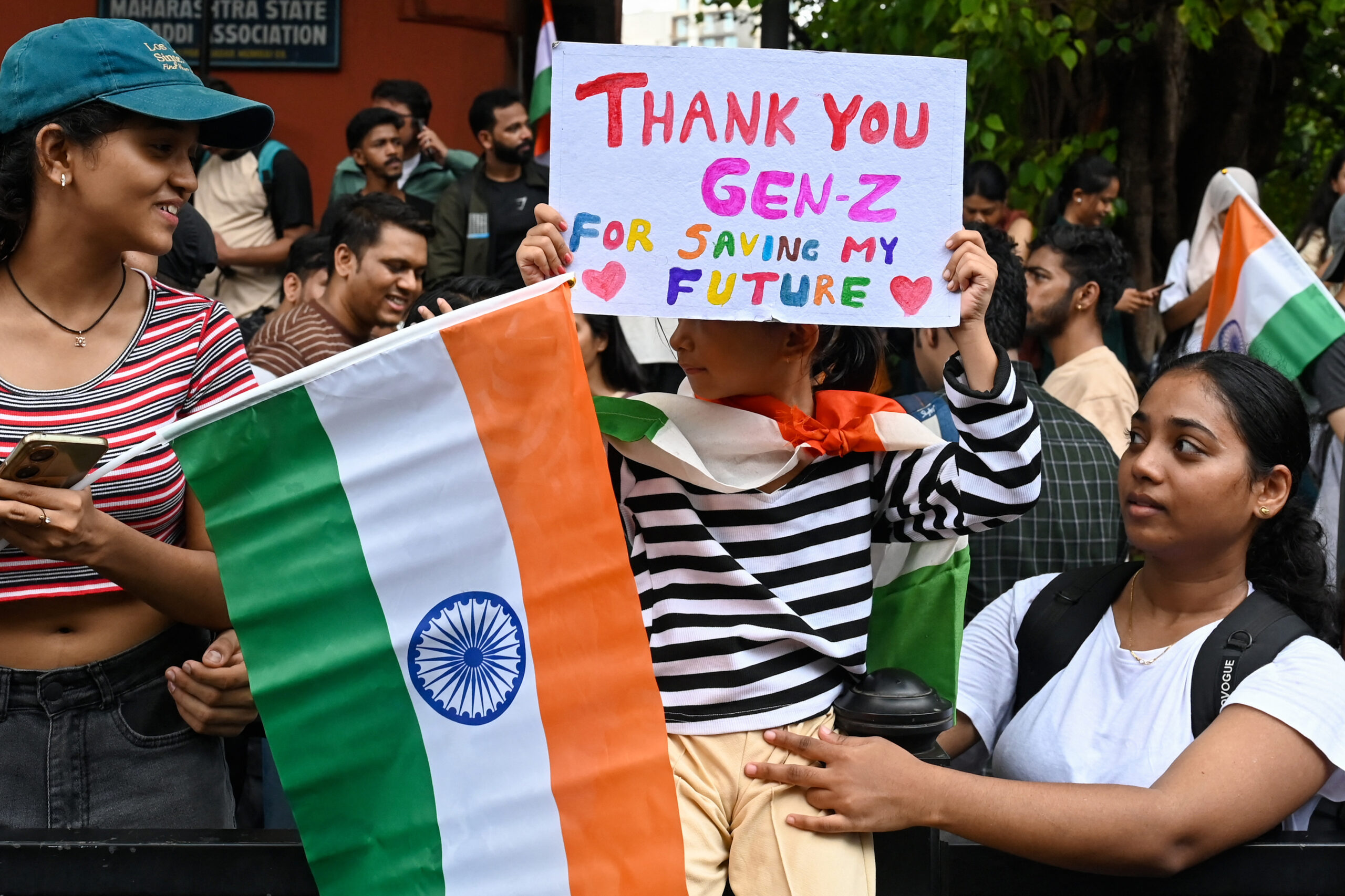
On Friday, the “Cockroach People’s Party” (CJP) led by India’s Generation Z youth, along with a coalition of students and civil society groups, held a rally protesting the revision of the electoral roll and calling for the resignation of the Chief Election Commissioner. This move has once again put pressure on Prime Minister Narendra Modi.
According to a report by Reuters on October 2nd, CJP planned to hold a rally in Mumbai and expand demonstrations nationwide in the coming days; meanwhile, students and civil society groups also gathered at Jantar Mantar in New Delhi.
On the morning of the 2nd, dozens of protesters gathered at the protest site in New Delhi, but the police forcibly put some protesters on buses and removed them from the scene; at the same time, several metro stations near the rally site remained closed, and security measures were significantly strengthened.
Authorities set up barriers at the protest site, deployed hundreds of police and paramilitary personnel, and repeatedly warned against gatherings of more than 5 people through loudspeakers.
When being taken on the bus by the police, protester Rishabh Singh said, “Protesting is our basic right, we demand an explanation from the government on the ‘stolen votes’ issue.”
The protest in Mumbai is scheduled to take place in the afternoon of October 2nd, with hundreds of police officers gathering at the scene.
This protest marks the latest escalation in the controversy over the revision of the electoral roll, putting unprecedented scrutiny on the Election Commission of India, which has long been considered one of India’s most trusted institutions.
Protesters primarily accuse the Election Commission of manipulating the electoral roll to favor the Bharatiya Janata Party (BJP) led by Prime Minister Modi. Both the Election Commission and the government have denied these allegations.
According to the Indian Express, on September 23, the Election Commission’s two deputy commissioners raised formal queries at least 14 times in the last 10 months regarding the revision of the electoral roll, registration procedures, and the digital systems of the Election Commission. Subsequently, the pressure on Election Commission Chairperson Gyanesh Kumar has intensified.
The Election Commission stated that internal differences in discussions are normal.
“We have been asking for change and urging for it, but if the only tool we have to bring about change in society – our voting rights – are taken away, then all those changes will not happen,” CJP convener Saurav Das told the Indian news agency ANI on Thursday.
He said, “We will only end the protest after Kumar resigns.”
India launched a nationwide voter verification initiative known as Special Intensive Revision (SIR) last year, which sparked controversy. Critics claim that this initiative led to the exclusion of millions of eligible voters from the electoral roll.
The Election Commission, on the other hand, stated that the initiative aims to remove duplicate registrations, deceased individuals, or ineligible voters.
On Friday, the Election Commission directed officials to register new eligible voters and those who were previously omitted from the electoral roll, seen as the latest sign of a softening attitude by the commission.
The opposition alliance led by the Indian National Congress (INC) also stated that they will begin protests on October 6 to demand Kumar’s resignation.
CJP was founded by Abhijeet Dipke in May this year and launched protests in June against unemployment and exam paper leaks, ultimately leading to the resignation of the then Education Minister in July. It is considered one of the significant political setbacks faced by the Modi government in recent years.
Since then, CJP has rapidly gained attention, its influence continues to grow, becoming an emerging force on the Indian political stage.