
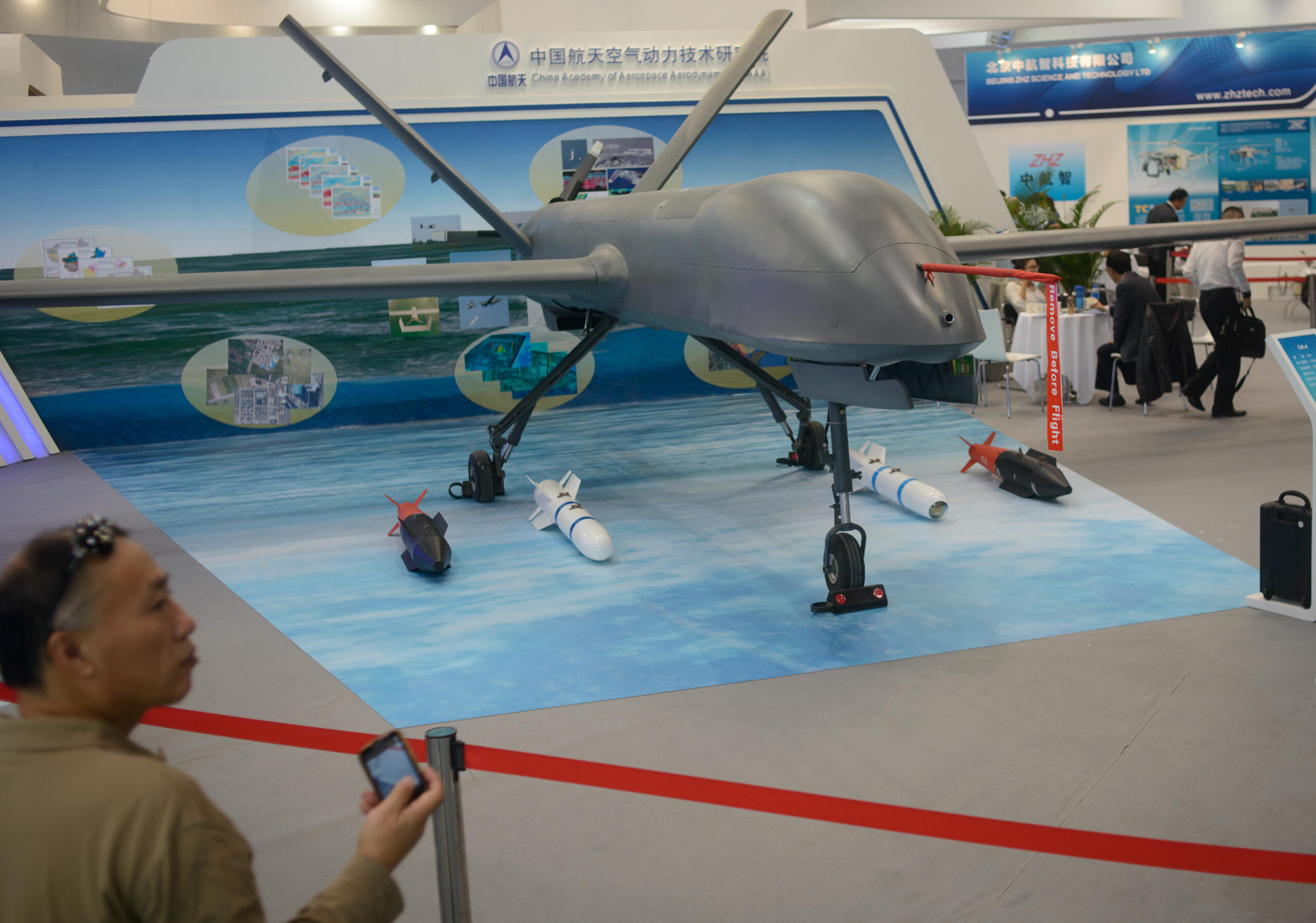
After the “China Zun” collision incident, Beijing has tightened its control over drones by expanding the no-fly zone to a radius of 600 kilometers, covering the Beijing-Tianjin-Hebei region. Tianjin has also designated its entire area as a drone control zone, which led to the cancellation of the “designated flying zone” announced in June.
On September 30th, the Tianjin Municipal Government announced that the entire administrative area of Tianjin has been designated as a drone control zone. The notice regarding the “Designated Flying Area Range for Micro, Light, and Small Unmanned Aerial Vehicles” that was released just on June 4th has been repealed.
Previously, Tianjin had designated a normal “designated flying zone” for drones. According to the policy announced on June 4th this year, Tianjin had assigned approximately 2205 square kilometers as the flying zone, with about 1992 square kilometers over land, accounting for about 16.7% of the land area of Tianjin. Drones below 120 meters in these flying zones did not need to apply for flight activities with the aviation authorities.
On the evening of June 26th, a light sports aircraft deviated from its flight path and collided with the top of the Beijing’s tallest building, “China Zun” (CITIC Tower). Officials stated that the incident caused the death of the pilot and injuries to 13 people. There are still doubts surrounding the incident, such as why the no-fly zone in Beijing was breached and the true details of the pilot’s collision.
Following the impact of the “China Zun” incident, starting from September 20th, an approximately 600 kilometers in diameter area centered around Beijing has been permanently designated as a “Special Restriction Zone” (covering an area of over 280,000 square kilometers). Besides Beijing and Tianjin, it also includes most areas of Hebei, extending to parts of Inner Mongolia, Shanxi, Shandong, Liaoning, and the Bohai Sea, covering the top leaders’ summer retreat destination Beidaihe.
Furthermore, the revised “Beijing Unmanned Aerial Vehicle Management Regulations,” issued on September 11th, will officially take effect on November 15th. The new regulations establish “city-wide storage ban,” implementing a comprehensive ban on flying, storing, and transporting drones throughout the city. It prohibits the possession or storage of drones and their core components within the city, and existing equipment must be relocated out of Beijing or disposed of before November 15th.
While the surrounding provinces have not required a “zero storage” policy like Beijing, the control and approval process for outdoor flight activities within the restricted zone are much stricter than in other parts of the country, requiring aircraft to comply with identity recognition and prior approvals.
Currently, apart from the core control circle of Beijing-Tianjin-Hebei, the overall control measures in other parts of the country have also significantly tightened in 2026.
Taiwan’s Ministry of National Defense think tank and scholar Su Ziyun from the Institute for National Defense Security told Dajiyuan that these drone bans are a sign of insecurity within the Chinese Communist regime. To maintain regime security, the Chinese Communist Party has resorted to extreme measures. In comparison to other countries, all countries have regulations on drones, usually confined to specific areas, unlike Beijing’s extensive scope.