
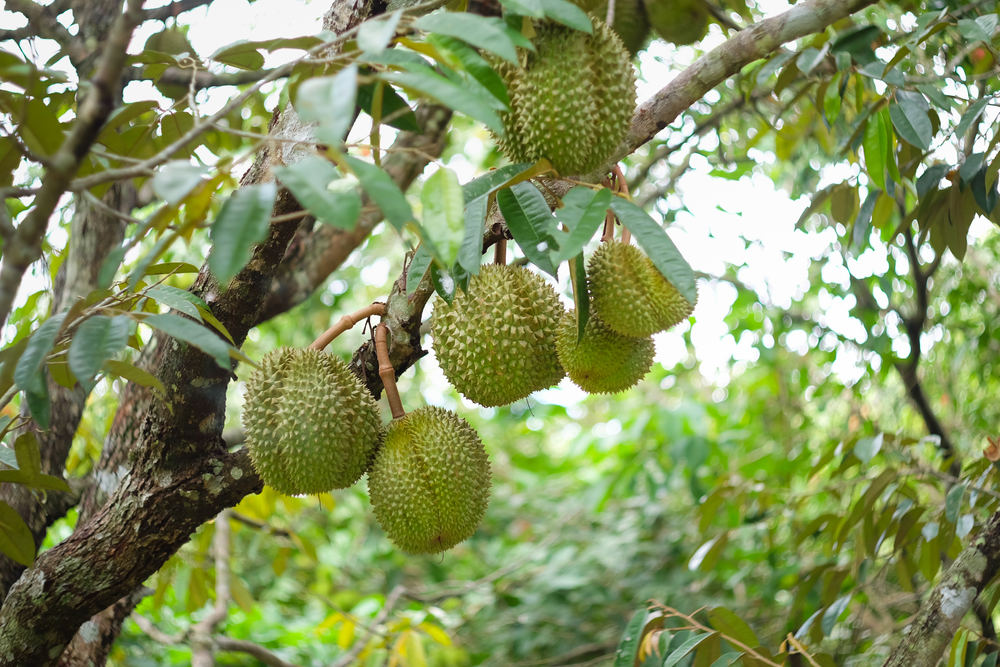
The intense aroma of durian delights enthusiasts, yet it also repels some people. Nevertheless, China’s appetite for durian remains remarkable. Malaysia is working hard to promote durian beyond roadside stalls and home orchards, in hopes of convincing more people that various durian varieties from Malaysia are worth a taste.
Durian enthusiasts savor the fruit like wine tasting. For Malaysians, different varieties of durian offer rich and delicate textures, each with unique flavors. Some durians are renowned for their sweet creamy taste and rich fruit aroma, while others have hints of bitterness, alcoholic notes, and even taste like peanut butter.
China is the world’s largest importer of durian. According to Chinese customs data, in 2025, China imported 1.87 million tons of fresh durian, worth $7.5 billion, marking an over six-fold increase in imports over the past decade. Thailand and Vietnam are China’s top durian suppliers, accounting for nearly all imports, while Malaysia’s market share is rapidly growing, especially with premium varieties like Musang King.
Thailand entered the Chinese market earlier, holding over half of the market share by value in 2025. Malaysia began exporting fresh durian to China in 2024 with a modest market share. However, in the first half of 2026, China’s import of fresh durian from Malaysia increased fourfold compared to the same period last year, indicating rapid market growth.
An Associated Press report on September 27 detailed Malaysia’s efforts to boost the durian industry in the capital, Kuala Lumpur. The Durian Experience Center in Kuala Lumpur, located next to the iconic Petronas Twin Towers, aims to showcase durians and their diverse derivative products.
At the durian center, visitors can stroll through a simulated durian orchard, explore the fruit’s culture and history, enjoy entertaining theater performances, and indulge in durian-made platters and egg tarts downstairs.
This two-story center, opened in the summer, targets local residents and tourists, especially from China, as emphasized by its founder Edison Ang. Ang highlighted the long-standing influence of Thai durian culture on Chinese tastes.
“What we really hope for now is not to get non-durian eaters to start eating durian,” he said. “But to encourage those who have tasted durians from other countries to try Malaysian durians.”
Malaysian businesses are exploring various uses of durian. Some companies sell durian jam, durian-flavored chocolates, mochi, and even launched mooncakes before the Mid-Autumn Festival.
DurianBB founder Adrian Choy’s company offers durian ice cream, desserts, dried durians, Musang King-flavored coffee, and more at a cafe, along with farm tour services. In July this year, Choy’s brand expanded its product line by introducing a sweet floral-scented durian perfume.
Choy emphasized the importance of diversifying product lines to enhance the food’s value and distinguish his business, even amidst price competition from other brands.
“Food is food,” he said. “You can’t raise prices by 50% just because of a different brand.”
In various locations across China, durian specialty stores selling Malaysian durian have sprung up, with some specifically retailing Malaysian durians. In Beijing, Jiangsan Durian Store offers durian platters priced between 300 to 1000 Chinese Yuan (approximately $42 to $140), depending on the weight and variety of the flesh.
At Mr. Ang’s center in Kuala Lumpur, Henry Zhang from Shanghai was among the numerous visitors. He has been enjoying durians since his university days and was amazed to see palm-sized durians for the first time here.
Zhang noted that Malaysian durians have a denser texture compared to Thai durians, with each variety having its unique flavor. He was impressed that the center not only provided durian fruits.
“I may still eat durians from other countries, but after trying Malaysian durians, I might miss them even more,” Zhang said.