
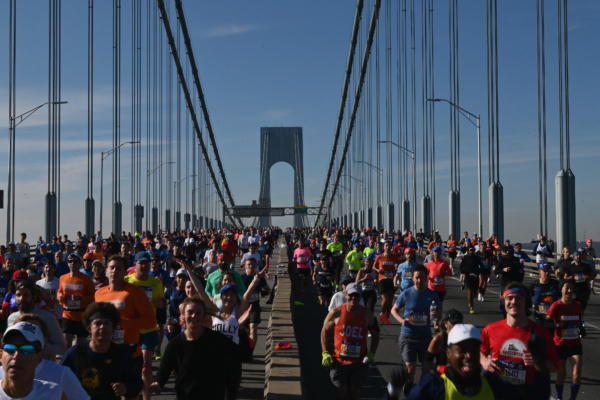
The 2026 New York City Marathon is set to take place on November 1st, with the New York Road Runners (NYRR) announcing on September 22nd that they will be adjusting a portion of the Bronx route for the first time in 15 years. The new route aims to reduce the number of turns for runners and improve the convenience for local residents to access supermarkets, laundromats, and residential areas during the event.
The NYRR stated that this year’s marathon will see adjustments to the route in the Mott Haven community in the Bronx to lessen the impact of the large-scale event on the surrounding residents and businesses.
The main focus of this adjustment involves the Bronx section of the 26.2-mile course. After crossing the Willis Avenue Bridge into the Bronx, runners will take a more direct route, reducing the number of turns in that area from seven to five. This change will not affect the overall distance of the marathon.
According to the new route released by the organizers, after crossing the Willis Avenue Bridge, runners will turn left onto East 135th St, then make a right onto Alexander Ave. Unlike previous years where runners turned left on East 138th St, this year they will proceed along Alexander Ave until East 141st St before making a left turn, then left again onto Third Ave, followed by a right turn back onto East 138th St, and crossing the Madison Ave Bridge to return to Manhattan.
This marks the first official adjustment to the NYC Marathon course since 2011. Back in 2011, the organizers made changes to the route after runners entered Brooklyn from the Verrazzano-Narrows Bridge, looping through a residential street before entering Bay Ridge Parkway instead of directly accessing the parkway from the bridge.
This year’s adjustment focuses specifically on the Bronx. While this section of the course is only about a mile long, it poses a significant challenge to runners as it is located towards the later part of the race, testing their physical strength and endurance.
Marathon runners often refer to the later stages of a long-distance race as “hitting the wall,” describing the noticeable fatigue due to energy depletion. The Bronx section comes after roughly 20 miles into the full course, a critical point where many runners face physical challenges, making it a crucial segment that participants must overcome, despite the slight simplification of the route.
The inaugural five-borough marathon in 1976 had 2,090 participants, with 1,549 successfully finishing. In comparison, the number of finishers in the 2025 event reached 59,226. The organizers anticipate that this year’s event will attract over 60,000 participants, potentially setting a new record for the largest participation in the history of the marathon.