
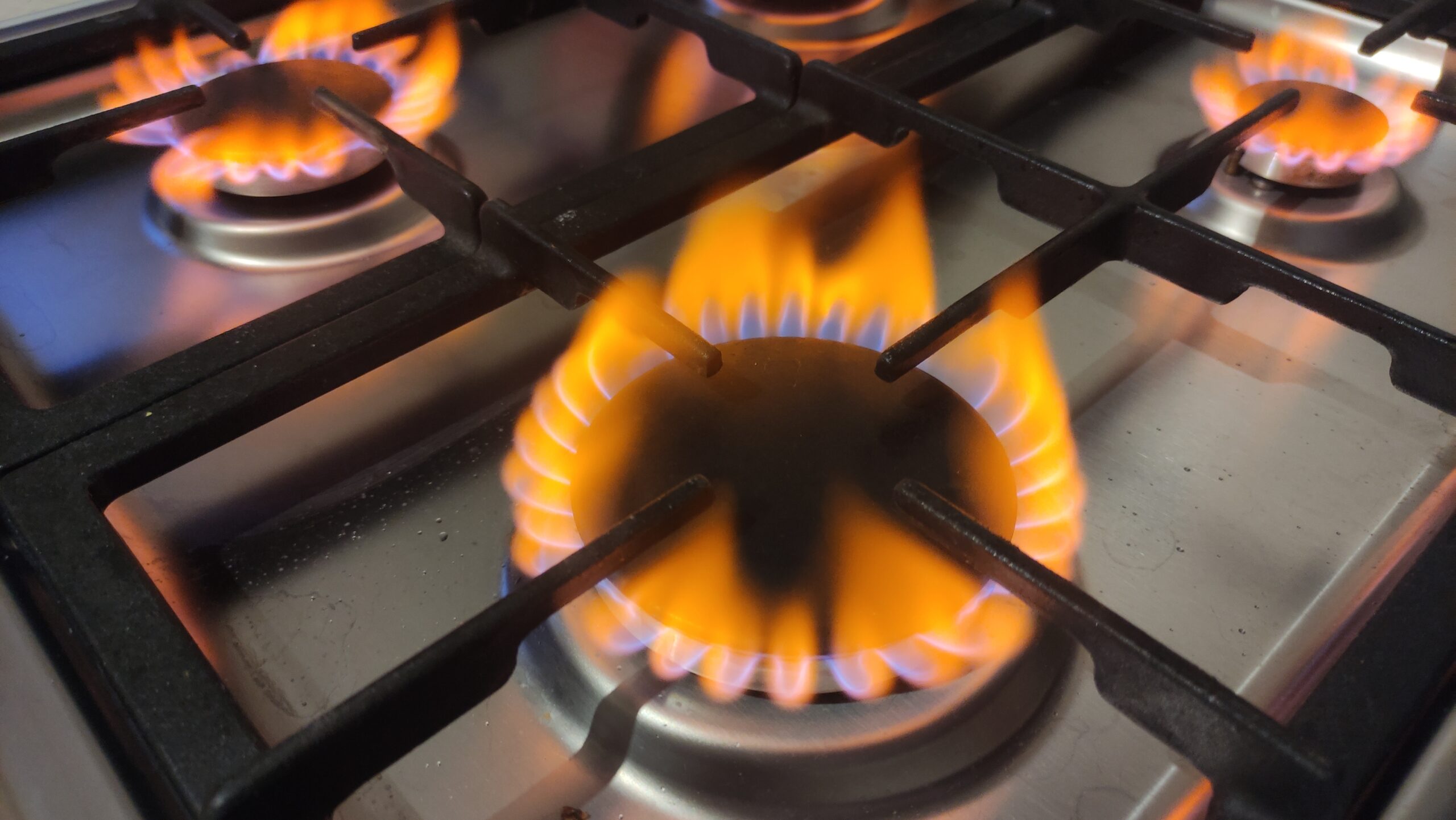
When we see wood burning, the flames are usually orange or red, but don’t assume that the flames of a gas stove should also be of these colors. In fact, the normal flames of a gas stove should be a steady blue color, and if they turn orange or any other color, that’s not a good sign.
According to Reader’s Digest, Troy Legg, a remote appliance repair technician at American Home Shield, with over 20 years of experience repairing gas stoves and other appliances, knows well what color the normal gas stove flame should be.
Legg explained that a normal gas stove flame is blue. While there may be slight variations in color, it should not differ significantly. If natural gas is used, a blue flame with a slightly white tip is normal. If propane is used, a blue flame with a bit of yellow at the tip is also normal.
A blue flame signifies complete combustion of natural gas. The main component of natural gas is methane, and when it burns sufficiently on the stove, all the fuel is consumed and transformed into heat, water vapor, and carbon dioxide. The reason the flame appears blue is due to the shorter wavelength of light emitted by this complete combustion.
So, why do some flames turn orange? Combustion of natural gas can produce flames with temperatures as high as 3500 degrees Fahrenheit (1927 degrees Celsius), resulting in a blue color. In contrast, wood burning produces lower temperature flames, accompanied by incomplete combustion releasing smoke and wood particles, giving the flame a red or orange appearance, much like a campfire.
If you notice that most of the flames on your gas stove at home are not blue but another color, and the flame tip color differs from the normal conditions mentioned above, then there might be something off.
Legg pointed out that if the gas stove flame consistently appears yellow or orange, it may be due to incomplete combustion, often caused by dirty burners, obstructed openings, or improper gas-to-air mixture ratio.
However, not all situations are cause for alarm. Legg mentioned that a slight amount of white or yellow at the tip of the flame could be normal, depending on the type of gas and stove.
Dust in the air might create brief yellow flashes, while calcium and other minerals could produce an orange hue during combustion. “But if the flame appears primarily yellow, orange, or red, it’s advisable to seek professional inspection.”
A predominantly orange-yellow gas stove flame can be a major problem, potentially leading to issues such as incomplete combustion, affecting operational efficiency, and possibly posing a risk of carbon monoxide poisoning.
Data from the Centers for Disease Control and Prevention (CDC) shows that carbon monoxide, a colorless, odorless gas, causes hundreds of deaths annually and sends nearly 100,000 people to emergency rooms, with children and older individuals with respiratory issues being particularly susceptible.
If your home uses a gas stove, how can you prevent potential hazards? Installing a carbon monoxide detector can alert you when levels are dangerously high, potentially saving your life.
An orange-yellow flame indicates incomplete combustion, leading to wastage of gas. Failure to rectify this may result in increased gas consumption to generate sufficient heat for cooking, causing a spike in gas expenses.
Apart from carbon monoxide, even properly functioning gas stoves emit nitrogen dioxide, benzene, and other volatile organic compounds (VOCs). Inefficient combustion in gas stoves can increase the emission of these substances, compromising indoor air quality.
Uneven flame distribution or low combustion efficiency (usually characterized by an orange or yellow flame) in gas stoves can lead to uneven heating of food, necessitating higher heat settings, potentially impacting your cooking experience.
And what about a red flame? Legg pointed out that red flames are rare and could indicate an issue with the gas quality (incomplete combustion or oxygen deficiency). In such cases where the flame consistently appears red, homeowners should contact their natural gas supplier.
He advised that if your gas stove flame is showing abnormal yellow, orange, or red colors, you can perform basic cleaning and checks initially. If the flame color persists or if you detect a gas odor, it is recommended to stop using the gas stove immediately and seek assistance from a professional technician.
Speaking of gas stoves as a modern cooking tool, you might wonder who invented them and how long they have been around.
According to Smithsonian Magazine, ancient Egyptians, Jews, Romans, and other civilizations used stone or brick ovens heated with wood for baking bread. Some designs bear resemblance to modern pizza ovens used today.
In 1802, a Moravian man named Zachaus Winzler proposed the concept of cooking with gas, though no finished product materialized. The first commercially produced gas stove was invented by James Sharp of the United Kingdom in 1826. By the end of the 19th century, gas stoves had become popular due to their ease of heat control compared to wood or coal-fired stoves, along with simpler maintenance.