
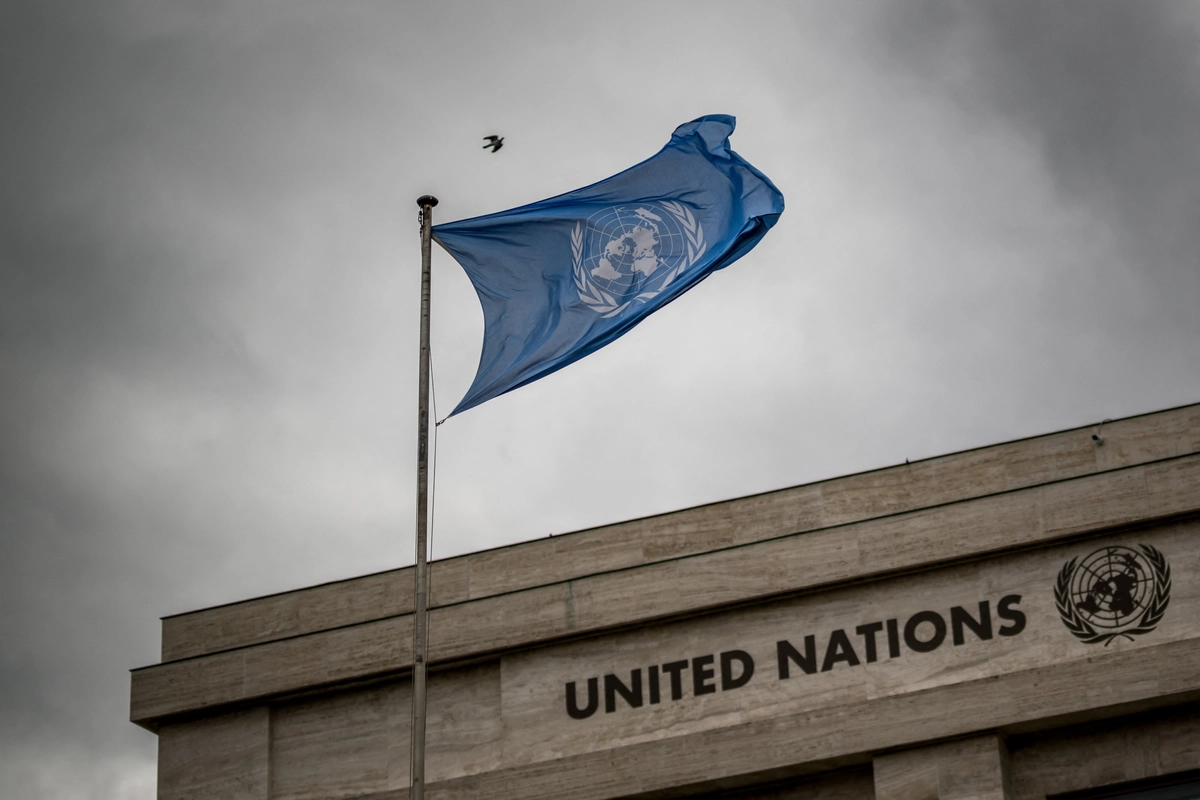
France is making efforts to resolve the diplomatic turbulence caused by its social media comments regarding the United States’ stance on human rights. The French delegation to the United Nations in Geneva issued a statement on September 11, retracting its comments on US human rights made in July on X platform, and stating that this would not affect the “long-standing alliance relationship” between the two countries.
On September 11 (Friday), the French delegation to the United Nations in Geneva posted an English statement on its X account, stating, “France and the United States have taken different positions in a recent vote at the United Nations General Assembly. This disagreement is only related to a single vote and does not involve issues related to defending human rights.”
The statement further elaborated, “Differences of opinion on a particular vote do not hinder France and the United States from maintaining close dialogue, nor will it shake our longstanding alliance relationship, or affect our ability to jointly promote peace, stability, and prosperity, including cooperation in multilateral forums.”
According to AFP, the US State Department responded positively to France’s retraction statement. A State Department official told AFP on condition of anonymity, “We note France’s statement and appreciate it; we look forward to working with France to promote our shared values and interests.”
French media reported that this dispute has affected the appointment of France’s newly appointed ambassador to the United States, Aurélien Lechevallier.
At the end of June this year, French President Macron selected Lechevallier to be the next ambassador to the United States. On July 20, Lechevallier made a public appearance as the incoming ambassador to the US at the Élysée Palace. At that time, he was still serving as chief of staff to French Foreign Minister Jean-Noël Barrot and had previously worked at the Élysée Palace.
On July 25, the French delegation to the United Nations in Geneva posted on X platform, stating, “The United States used to be a beacon of human rights. Not anymore.” This comment was made after the US voted against extending the term of UN High Commissioner for Human Rights, Volker Türk.
Two days after the French delegation posted this social media message, the US representative left a meeting of the UN Security Council when the French representative began speaking.
The General Assembly in July was to vote on whether Türk would serve another four-year term as the High Commissioner for Human Rights. US Deputy Representative Jeff Bartos stated before the vote that reappointing Türk would prove critics of the United Nations right about the “malfunctioning of UN institutions.”
The US, particularly opposed to the unscheduled vote on this appointment, which did not allow enough time for member states to review and consult, requested a postponement of the vote but was unsuccessful. In the end, the General Assembly approved Türk’s reappointment with 144 in favor, 10 against, and 13 abstentions. The ten countries that voted against included the United States, Israel, Russia, Argentina, Burkina Faso, Mali, Niger, Nicaragua, North Korea, and Trinidad and Tobago.
The US government has long criticized issues within the UN human rights system, such as stricter treatment of some countries compared to others, member states with poor human rights records being able to participate in human rights institutions, politicization, disproportionate focus on Israel, and lack of transparency due to bureaucratic procedures.
The UN High Commissioner for Human Rights released an evaluation of the human rights situation in Xinjiang on August 31, 2022, stating that China’s anti-terrorism and “de-extremification” policies in Xinjiang have led to serious human rights abuses, some of which may constitute “crimes against humanity.” This report was one of the most significant public investigations by the UN human rights system into China at that time.
The UN Human Rights Council (comprised of 47 member states) voted on October 6, 2022, on a draft resolution proposed by the United States, Canada, and other countries, which aimed to “discuss the human rights situation in the Xinjiang Uyghur Autonomous Region of China.” The outcome was 17 in favor, 19 against, and 11 abstentions — meaning that even the discussion of this report did not pass.
China naturally voted against the resolution, but what is more notable is that many developing countries also sided with China. This is a typical example of the issues within the UN human rights system.