
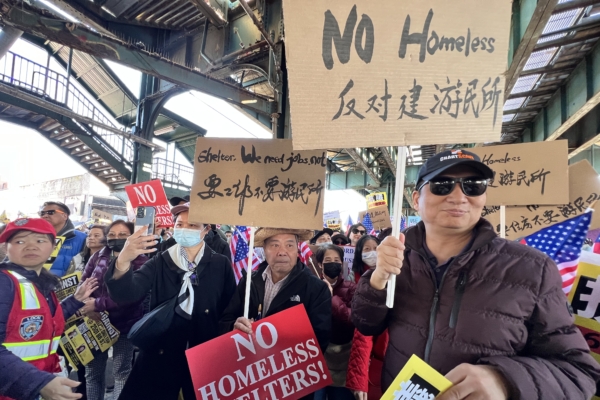
New York City’s homeless shelter system has continued to expand in recent years. According to data from the New York City Department of Homeless Services (DHS), an analysis by the New York Post revealed that over the past four years, the number of shelters in the city has increased from 333 to 499, representing nearly a 50% growth. At the same time, the annual expenditure on the shelter system has reached billions of dollars, sparking ongoing debates among residents and local elected officials.
In particular, the increase in shelters for single adults has been particularly notable. As of June 30th, the number of shelters for single adults has risen from 175 to 209, a 19% increase within a year. Data shows that 15 of these shelters were added after Mayor Mamdani took office in January this year.
According to DHS data as of last Thursday, there are a total of 83,407 residents in the city’s shelter system, with 26,266 being single adults and the rest primarily being families with children.
In comparison, during the fiscal year ending on June 30, 2022, the New York City shelters averaged around 42,563 individuals housed per day (half of the current number), including 16,465 single adults. In the 2024 fiscal year, influenced by a significant influx of immigrants, the shelter population surged at one point, averaging around 86,321 individuals per day, with 20,468 being single adults. During the same period, the number of shelters increased from 333 in the 2022 fiscal year to 496.
At the peak of the immigration crisis, the population in New York City’s shelter system even exceeded 130,000 people, forcing the city government to search extensively for new temporary and permanent shelter spaces. Although this crisis has significantly eased since 2024, the total number of shelter facilities has not seen a significant decrease, with it currently remaining at nearly 500.
The Mamdani administration plans to allocate around $4.2 billion in this fiscal year for homeless and shelter-related services, an increase of about $700 million from the previous year and exceeding the expenses incurred during the peak of the immigration settlement pressure in 2024.
Critics linking the continuous expansion of the shelter system to New York City’s housing policies. Joann Ariola, a Republican city council member from Queens, criticized certain policies for overly emphasizing ideology, suggesting that policies including rent control may discourage some landlords from renovating and investing in housing, thus limiting housing supply.
However, the direct causal relationship between housing policies and the increase in the homeless population remains controversial. Housing costs, income levels, mental health, addiction issues, lack of affordable housing, and the influx of immigrants are all considered significant factors by different policy advocates affecting homelessness.
In terms of geographical distribution, Brooklyn currently has the most shelters in the city, totaling 153; followed by the Bronx with 136, Queens with 113, Manhattan with 90, and Staten Island with 7.
When considering shelters for single adults only, Brooklyn again leads with 77 shelters, followed by Queens with 48, the Bronx with 41, Manhattan with 41, and Staten Island with 3.
In terms of community board districts, the 12th Community Board in Queens, covering areas such as Jamaica, Hollis, and St. Albans, has 35 shelters, making it the most concentrated area in the city. The 16th Community Board in Brooklyn, mainly covering Brownsville, has 28 shelters; while the 5th Community Board in Brooklyn, including East New York and New Lots, has 25 shelters.
As for shelters for single adults, the 5th Community Board in Brooklyn has 14 shelters, the 12th Community Board in Queens has 13, the 16th Community Board in Brooklyn has 12, the 10th Community Board in Manhattan’s Harlem has 10, and the 3rd Community Board in the Bronx has 9.
The concentration of shelter facilities in certain communities has raised questions from local elected officials about “fair distribution.” Nantasha Williams, the Deputy City Council Speaker representing most areas of the 12th Community Board in Queens, emphasized the importance of not burdening any single community disproportionately with the shelter system. She highlighted residents’ ongoing concerns about public safety, hygiene, mental health services, and overall quality of life.
Two months ago, plans to convert a shelter in Sheepshead Bay, Brooklyn, initially designed for 55 families into one accommodating 110 single men faced opposition from residents. Local Republican city council member Inna Vernikov, State Assemblyman Kalman Yeger, and other community members filed a lawsuit on July 24th to try to halt the conversion.
Meanwhile, the 2nd Community Board in Manhattan’s Greenwich Village and Meatpacking District, the 3rd Community Board on the southern coast of Staten Island, and the 10th and 11th Community Boards in the Bay Ridge to Bensonhurst area of Brooklyn currently do not have shelters for single adults.
However, there are plans for new projects in some areas, including a long-planned 150-bed shelter for men at 2501 Benson Avenue in Bensonhurst, which has been stalled for over three years due to community protests. On the other hand, there is a proposal to build a 105-bed shelter for men near the Gowanus Expressway on Fourth Avenue in Bay Ridge.
Responding to criticism, DHS spokesperson Nicholas Jacobelli stated that the city government is committed to fair distribution of shelter facilities. The Mamdani administration also aims to gradually reduce using commercial hotels to accommodate families with children, phase out outdated or substandard facilities, and improve the safety and living conditions of the shelter system.
He noted that the city’s goal is to provide “a safer, more dignified environment” for those receiving services, including placing more families in facilities that better suit their needs.