
With the new academic year just around the corner, renowned for its educational services and university rankings, “The Princeton Review” released its 22nd annual college ranking report on Tuesday (August 18), evaluating and ranking the performance of hundreds of high schools across the United States in various categories.
One of the rankings focuses on students’ extracurricular study time, selecting the “most diligent learning” 10 universities. Looking at the list, the top-ranked colleges are mostly known for their excellence in science, technology, engineering, and mathematics (STEM) education.
STEM degrees have always been a popular choice among American universities, often considered to have better career development and income prospects. However, obtaining a STEM degree often means higher academic intensity and more study hours outside of class.
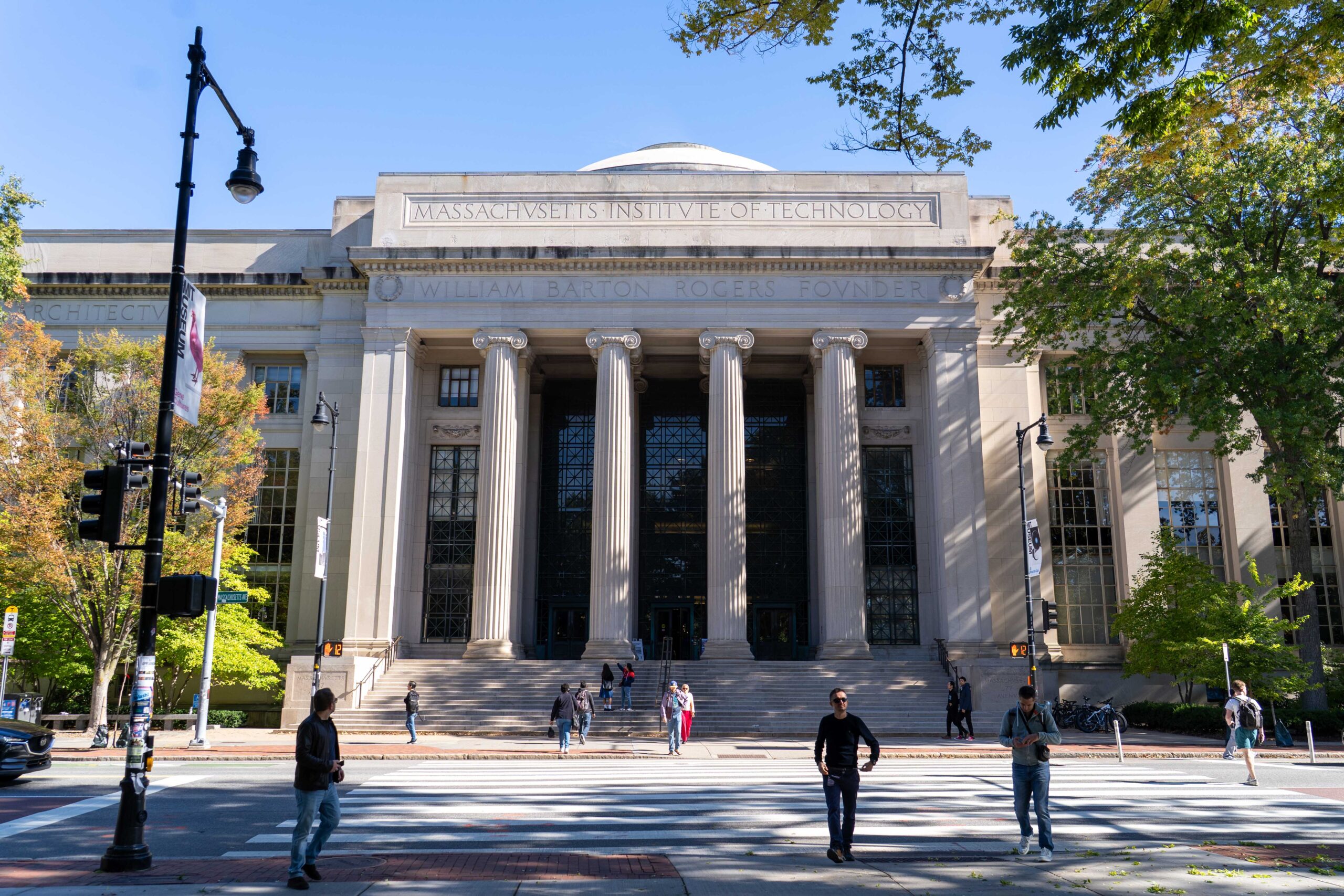
“The Princeton Review” conducted a survey of students from 392 American universities, asking them about the time they spend on extracurricular learning each week. The results show that Massachusetts Institute of Technology (MIT) students spend the most time studying, followed by California Institute of Technology (Caltech), with only Princeton University from the Ivy League entering the top 10.
MIT is renowned for its disciplines in engineering, science, and mathematics. The academic system of the school covers 65 distinctive research centers; currently, faculty and students are collaborating with about 700 companies across various project areas.
The school respects its students. Once on campus, students are greeted with a plethora of choices, including research opportunities for undergraduates to work with top professors in the country. MIT attracts numerous creative minds, fostering an environment that encourages students to actively solve problems and engage in critical thinking.
“The Princeton Review” published testimonials from some students, with one chemical engineering student stating, “Unlike many schools, MIT’s goal is not just to teach specific knowledge points of each discipline. MIT teaches you how to think, focusing not on imparting viewpoints but on how to solve problems. If you don’t know how to tackle difficulties, merely mastering facts or rote memorization is useless.”
MIT students generally believe that the school has excellent teachers, with engaging, interesting classroom teachings. Some students say, “Professors make the teaching content interesting by inserting jokes or showcasing cool experimental demonstrations.”
Students say that despite facing academic challenges that “undoubtedly push you out of your comfort zone,” they praise MIT as “a place of vast information, full of endless possibilities, and greatly broadening perspectives.”
Current U.S. Secretary of Energy Chris Wright and Lisa Su, current Chairman and CEO of AMD, both graduated from MIT.
California Institute of Technology ranked first in the most diligent student university last year, coming second to MIT this year.
“The Princeton Review” believes that Caltech is globally renowned, with influence extending beyond the fields of science and engineering. The school encourages students to think critically and tackle challenges, while also excelling in “cramming massive amounts of knowledge into students’ minds in a busy, fulfilling, and fun-filled way.”
Interdisciplinary learning and teamwork are prevalent throughout the entire academic experience, as one student writes, “The collision of ideas and creativity across disciplines leads to extraordinary achievements!”
While this high-intensity academic experience may seem daunting to outsiders, the school provides extremely plentiful resources to around 1,000 undergraduate students, with a student-to-faculty ratio of 3:1, meaning class sizes are small, and students can easily establish close connections with professors. There are also numerous funding opportunities for extracurricular projects on campus (such as the Housner Fund and Moore-Hufstedler Fund), making mentorship readily available.
The school’s core curriculum is rigorous and comprehensive, covering areas of science, humanities, mathematics, and social sciences, aimed at “exposing every student to a wide array of academic disciplines.” One student describes this experience as “an extremely challenging journey that makes you feel both insignificant yet fascinated by the wealth of knowledge”; another student adds that, especially when facing “professors who are Nobel Prize-level, even though they may not be excellent lecturers.”
However, the vast majority of students express that “you will fall in love with what you learn” and believe that Caltech is a place where students can “enjoy the pleasant climate while working together to solve future challenges.”
Below are ten universities selected by “The Princeton Review” rankings as the most diligent students.
Location: Cambridge, Massachusetts
Percentage of Asian students: 35.17%
Percentage of international students: 11.66%
Location: Pasadena, California
Percentage of Asian students: 39.65%
Percentage of international students: 15.86%
Location: Claremont, California
Percentage of Asian students: 21.69%
Percentage of international students: 10.84%
This is a world-class liberal arts and engineering college. The college is known for its excellent science, engineering, and mathematics education, dedicated to fostering technologically adept leaders with a strong humanistic background.
Location: Needham, Massachusetts
Percentage of Asian students: 25.93%
Percentage of international students: 8.47%
The college is known for its vibrant, small-scale, project-based curriculum, funded by a substantial donation from the F. W. Olin Foundation.
Location: Princeton, New Jersey
Percentage of Asian students: 24.98%
Percentage of international students: 13.05%
Location: Claremont, California
Percentage of Asian students: 19.77%
Percentage of international students: 13.57%
The school is located in a serene residential area 30 miles east of Los Angeles, with a prime location. It is highly competitive in admissions and is one of the most difficult liberal arts colleges to be admitted to in the United States. Claremont McKenna College ranks tied for 7th place in the 2026 U.S. News ranking of liberal arts colleges.
Location: Williamstown, Massachusetts
Percentage of Asian students: 13.11%
Percentage of international students: 9.24%
Williams College is a private liberal arts college, one of the top-ranked liberal arts universities in the United States, with numerous distinguished alumni. The school was established in 1793.
Location: Portland, Oregon
Percentage of Asian students: 8.23%
Percentage of international students: 10.65%
Reed College was founded in 1908, as a private, independent liberal arts college in southeast Portland, Oregon, and is also the alma mater of former Apple Inc. CEO Steve Jobs.
Location: Northfield, Minnesota
Percentage of Asian students: 11.04%
Percentage of international students: 10.10%
Carleton College is a top-ranked liberal arts college, known for its outstanding academic reputation and rigorous academic atmosphere. The college is committed to providing high-quality undergraduate education.
Location: Terre Haute, Indiana
Percentage of Asian students: 8.13%
Percentage of international students: 8.87%
Rose-Hulman Institute of Technology was founded in 1874 and is a top-notch engineering college, emphasizing teaching quality and employability over traditional four-year American universities. It enjoys a strong reputation in the engineering field, both in the United States and worldwide.