
Audience friends, hello everyone! Welcome to watch “Century Truths”.
In April 2026, a world-shaking event occurred in the Middle East – an American soldier was trapped behind enemy lines.
Following that, the United States made a decisive decision: deploying 155 fighter jets, nearly 200 special forces, deep into enemy territory, all to bring this American soldier home.
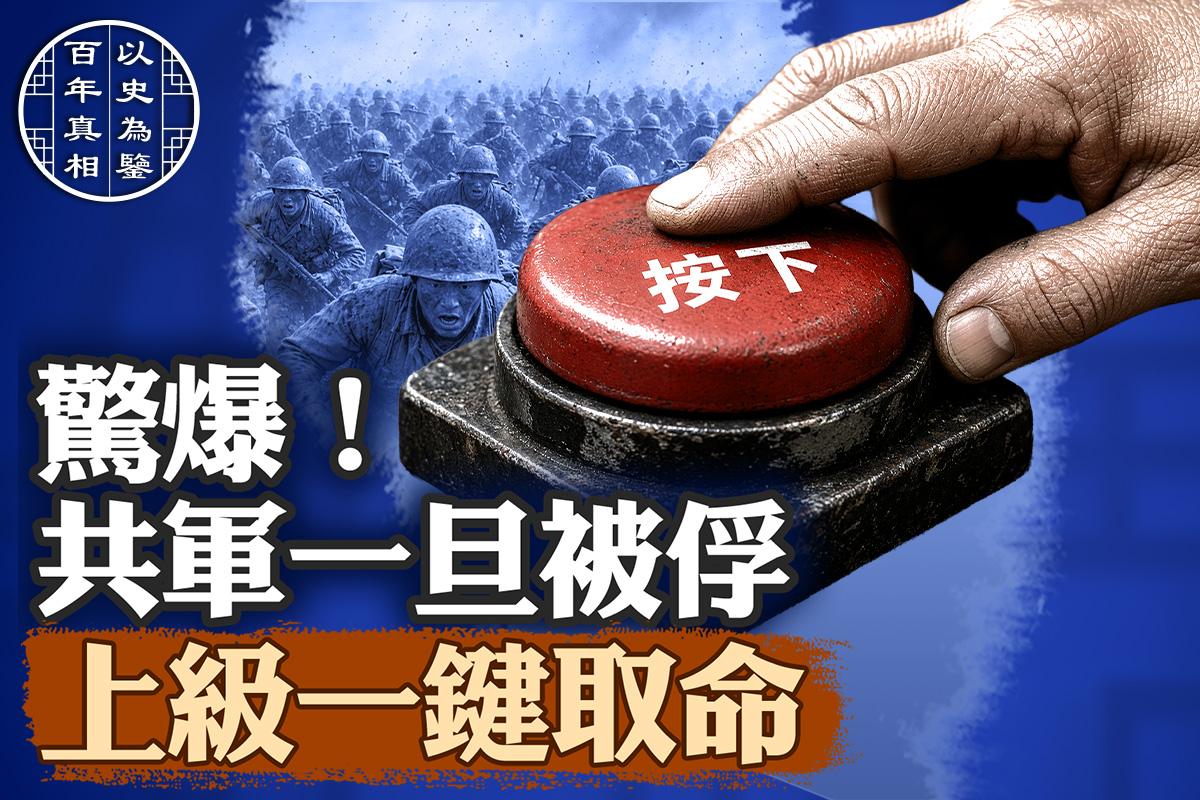
However, on the other side of the earth, under the Chinese Communist regime, there exists a completely different logic – once a soldier falls behind, they can be remotely detonated by their own people and disappear on the spot.
So the question is: in the battlefield, how much is a life worth?
Today, let us fully reconstruct the life-and-death rescue of this American soldier over 48 hours, and reveal the deeper institutional differences between the operations of the American military and the Chinese Communist military.
In the early hours of April 4, 2026, an F-15E fighter jet from the United States was hit while on a mission in Iranian territory. After the aircraft was damaged, two crew members ejected to escape. One was quickly rescued, but the other lost contact and landed in the mountainous area in the southwest of Iran.
This pilot was seriously injured, alone, surrounded by Islamic Revolutionary Guard Corps and local militias. He only had a handgun and encrypted communication equipment, no supplies, no cover.
In this situation, for the majority of armies in the world, it basically means the mission is terminated, and the fate of this isolated pilot can only be “abandoned.”
But the choice of the American military was completely different.
After the accident, the United States quickly made a decision: suspending other military actions and redirecting all resources to the search and rescue mission. Hundreds of special forces were put on standby, and the Air Force began a large-scale mobilization.
During the day, 21 aircraft were deployed by the US military for search and rescue, including electronic warfare aircraft used to disrupt enemy communications, gather intelligence, and several rescue aircraft for aerial support. At night, a truly large-scale joint rescue operation officially commenced.
The forces invested by the US military reached an astonishing scale: 155 aircraft of various types, including 64 fighter jets, 48 aerial refueling aircraft, 4 bombers, 26 electronic warfare and intelligence aircraft, and 13 dedicated rescue aircraft. At the same time, nearly 200 special forces personnel participated in the operation, including SEAL Team Six, Delta Force, and Paratrooper Rescue Team.
To increase the success rate, the US military also conducted a series of precise deception operations. They released false information, created multiple false targets, and even set up seven lure zones to mislead the Iranian forces’ deployment.
On the night of the operation, the US military simultaneously launched a powerful strike. B-2 stealth bombers flew directly over Tehran, dropping bunker-buster bombs on critical targets; B-1B bombers dropped hundreds of heavy bombs in surrounding areas; MQ-9 drones continued to monitor and strike ground targets; and A-10 attack aircraft were responsible for suppressing enemy forces. Even the roads leading to the pilot’s hiding area were precisely bombed, preventing the rapid encampment of Iranian forces.
On the Iranian side, a large number of militias, military forces, and even police dogs were mobilized to conduct a carpet search of the mountainous area where the pilot might be hiding.
Meanwhile, on the ground, this pilot was racing against death. Dragging his severely injured body, he hiked over 7,000 feet up a ridge, climbed to the mountaintop, evading pursuers from the Iranian militias, while trying to send satellite signals taking advantage of the terrain. The first message he transmitted was: “God is good.” After that, he hid in a crevice among the rocks on the mountaintop, waiting for rescue for a full day and night.
This was no longer just a simple rescue operation; it was a highly coordinated multi-service joint operation. To save this pilot, the US military temporarily established a fully controlled battlefield space within enemy territory.
At the same time, the US utilized high-altitude reconnaissance equipment to pinpoint the pilot’s location several miles away.
The US MC-130 transport aircraft quickly took off, secretly landing on a makeshift runway in a field 10 miles away from the pilot, special operations personnel assembled a “Little Bird” helicopter on-site, then flew to the target area within minutes. Beneath a cliff, they found the pilot, swiftly evacuated him, and didn’t engage in direct firefight with Iranian forces throughout the entire process.
Unexpectedly, during the evacuation, the MC-130 transport aircraft became stuck in the sand and couldn’t take off. The US military immediately initiated a backup plan, utilizing three light transport planes for phased evacuation. Ultimately, all personnel returned safely without any casualties. The transport aircraft and helicopters that couldn’t evacuate were destroyed by the US military. It’s estimated that the equipment losses in this operation exceeded $400 million.
So, was this incalculable cost worth it?
Retired General Frank McKenzie, former commander of the US Central Command, gave a profound answer: “Although the US lost several aircraft in this mission, it takes a year to build a plane, while establishing a tradition of not abandoning comrades will take two hundred years.” General McKenzie’s words are the core logic of the entire operation.
This drew admiration from the majority of military forces worldwide for the rescue operation. In contrast, the Chinese Communist military’s “individual self-destruction device” left people astonished in another way.
At the end of 2020, the operational system equipped for soldiers by the Chinese Communist Tibet Military Area Command became a topic of controversy. According to mainland media reports, this controversial “individual digital combat system” integrated functions such as navigation instruments, audio converters, and consulting processors all in one. The soldier’s helmet was fitted with a satellite antenna, and they were equipped with a monocular night vision multifunctional sighting scope, with a digital terminal on their arm.
These advanced equipment allowed a battalion commander stationed in a control center to directly command individual soldiers. Solders could also call for artillery support by pressing a button on this equipment.
If this equipment is captured by the enemy, it will self-destruct. Reports from the mainland also mentioned that if an individual soldier is critically injured and does not want to be captured, they can activate the self-destruction device to “maintain the dignity of the soldier,” essentially choosing self-sacrifice, preventing the enemy from obtaining any information from this system.
What’s even more shocking is that if a commander on the screen notices a soldier moving away from the group without contact, the commander can remotely activate the self-destruct device.
In other words, in some situations, soldiers are not brought back but are “handled” by commanders. The grandiose rhetoric of the Chinese Communist regime suggests that this is to prevent intelligence leaks and protect military secrets. However, fundamentally, it reflects a high level of distrust toward grassroots soldiers within the Chinese Communist military and a disregard for human life.
Putting these two systems side by side, the fundamental difference becomes apparent: the American military’s system is to protect its soldiers by all means, while the Chinese military’s system is to control its soldiers by all means.
These two starkly different approaches have sparked strong contrasts online. Some netizens pointed out that in the US military, soldiers are called “people,” while in the Chinese Communist system, soldiers are called “costs.”
Some directly posed a question: if given a choice, under which system would you choose to live? Many Chinese netizens commented that a military like the US armed forces deserves loyalty. Many criticized the Chinese Communist Party for “treating human lives as expendable” and “using people as cannon fodder.”
In fact, the fact that the Chinese Communist Party does not treat soldiers as human beings is no longer a secret.
In 2021, the Chinese Communist Party’s anti-US aid to North Korea movie “Chosin Reservoir” attempted to ride the wave of nationalism. However, there were public doubts about the righteousness of the Chosin Reservoir battle and the Chinese Communist Party’s disregard for soldiers’ right to life.
The film describes in the 1950s how the Chinese Communist Party drove 150,000 soldiers into northern Korea in temperatures of over 30 degrees below zero Celsius without proper winter clothing, resulting in many freezing to death or suffering frostbite.
The most prominent instance in the 21st century occurred on the Sino-Indian border.
In June 2020, bloodshed erupted between the Chinese Communist military and India at the border. According to Indian media reports, India had at least 20 fatalities, while the Chinese side reported casualties between 35 to 43. The Indian military promptly detailed the death of its 20 soldiers in the conflict and held a grand national funeral for the fallen.
On the other hand, the Chinese Communist Party never mentioned specific casualty numbers for its soldiers, didn’t publish a list of fallen soldiers, and didn’t hold public funerals. It wasn’t until February 19, 2021, eight months after the incident, that Chinese state media claimed in this conflict, one Chinese soldier died, and four were injured. Nevertheless, the authenticity of this data remained in doubt.
In a violent clash where the Indian military reported 20 deaths, did the Chinese soldiers really have only one death and four injuries? In the eyes of the Chinese Communist Party, most of the sacrificed soldiers are not even worth mentioning by name.
Lastly, let’s return to the initial question: how much is a soldier’s life worth?
For the US military, one life is worth 155 aircraft, worth $400 million, and even worth the full operation of the entire country’s machinery. While for the Chinese Communist Party, it might only be worth a self-destruct button.
When a soldier believes that no matter where they are, the country will bring them home, how will they fight?
And when a soldier knows that they could be “abandoned” at any moment, or even “disappear,” how will they choose?
Perhaps, this is the deepest source of a military’s combat power.
Alright, that’s it for today’s program, thank you for watching. If you enjoyed our show, don’t forget to like, subscribe, and share. See you next time.
– “Century Truths” Production Team