
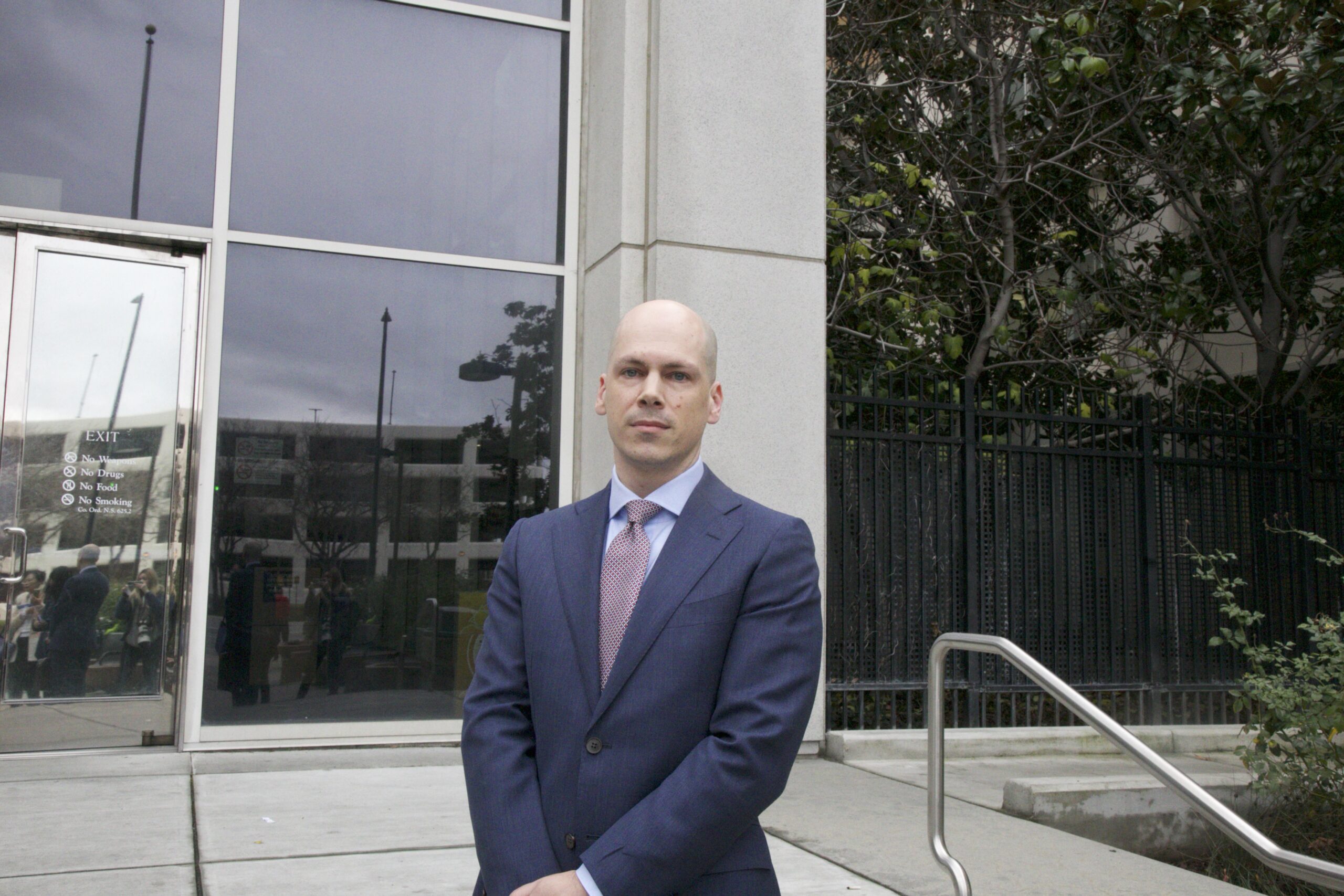
On Monday, October 19, Liren Chen, a former Google engineer accused of beating his wife to death, has entered pleas of “not guilty” and “not guilty by reason of insanity” at the same time. Nearly two years later, this shocking case in Silicon Valley resumed in court.
On Thursday, October 22, Michael Gadeberg, the prosecutor in charge of the case, informed Epoch Times that the next court hearing is scheduled for November 18. The court will appoint two independent physicians to assess whether Chen met the insanity standard under California law at the time of the crime.
The prosecution estimates that the evaluations by the court-appointed doctors can be completed within 6 to 12 months after their appointment. Once the evaluations are completed, the court will then reschedule the trial.
During Monday’s hearing, Chen’s defense attorney, Wesley Schroeder, officially entered the plea of “not guilty” and adopted “not guilty by reason of insanity” (NGRI) as a key defense strategy in the case.
The prosecution, in an email response to Epoch Times, stated that they cannot discuss specific evidence outside the courtroom or disclose how they will respond to the defense’s arguments.
According to California Penal Code Section 1026, these types of cases typically proceed to address other defenses first before considering the issue of insanity after a finding of guilt.
The prosecution informed Epoch Times that after the defendant formally contested his mental state at the time of the crime, they have the right to seek access to Chen’s past mental health records (if available) and select their own independent expert for evaluation. This evaluation will be separate from the assessments by the court-appointed physicians and the defense’s hired experts.
“The appointed doctor and ultimately the jury need to determine whether the defendant, at the time of the crime, (1) suffered from a mental disease or defect and (2) as a result of the disease or defect, was unable to understand or comprehend the nature and consequences of his behavior, or unable to understand or comprehend that his conduct was morally or legally wrong,” the prosecution said.
Under California Criminal Jury Instruction 3450, the defendant must prove that he suffered from a mental illness or defect at the time of the crime and as a result, was unable to understand the nature and significance of his actions, or unable to understand that his actions were wrong morally or legally.
In other words, the focus of this determination is on the defendant’s mental state at the time of the crime, not just whether the defendant currently has a mental illness. Even if it is proven that the defendant was ill at the time of the crime, it still needs to be determined whether the illness caused the lack of understanding as described above. It is the defendant’s burden to prove by a preponderance of the evidence, meaning it is more likely than not, that the defense is valid.
The prosecution stated that the defense experts have taken approximately two years to complete their preliminary report, and they anticipate that the evaluations to be conducted by the court next will be completed more quickly. However, the 6 to 12-month timeframe is an estimate provided by the prosecution and is not a confirmed deadline for completion or trial commencement.
The prosecution did not disclose the evaluation conclusions regarding Chen’s mental state at the time of the crime.
If the defendant is found guilty and the insanity defense is not successful, the court will impose a sentence according to the guilty verdict. Even if ultimately acquitted on the grounds of insanity, it does not automatically mean immediate release for the defendant.
Under California Penal Code Section 1026, the defendant could still be committed to a state mental hospital or another appropriate treatment facility, or receive outpatient treatment as required by law. The determination of whether the defendant can leave the facility, transition to a conditional release program, or completely lift the relevant restrictions will be made based on applicable laws and court procedures, not solely on the insanity acquittal.
Furthermore, an insanity acquittal does not automatically mean lifelong hospitalization.
California law sets forth regulations regarding the duration of commitment and extension procedures. The court must establish the maximum commitment period in accordance with the factors, such as the longest possible imprisonment term for the related crimes. If an extension beyond the maximum period stipulated in Penal Code Section 1026.5 is considered, it must go through a statutory process and conclude that the individual poses a significant danger to the physical safety of others due to mental illness, defect, or disability. Each extension made under this provision is for two years, and any further extensions require legal review.
As of the time of this article’s completion, there has been no comment from Wesley Schroeder, Chen’s defense attorney.