
The U.S. Army’s global military deployment in 2026 continues to adjust, with the Indo-Pacific region becoming a key focus of the U.S. military’s strategic layout. From establishing new multi-domain task forces and enhancing long-range precision strike capabilities, to expanding military cooperation with allies such as Japan and the Philippines, the U.S. military is gradually establishing a regional military system with greater mobility, dispersion, and sustained operational capability.
Observing from the deployment locations, weapon configurations, and operational concepts, addressing the military capabilities of the Chinese People’s Liberation Army (PLA) has become an important consideration in this series of adjustments.
According to a report from the U.S. Defense News website on October 19, 2026, the global combat deployment pattern of the U.S. Army in 2026 continues to evolve, highlighting the strategic positions of the Western Hemisphere and the Indo-Pacific region through the establishment of new command structures and unit restructuring. Meanwhile, the conflicts between the U.S. and Iran, as well as the Russia-Ukraine war, have placed additional constraints on U.S. forces’ troop adjustments in the Middle East and Europe.
This indicates that the U.S. is attempting to reallocate its forces between global military commitments and limited military resources, with the Indo-Pacific region being one of its priority areas for investment.
The strategic background of the U.S. military’s Indo-Pacific deployment is closely related to the recent development of the military capabilities of the Chinese Communist Party (CCP). The U.S. has long viewed the CCP as a major strategic competitor, particularly focusing on the CCP’s advancements in areas such as long-range missiles, maritime and air operations, electronic warfare, cyber warfare, and anti-access/area denial capabilities.
The U.S. military believes that these capabilities could weaken the traditional advantages of the U.S. military in the Western Pacific and increase the costs of American military intervention in the Taiwan Strait and surrounding areas. Therefore, the U.S. military is adjusting its force structure and forward deployment methods to maintain its military operational advantages in the Indo-Pacific region.
The First Island Chain is a crucial geographical point in this strategy. From the Japanese archipelago, the Ryukyu Islands, Taiwan to the Philippines, this region not only compresses the activities of CCP’s land, sea, and air forces entering and exiting the Western Pacific but also strengthens the U.S. military’s military deployment and wartime support capabilities in East Asia.
In recent years, the U.S. military has increased military cooperation with Japan and the Philippines, expanded joint exercises, improved base and logistics facilities, and promoted the forward deployment of long-range strike systems, aiming to enhance military response capabilities in the First Island Chain and its surrounding areas.
Among them, the strategic importance of the Philippines is increasingly prominent. The northern Philippines faces Taiwan’s southern end across the Bashi Strait, close to the Luzon Strait and vital sea routes in the South China Sea. Through defense cooperation with the Philippines, the U.S. military has gained more opportunities to use military facilities and has strengthened joint training and equipment deployment. The U.S. military’s “Typhon” medium-range missile system deployed in the Philippines, officially known as the “Mid-Range Capability” (MRC), is a critical equipment for the U.S. military to enhance its land-based long-range precision strike capability in the Indo-Pacific region.
On May 5, 2026, during the U.S.-Philippine joint military exercise “Shoulder to Shoulder,” the U.S. military conducted live-fire launches of Tomahawk cruise missiles using the “Typhon” system in the Philippines for the first time. The missiles were launched from the Tacloban Airport in Leyte Island, flying approximately 600 to 630 kilometers before hitting a designated target in the La Union region of Nueva Ecija Province. This exercise not only verified the practical launch capability of the “Typhon” system in the Philippines but also demonstrated that the U.S. military has begun testing the coordinated operations of land-based long-range firepower and ground forces.
From a strategic geographical standpoint, deploying Tomahawk missiles with a range of about 1,600 kilometers in the northern Philippines could theoretically cover some southeastern coastal areas of mainland China, as well as a wide area around the South China Sea and Taiwan. This enables the U.S. military, in the event of potential conflicts in the Taiwan Strait or the Western Pacific, to utilize mobile land-based missiles to provide additional long-range strike capabilities beyond aircraft carriers, fighter jets, and submarines.
For the CCP, such deployments mean a more complex military environment in its periphery. If the U.S. military can build a dispersed network of missiles, reconnaissance, and logistical support within the First Island Chain, it will help enhance its sustained operational capabilities in potential conflicts.
However, forward deployments also come with clear weaknesses. Military facilities in proximity to potential battlefields are more vulnerable to threats like long-range missiles, drones, and electronic warfare.
As a result, the U.S. military is placing greater emphasis on rapid troop transfers, dispersed deployments, and wartime supplies to avoid concentrating combat capabilities at a few fixed bases.
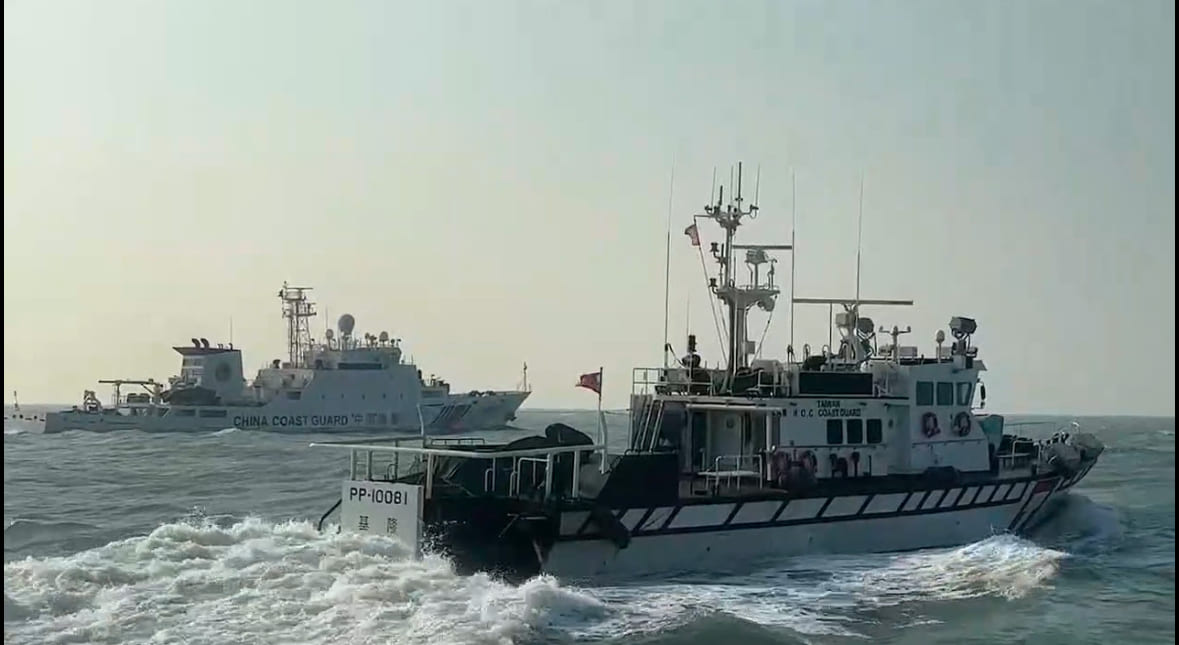
The Taiwan Strait is a potential conflict area that receives high attention in the U.S. military’s Indo-Pacific operational planning. The CCP continues to enhance its naval and air blockade, amphibious landing, long-range firepower, and joint combat capabilities against Taiwan, prompting the U.S. to strengthen regional military readiness accordingly.
The deployment of U.S. forces in Japan, the Philippines, and other regions in the Western Pacific aims, in part, to enhance response capabilities to crises in the Taiwan Strait and to influence Beijing’s strategic judgments through military deterrence.
Beyond geographical deployments, the U.S. Army’s operational model is also evolving. In 2026, the U.S. military further strengthens multi-domain combat capabilities in the Indo-Pacific direction, seeking to integrate traditional ground forces with long-range precision firepower, intelligence surveillance, electronic warfare, cyber operations, and unmanned systems.
These types of forces are no longer limited to ground combat but, through joint operations across branches, support naval and air forces and operate in a broader battlefield space.
It is worth noting that the U.S. military’s global deployment adjustments do not simply increase forces in the Indo-Pacific. Instead, resources are being reallocated between different strategic directions. Europe is still affected by the Russia-Ukraine war, and the situation in the Middle East also restricts the space for the U.S. military to reduce its military presence.
The U.S. aims to invest more military resources in the Indo-Pacific while maintaining the support capabilities for security commitments in other regions. This global force allocation pressure will continue to impact the progress and effectiveness of the U.S. military’s Indo-Pacific strategy.
Overall, the U.S. military’s Indo-Pacific deployment adjustments in 2026 are clearly targeted towards China. The focus lies not only in enhancing deterrence against the PLA but also in pre-establishing military strike capabilities for potential conflicts in the Taiwan Strait and the Western Pacific.
The expansion and strengthening of the U.S. Army’s forces in the Indo-Pacific region will be a long-term strategic move in the future.
It is foreseeable that as the U.S. military continues to strengthen its deployment in the First Island Chain and emphasizes remote strikes, multi-domain coordination, and sustained operational capabilities in the Indo-Pacific region, these changes will effectively counter the threats posed by the CCP to the regional security.