
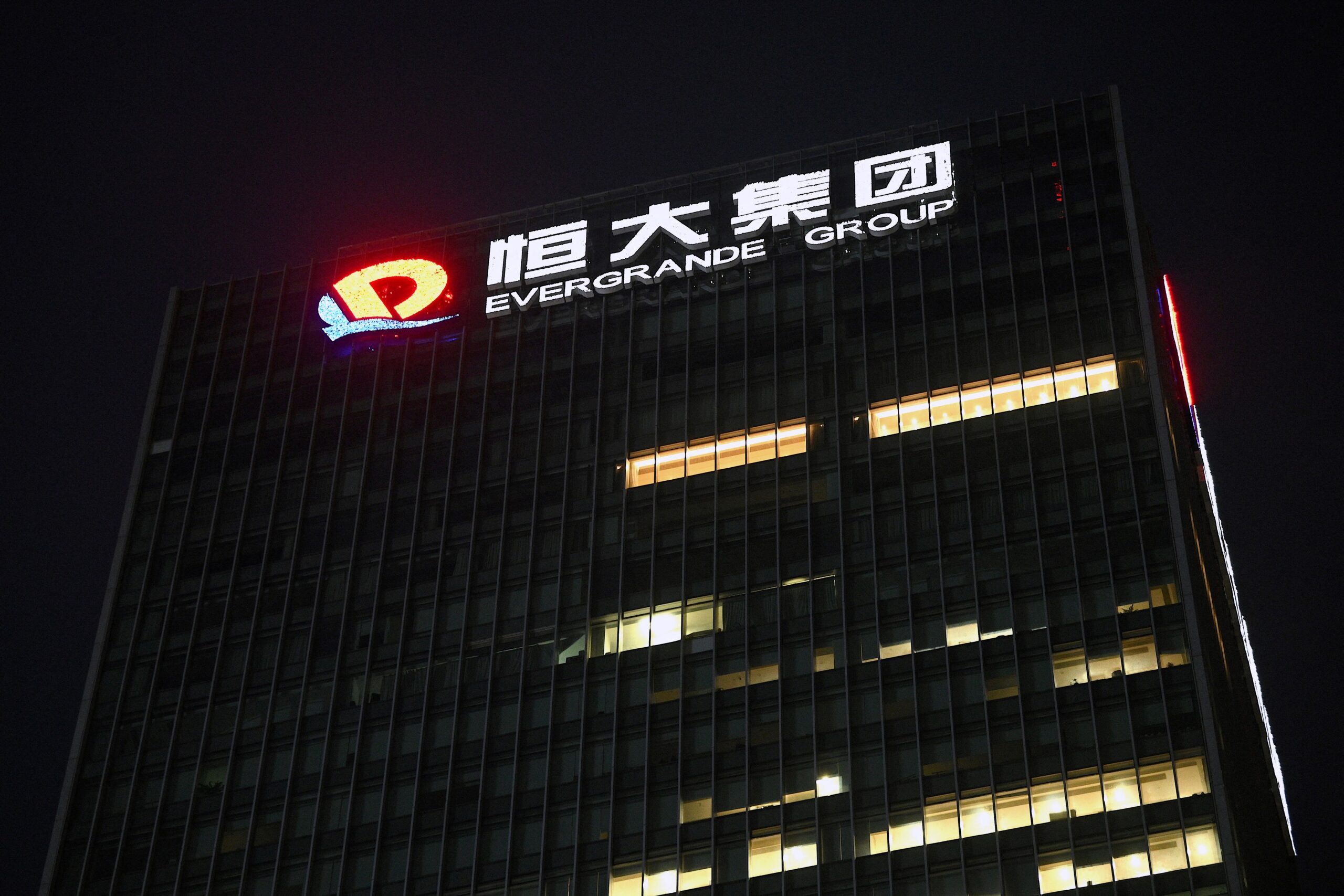
Yesterday, on October 22, the liquidators of China Evergrande Group disclosed that over the past two years of liquidation, they have managed to recover approximately 436 million US dollars through asset sales and debt collection, which is less than 1% of the total amount claimed by creditors. The liquidators stated that the likelihood of recovering funds from assets of mainland subsidiaries is extremely low.
In the second progress report released by the liquidators of China Evergrande Group on October 22, it was revealed that as of September 30, the group had realized assets totaling around 3.4 billion Hong Kong dollars, equivalent to 436.9 million US dollars. The liquidators have received 200 creditor claims amounting to about 46 billion US dollars.
Of this sum, China Evergrande has already recovered approximately 2.2 billion Hong Kong dollars (about 281 million US dollars), with the remaining 1.2 billion Hong Kong dollars (about 155 million US dollars) still being held in subsidiaries under the control of the liquidators.
Relevant creditor claims are still under review. The report stated that the current total claim amount is not final, as there may be more creditors submitting claims. The liquidators anticipate that the review process will take several more months, with the aim of making the first distribution of funds in the first half of 2027, although the actual repayment ratio cannot be estimated at this time.
Following the liquidation of Evergrande, the liquidators reported that their access to the group’s mainland accounting system was unexpectedly disabled without notification and has not been restored for direct access. Other obtained data also presents issues such as being scattered and incomplete, which has hindered the investigation and asset recovery process.
The report revealed that out of over 3,000 entities in mainland China, more than 650 have entered bankruptcy proceedings. Once assets of these related entities are sold, the proceeds must first repay their respective creditors; whether the parent company, as a shareholder, can receive funds depends on whether there will be any remaining after the debts are settled.
Therefore, the liquidators believe that the possibility of recovering funds through assets held by mainland subsidiaries is very low.
The recovered funds came from asset sales, debt collection, and other sources. Out of the 107 artworks obtained by the liquidators, 96 have been sold, generating a net income of about 28.8 million US dollars, which is lower than the purchase cost overall.
Additionally, the liquidators are currently selling a private jet. If the transaction goes smoothly, an estimated net income of around 12 million US dollars is expected in the fourth quarter.
The liquidators are also pursuing the recovery of 2 million US dollars in pre-paid research project funds from a university in the United States. The liquidation report did not disclose the name of the university. On October 22, the Financial Times cited sources confirming that the university in question is Harvard University.
Efforts to sell stakes in Evergrande Properties had faced setbacks as well. In March of this year, the liquidators identified a buyer and initiated negotiations, but the buyer withdrew in the later stages of the transaction. The sale process has since restarted, and negotiations with another potential buyer are ongoing, with an exclusive negotiation period until October 27, and the deal has not been finalized yet.
According to a report by Reuters on October 22, Evergrande’s debt default in 2021 was a landmark event in the Chinese real estate crisis. The High Court in Hong Kong ordered the company’s liquidation in January 2024, but the process of asset recovery has been progressing slowly.
In the mid-year financial report of 2023, Evergrande disclosed that as of the end of June that year, the group’s total liabilities amounted to 2.3882 trillion RMB (approximately 350 billion US dollars), with borrowings of around 624.8 billion RMB and debts payable for construction materials totaling about 596.2 billion RMB.
On August 20 of this year, the founder Xu Jiayin was sentenced to life imprisonment in the first instance, and his personal assets were confiscated.
American economist David Huang, in an interview with Epoch Times in the same month, commented that Xu Jiayin’s conviction deals with the issue of criminal responsibility, but it does not automatically complete the housing projects or ensure that creditors will recover their funds.
An analysis published by the American financial media outlet Barron’s on August 22 pointed out that Evergrande’s downfall does not signify the end of the Chinese real estate crisis. Falling house prices damage household assets and weigh down on consumption. Concerns about unfinished projects and continued declines in property prices have kept potential homebuyers cautious.