
The southern border of the United States is poised to reopen for importing livestock from Mexico, but federal officials announced on October 21st that there are new cases of screwworms reported in New Mexico and for the first time, in wild animals in Texas.
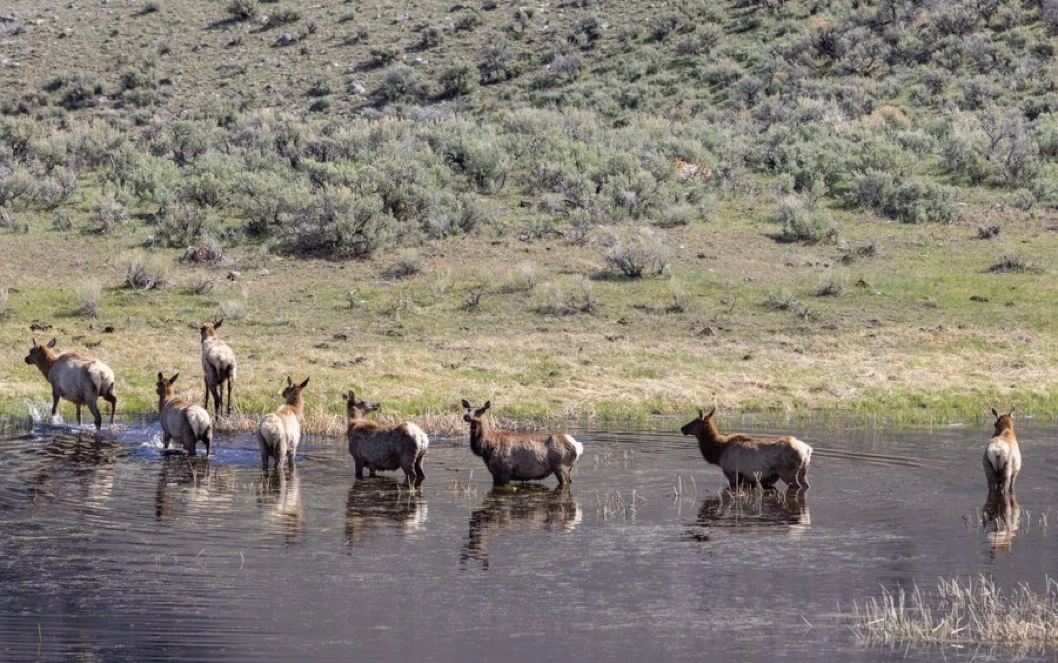
Wildlife officials have confirmed that a mule deer in Pecos County, Texas, tested positive for New World screwworm, marking the first time this disease has been found in the state. The infected deer has been hunted and reported to the United States Department of Agriculture (USDA).
The Texas Animal Health Commission (TAHC) is expected to adjust the state’s quarantine zone boundaries in response. Following the report, the USDA and the Texas Parks and Wildlife Department (TPWD) are conducting increased wildlife monitoring in the area.
In New Mexico, wildlife officials have confirmed the fifth case of screwworm infection, found on a beef cow in Otero County on Wednesday, October 21st.
On October 15th, screwworms were also detected in Grant County on a horse and a calf.
State and federal officials have expanded surveillance and trapping efforts around the affected areas to determine if screwworms have spread beyond the infected animals.
New Mexico currently has two quarantine zones where animals must undergo inspections and, if necessary, treatment before being transported within or out of the areas.
New Mexico Secretary of Agriculture, Jeff Witte, stated, “As the weather turns cooler, now is a critical time. Lower daytime temperatures can slow screwworm activity, but it does not eliminate the risk entirely.”
Grant County has a long history of cattle farming, with approximately 25,000 cattle estimated by the USDA. The state as a whole has about 1.2 million cattle.
U.S. Agriculture Secretary Brooke Rollins visited Columbus, New Mexico on Tuesday to prepare for the reopening of livestock crossing points starting on October 26th.
The southern livestock border ports were closed in May 2025, but with a sharp decrease in active screwworm cases, these ports are planning to reopen to livestock.
Rollins posted on X website that there have been only 56 confirmed cases in the U.S., significantly lower than the over 90,000 cases in Texas alone during the outbreak in 1972.
Rollins announced that the Santa Teresa port in New Mexico will resume horse imports on October 26th, following the resumption of cattle imports in September.
She mentioned that cattle trading will reopen in Columbus, New Mexico on October 26th, with each cattle undergo multiple inspections before entering the U.S.
In Nogales, Arizona, if conditions allow, cattle imports will be permitted starting on November 30th.
Screwworms primarily affect animals, causing wounds to become infected, emitting a foul odor. Without prompt treatment, animals may suffer extensive tissue necrosis, secondary infections, and ultimately death.
Humans traveling or camping in areas where screwworms are present, with open wounds or frequent contact with infected livestock, may also become infected. Symptoms in humans may include swelling, severe pain, tissue damage, and fever.
This information was reported in an article on the English Epoch Times website.