
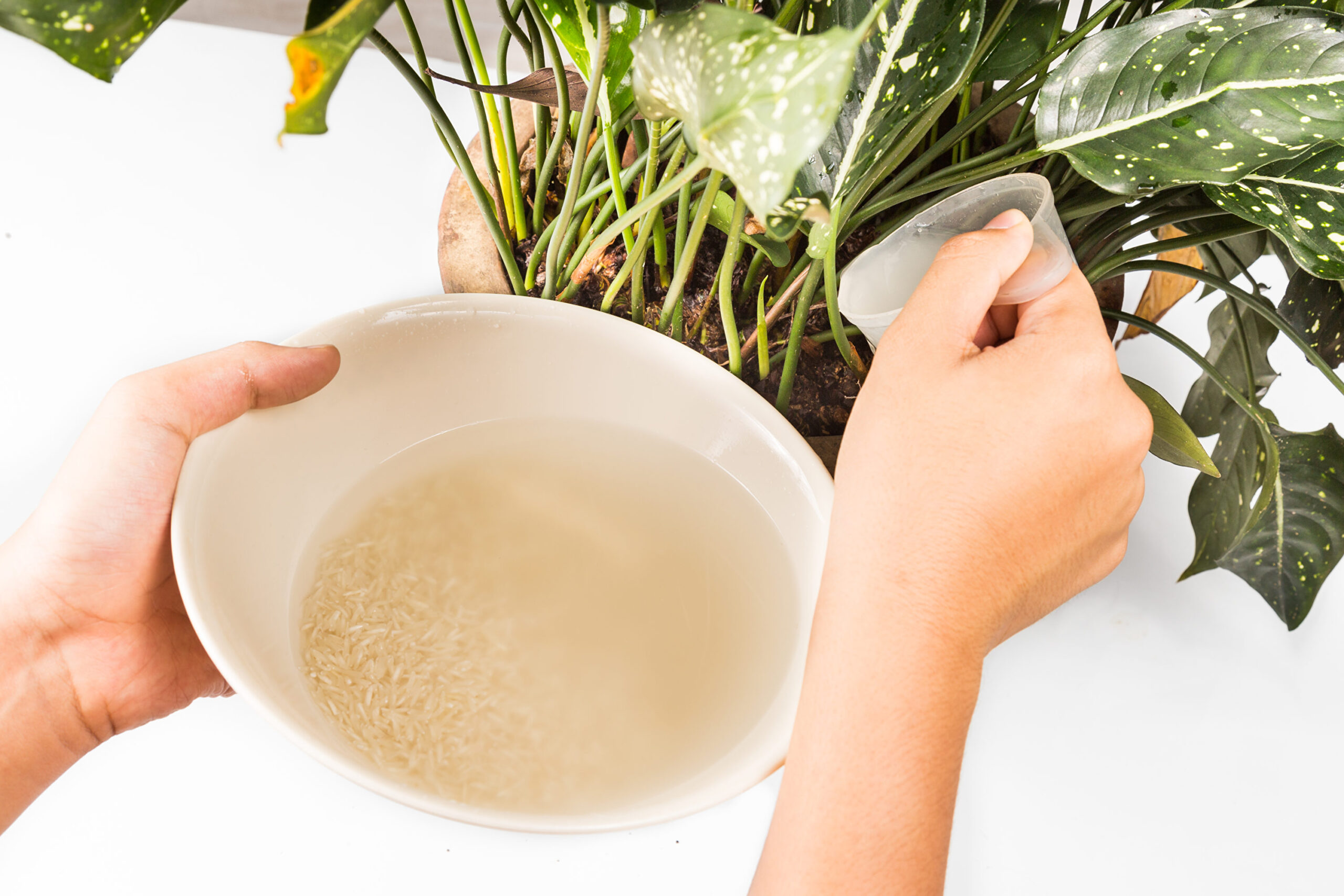
Before cooking rice, it’s common practice to wash the grains. But if you simply pour the water used to rinse the rice down the kitchen sink, you might be missing out. This seemingly cloudy water actually has multiple practical uses in daily life, including being rich in starch, vitamins, and minerals which can make it an excellent plant fertilizer. Scientific studies have shown that using rice water can promote healthy growth in eggplants, resulting in better fruit production.
According to a report by the household living website “House Digest,” rice water has historically been used for hair care, skincare, and even as a natural cleanser. It is also commonly utilized as a plant fertilizer.
Many plants, including eggplants, thrive when fertilized with rice water. A study published in 2023 in the “Indonesian Journal of Innovation Studies” confirmed that rice water can enhance the healthy growth of eggplants.
While rice water may not significantly increase eggplant yield or plant height, it does lead to heavier fruit harvest, more developed root systems, and increased leaf production.
Of course, rice water is not a miraculous solution for severely depleted soil, but it can certainly serve as a beneficial supplement to existing gardening practices.
If you wish to utilize this method, you can wash the rice using a strainer to collect the rice water before directly watering your plants. For enhanced effectiveness of rice water as fertilizer, additional steps can be taken.
According to a study published in the journal “Agronomy” in 2021, fermenting rice water can increase the content of various nutrients like nitrogen, potassium, and phosphorus.
The fermentation process is relatively simple. First, pour the collected rice water into a glass container and cover it with a cloth. Let the rice water sit at room temperature for about three days, then store it in the refrigerator until use. Unlike fresh rice water, fermented rice water should be diluted with an equal amount of water before application.
You might be tempted to water your eggplants with rice water daily, but it’s advisable to do so every few weeks during periods of vigorous plant growth.
It’s important to note that rice water is acidic. While eggplants prefer slightly acidic soil, overdoing it can lead to a deviation from the ideal pH range of 5.8 to 6.5. Furthermore, if you notice overly damp soil, unpleasant odors, or increased pest activity, it’s best to suspend the application of rice water.
According to a report by the website “Medical News Today,” rice water contains various nutrients found in rice grains, including amino acids, B vitamins, vitamin E, minerals, and antioxidants.
The historical practice of using rice water for hair care has gained popularity in recent years, with many people promoting this traditional method online.
Advocates of using rice water for hair care believe that it can smooth hair strands, increase shine, improve hair texture, and promote hair growth, potentially replacing commercial hair conditioners. The specific steps include:
– Wash hair with shampoo
– Rinse thoroughly with tap water
– Pour rice water onto hair
– Massage rice water into the hair and scalp
– Let it sit for a period (up to 20 minutes)
– Rinse hair thoroughly with warm tap water
In addition to hair care, rice water may also offer benefits for the skin. In a study published in 2018, researchers prepared a gel formulation containing 96% rice water. After participants applied this gel on their skin for 28 days, their skin’s moisture content increased by 10% compared to using a placebo.
However, experts have varying opinions on using rice water for hair care. Some believe that there is insufficient evidence to support the claim that rice water improves hair health. For some individuals, it may even worsen the quality of their hair.
Rhonda Farah, an associate professor of dermatology at the University of Minnesota Medical School, told “Health” magazine that rinsing hair with rice water could damage hair quality, especially for those with curly and fragile hair. Farah explained that rice water contains a high amount of starch that can draw moisture away from the hair, leading to increased brittleness and breakage. “It may actually be harmful because it is not formulated specifically for scalp care. It doesn’t effectively address the follicles or hair shaft.”
Nevertheless, rice water still carries skincare and beauty benefits, suitable for bathing, face washing, and moisturizing. It also serves as a cleanser, suitable for soaking wood ears or brightening clothes.
Ancient remedies like using rice water for various purposes continue to showcase their efficacy in modern times, creating a ripple effect of rediscovering traditional practices for contemporary applications.