
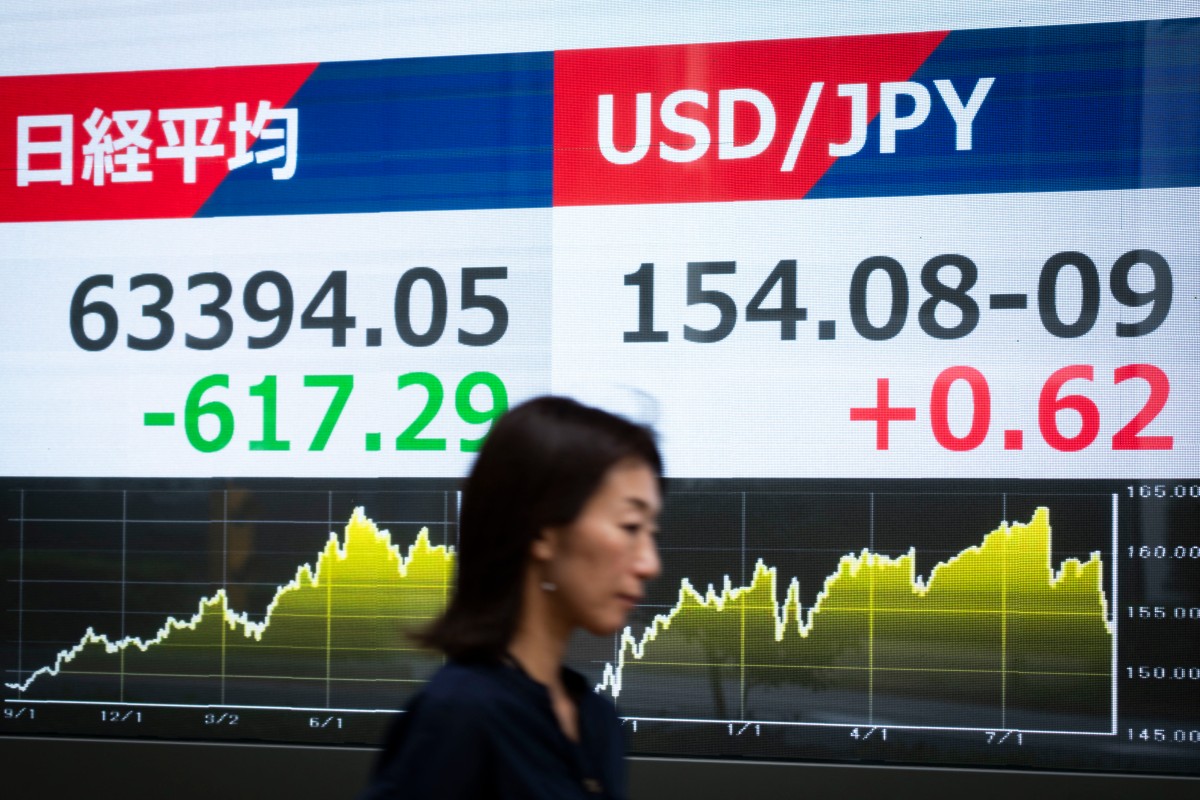
Asian stock markets dropped on Thursday (October 22) due to concerns over the investment prospects of artificial intelligence (AI) and the impact of geopolitical tensions in the Middle East. Despite strong earnings reports from US technology companies, they failed to boost market confidence. At the same time, tensions in the Middle East pushed up oil prices, with Brent crude nearing a five-month high.
In Asian markets, the MSCI Asia Pacific Index (excluding Japan) fell by 0.2%, heading for a fourth consecutive week of decline. The Nikkei 225 index in Japan initially rose in early trading but later dropped by 0.4%; South Korea’s composite stock price index fell by more than 1%. S&P 500 index futures in the US dropped by 0.4%.
US stocks closed higher in the previous trading day, led by the tech-heavy Nasdaq index. SpaceX, a space exploration technology company, became profitable for the first time as a publicly traded company. Meta exceeded market expectations in third-quarter revenue, and Super Micro Computer, an AI server manufacturer, also forecasted higher revenue and profit margin for the next quarter than market expectations.
However, concerns about the sustainability and profitability of AI investments persist in the market. Meta’s plan to issue non-voting Class C common stock has further raised market scrutiny on its AI spending arrangements.
International oil prices rose on October 22. Brent crude futures briefly rose above $110 per barrel, a gain of about 1.2%; US West Texas Intermediate (WTI) crude futures rose by about 1% to around $98 per barrel.
The rise in oil prices is primarily attributed to deteriorating security situations in the Middle East. Houthi rebels in Yemen have recently increased attacks on targets inside Saudi Arabia. On October 20, the Houthis attacked multiple targets within Saudi Arabia. On October 21, a civilian airport in Saudi Arabia’s Dammam was attacked, resulting in at least one fatality and eight injuries. Additionally, an oil field in Saudi Arabia was attacked by drones, resulting in two fatalities.
The US State Department subsequently ordered the partial evacuation of diplomatic personnel from Saudi Arabia and planned to evacuate family members of personnel from other US diplomatic missions in the Middle East to address regional security risks.
Market data also shows that there have been at least 18 attacks related to shipping in the past two weeks. Analysts from the London Stock Exchange Group (LSEG) warned that Iran’s actions against oil tankers have extended beyond the Strait of Hormuz to the Gulf of Oman, potentially jeopardizing ship-to-ship transfers of Persian Gulf crude oil and the region’s oil transport activities.
Data released by the US Energy Information Administration on October 21 showed that US crude oil inventories decreased by 3.06 million barrels to 412.5 million barrels, exceeding market expectations. However, distillate inventories, including diesel and heating oil, increased by 1.68 million barrels to 104.3 million barrels.
In the foreign exchange market, the US Dollar Index dropped to around 102.2, while the euro-to-dollar exchange rate was at 1.1231, remaining relatively stable. The yen-to-dollar exchange rate was at 158.125, with little change. Previously, Bank of Japan Deputy Governor Masahiro Amamiya signaled the possibility of further interest rate hikes.
The Korean won fluctuated around 1325.9 against the US dollar. The Bank of Korea announced on October 22 that it would keep the benchmark interest rate at 3.00%, following two consecutive rate hikes.
In other asset classes, gold prices slightly declined to $4115.5 per ounce; Bitcoin fell by 0.4% to $84,284.05, while Ethereum dropped by 0.6% to $2476.34.
(Translated from original source from Reuters)