
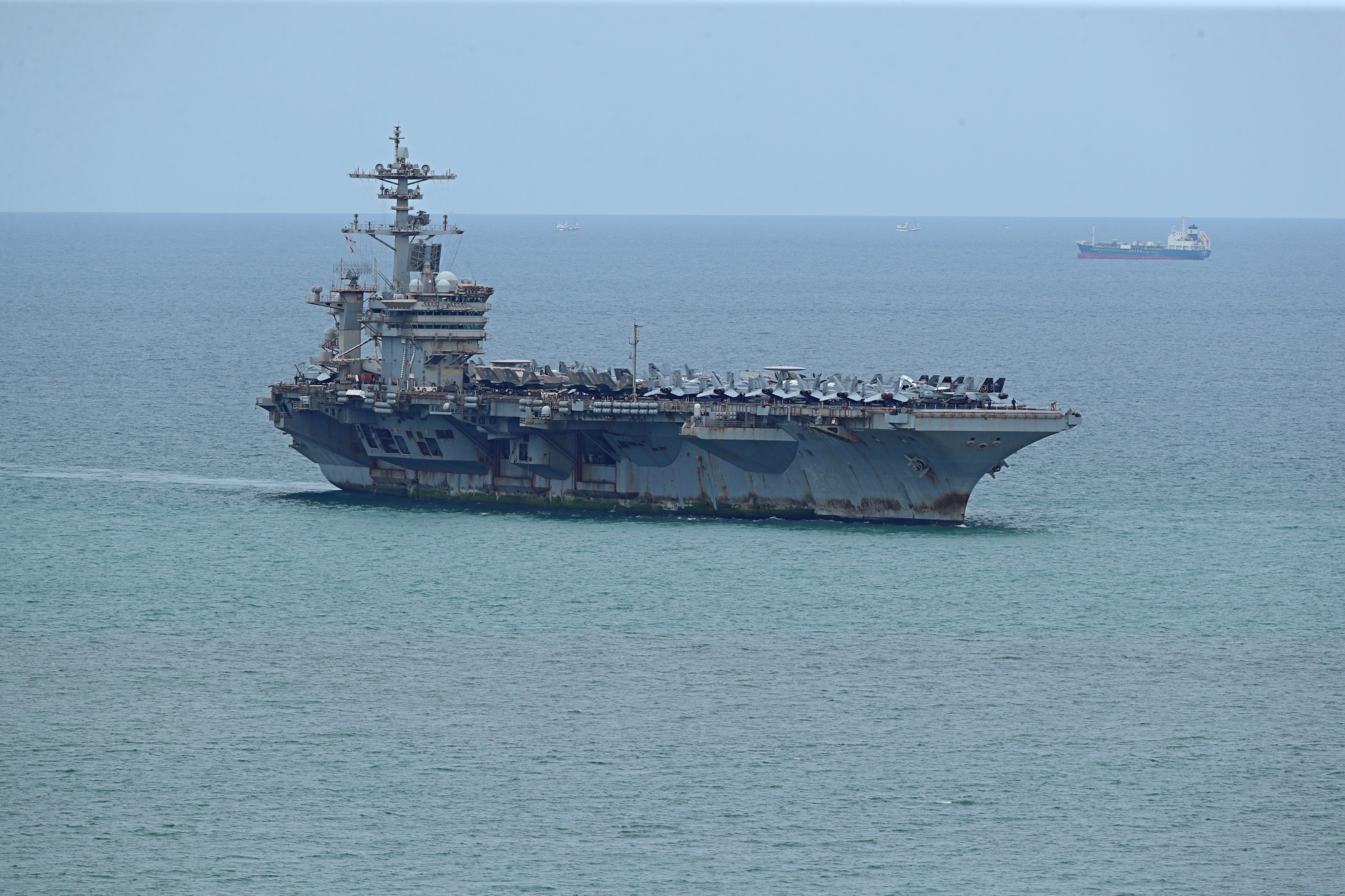
During the escalating military competition with the Chinese Communist Party, the US Navy is utilizing artificial intelligence (AI) driven robots to expedite maintenance processes on naval vessels, enabling them to swiftly return to sea operations. Gecko Robotics, a technology company specializing in robots, announced on Tuesday (October 20) that the Navy has increased its contract amount with the company to over four times the original value, reaching $300 million.
Six months ago, Gecko Robotics signed an initial contract worth $71 million with the US Navy. Gecko will be servicing 18 ships of the US Pacific Fleet, including destroyers, amphibious assault ships, and littoral combat ships.
The wall-climbing robots developed by Gecko can crawl along the ship’s hull, flight deck, ballast tanks, and other hard-to-reach areas to scan and detect corrosion, metal material loss, and other structural issues. The data collected from these inspections is then input into Gecko’s AI-driven Cantilever platform to assist maintenance planners in determining which areas require repair.
Traditionally, inspecting the condition of the steel beneath the non-skid deck coatings of naval vessels involved removing part of the coating to assess the severity of the problems. However, Gecko’s robot named “Komodo,” developed specifically for the US Navy, can directly inspect the steel beneath the deck coatings without having to remove the heavy protective layers. This robot can scan the ship’s deck, map out corrosion situations and material thickness distribution, enabling maintenance personnel to identify areas in need of repair before conducting more invasive operations.
With the Navy increasing the contract amount with Gecko to $300 million, the aim is to expand the application of Gecko’s robot inspection technology within the Navy fleet.
Although China currently possesses the largest number of naval vessels globally, the US Navy maintains superiority in fleet tonnage, aircraft carriers, and global maritime combat capabilities. Nevertheless, the US military is striving to reduce the maintenance time of its existing fleet to ensure more ships can be readily deployed for combat and missions.
Gecko’s CEO, Jake Loosararian, mentioned in an interview with Fox News Digital that, “While the US may not necessarily surpass China in shipbuilding speed, we can outsmart China in the maintenance, operation, and readiness of the vessels.”
Gecko stated that their robot inspection technology can save up to $8 million in maintenance costs per ship for the US Navy and can detect certain structural issues in ships 50 times faster than traditional inspection methods.
Loosararian cited an example where an initially estimated repair assessment area of approximately 1,200 square feet was reduced to around 300 square feet after the robot completed the inspection and provided more accurate information on the damage.
“This reduces the repair work and concentrates efforts on the areas that actually need repair,” said Loosararian. “This results in less maintenance required.”
The goal of robot inspection technology is to detect these issues early to prevent the need for additional repair work being discovered after the ship enters a significant maintenance period, prolonging its stay at the shipyard.
“It’s essentially like getting a CT scan that tells you exactly what’s wrong on the inside,” Loosararian explained.
He further emphasized, “The biggest benefit actually comes from speed. Speed is something that money can’t measure, especially for the current US Navy.”
Amid the expansion of the contract size, senior officials in the US Navy are working towards increasing the fleet’s readiness rate to 80%. For Gecko, the long-term goal is not only to identify current damages on ships but also to utilize years of accumulated inspection data to predict possible malfunctions in advance, thereby avoiding the need for extended maintenance periods for the ships.
Loosararian mentioned, “We can accurately predict where problems will occur before the equipment actually fails.” This enables maintenance planners to be prepared with manpower, materials, and repair solutions in advance when a ship docks or enters a shipyard, ensuring immediate repair work can commence.
With the shortage of skilled technical workers in the US shipbuilding industry, this technology also has the potential to reduce the need for shipyard workers to engage in dangerous and labor-intensive inspection work.
Loosararian stated that by combining robots with AI technology, the ultimate goal is to allow the limited maintenance workforce to spend more time on actual ship repairs rather than allocating significant time to identifying areas in need of maintenance.
He believes that as the Chinese fleet rapidly expands, for the US Navy, enhancing the efficiency and readiness of existing ships may be as crucial as constructing new vessels.