
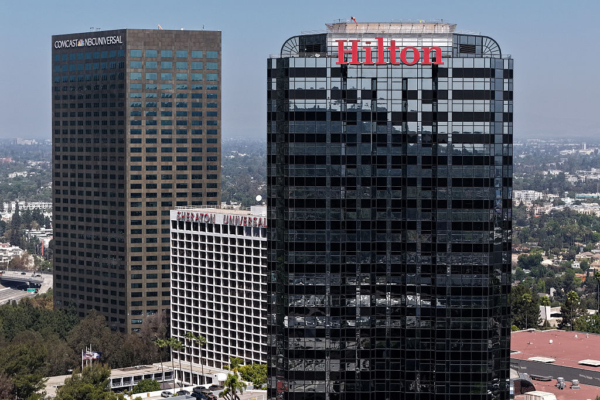
According to a report commissioned by the industry and released on Monday, during the 2026 FIFA World Cup, the hotel industry in Los Angeles failed to boost its performance as expected due to lower than anticipated occupancy demands. The industry believes that looking ahead to the 2028 Olympics, Los Angeles should learn from this experience and better prepare for such events.
The report by the Hotel Education and Research Organization under the Hotel Association of Los Angeles revealed that 72% of surveyed hotels stated that the World Cup had a negative impact on their financial prospects in 2026, with 48% describing the impact as “extremely negative.” Nearly three quarters of the hotels reported either no change or a reduction in staffing levels.
During the World Cup matches in June, hotel occupancy demands fell below expectations. Hotels in downtown Los Angeles saw a 6% decrease in occupancy rates compared to June 2024.
Despite an increase in room rates, the lower than expected occupancy rates limited overall hotel revenue and decreased the income collected by the city government through short-term accommodation taxes.
Participants in World Cup-related activities were mainly local residents rather than international tourists.
The accommodation needs of tourists displaced the higher-spending hotel clientele, leading business travelers and corporate events to seek alternative cities and secondary markets, causing Los Angeles hotels to lose these customers.
Jackie Fillia, President and CEO of the Hotel Association of Los Angeles, stated in a press release, “Predictions about the number of World Cup visitors were based on optimistic assumptions, expecting international audiences to be eager to travel and stay in cities like Los Angeles. When these predictions fell short, hotels and their staff ultimately paid the price.”
The report noted that actual demand was lower than expected, and shortly before the start of the matches, FIFA canceled reservations for thousands of room nights in downtown Los Angeles, making it difficult for hotels to accurately forecast income, manage staffing schedules, and increasing operational investment risks.
Additionally, discounted offerings from short-term rental accommodations attracted guests who might have otherwise stayed in hotels. The report found that overall performance across all Los Angeles hotels mostly lagged compared to the representative summer baseline of 2024; however, during the same period, demand for short-term rental accommodations increased by 23%, with a revenue increase of 21%.
Fillia added, “Looking ahead to the 2028 Olympics, Los Angeles can learn from these results by taking measures to protect hotels and their staff, including offering incentives to attract non-Olympic related group travel and conference activities, even when sports events are ongoing; making efforts to attract international tourists, and avoiding uncontrolled expansion of the short-term rental market.”
The “HERO Post-World Cup Hotel Survey” conducted by the Hotel Education and Research Organization surveyed 210 hoteliers in Los Angeles from July 23 to August 7. Approximately 58 hotels responded to at least one question, with 47 completing the entire survey, resulting in a response rate of about 22%. This extensive 17-page report calculated all percentages based on the participating hotels that answered specific questions.
This independent analysis was conducted by the travel data analysis company ROVE.