
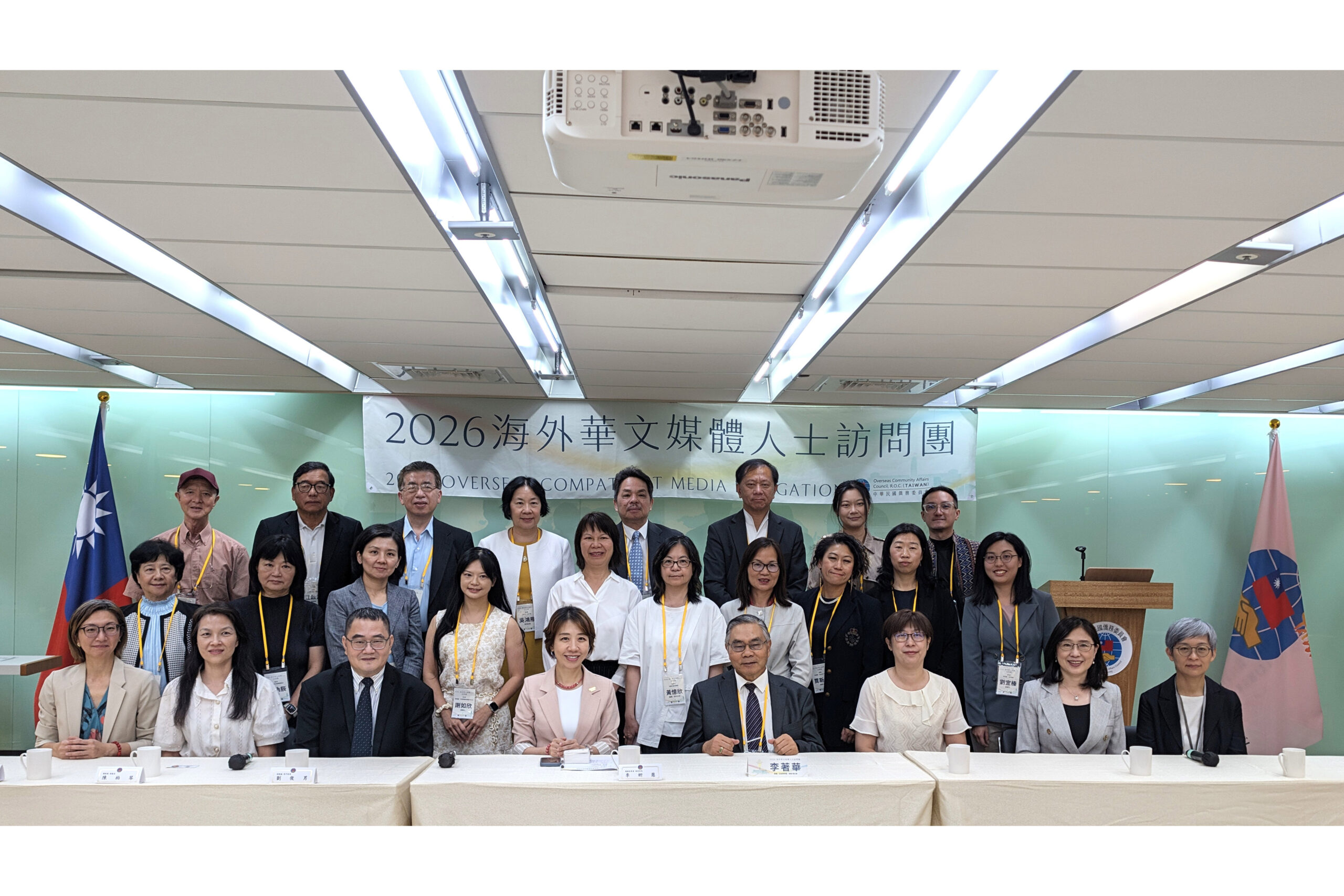
In the golden October, flying from the United States to Taiwan, the reporters participated in the “Visiting Group of Overseas Chinese Media Personnel” organized by the Overseas Community Affairs Council of the Republic of China. The seven-day itinerary arranged by the Overseas Community Affairs Council left a deep impression. Through visits and exchanges, not only did they witness the development of Taiwan’s high-tech industry, but they also gained a deeper understanding of the other driving force behind these industries: practical technical vocational education, close industry-academia cooperation, and future-oriented talent cultivation.
In today’s increasingly fierce global technological competition and rapid changes brought by artificial intelligence (AI) to industries, Taiwan’s technological strength does not only come from large corporations but also relies on many small and medium-sized enterprises focusing on technical research and development, as well as technological universities dedicated to cultivating practical talents. During this visit, Global Power Technology’s subsidiary, Big x Reality company, as well as Longhua University of Science and Technology, showcased Taiwan’s technological industry innovation and resilience from the perspectives of corporate innovation and talent development.
The former integrates extended reality (XR) with AI to develop simulation training systems for high-risk workers such as military, police, and firefighters; the latter focuses on semiconductors, electronic assembly, and industry-academia cooperation, allowing students to have hands-on experience with industrial equipment and real processes during their school years. The common feature between the two is their dedication to transforming innovation into solutions for real problems, serving the industry and society.
During the visit to Global Power Technology, the company’s business development manager, Chen Yihong, was interviewed by the reporters. He introduced that Big x Reality mainly develops XR simulation training systems for the military, police, firefighters, and other units that need to carry out high-risk tasks. Through virtual reality (VR), augmented reality (AR), and mixed reality (MR) technologies, users can repeatedly practice in simulated environments, learning how to assess situations, handle emergencies, and make decisions.
Traditional live ammunition training requires arranging venues, transportation, manpower, and ammunition, often consuming most of the day from departure to completing the training, with very limited actual practice time. Chen Yihong explained that XR training can be conducted in a regular classroom or dedicated space, allowing trainees to practice more frequently and train their mobility, observation, judgment, and tactical response abilities in a simulated environment.
The value of such systems not only lies in saving time and costs but also in providing an environment for repetitive practice and reducing the risks of actual operations. For example, police officers can practice identifying dangers, communicating with the public, and handling emergencies in virtual scenarios such as nightclubs, subway stations, and high-speed rail stations; firefighters can simulate entering a fire scene, familiarizing themselves with potential hazards like toxic gases and building collapses.
He mentioned that the company’s related systems have been applied in police stations in 14 counties and cities in Taiwan. These trainings give personnel the opportunity to familiarize themselves with different scenarios before they are on duty, allowing them to repeatedly adjust their responses in a safe environment.
The biggest difference between XR and traditional videos is that users can not only watch the scenes but also enter them, move around, interact with the environment, and make choices based on the scenarios. For example, trainees can approach the door, observe the surrounding environment, or make different choices according to the situations. Training thus becomes closer to real work, rather than passive information absorption.
With the development of AI technology, Big x Reality is also introducing AI into the training systems. Chen Yihong mentioned that the system can record the trainees’ operational processes, assist instructors in analyzing their sightlines, observation ranges, movement methods, tactical choices, identify areas for improvement, and arrange targeted exercises.
The company’s products cover military training, including individual combat tactics, drones, weapon and vehicle simulation systems. Some equipment is equipped with dynamic platforms to simulate vehicle movements, enhancing the sense of reality in training.
Chen Yihong emphasized that XR is not meant to completely replace actual training but serve as a supplementary tool. Virtual environments help increase practice frequency, reduce training risks, while real operational skills still need to be verified through appropriate field training.
Since starting the development of XR simulation training applications in 2017, the company has achieved multiple successes, having been awarded the first XR EXPRESS TW of the National Development Council, “XR Star Golden Point Award”, the sixth “Medium-sized Enterprise – Potential Medium-sized Enterprise Award”, and the eighteenth “National Brand Yushan Award – Outstanding Enterprise Award”, demonstrating its research strength and market competitiveness in the field of XR simulation training.
Currently, the company is actively expanding into overseas markets, having entered the Japanese market and continuing to explore Southeast Asian markets while planning to enter North America.
Enterprises are the practitioners of technological innovation, while educational institutions are vital bases for talent cultivation. Longhua University of Science and Technology, founded in 1969, has been running for over half a century and in recent years has focused on practical education, industry-academia cooperation, and semiconductor talent cultivation.
The current president of Longhua University of Science and Technology is Dr. Ge Zixiang. His concept of running the school called “TwoNosTwoYeses” means not explicitly pursuing international university rankings and not aiming to cultivate Nobel Prize winners; being practical and integrating learning with application.
He emphasized that technical vocational education should have a clear position. For schools that focus on practical training, besides imparting knowledge, it is more critical to equip students with the professional skills, operational capabilities, and problem-solving capabilities required to enter the workplace.
Longhua University of Science and Technology currently has about 11,000 students, with approximately 3,100 international students, mainly from Vietnam and other Southeast Asian regions. The school is located at the intersection of Taoyuan and New Taipei City, close to electronic, manufacturing, and related technology industries, providing geographic advantages for connecting businesses and teaching.
The school has teaching and practical fields in semiconductor processes, electronic assembly, printed circuit boards (PCB), 5G, and high-speed transmission, allowing students not only to understand technology from textbooks but also have practical exposure to equipment, process understanding, and operational practice.
Longhua University of Science and Technology’s Semiconductor Manufacturing Center, known in English as Longhua Semiconductor Manufacturing Center, abbreviated as LSMC, is an important platform for promoting practical education.
The semiconductor industry involves not just chip design but also wafer processing, pattern formation, packaging, testing, as well as subsequent integration of electronic modules and circuit boards. Through relevant equipment and teaching arrangements, the school enables students to understand the processes and connections of each step gradually.
Ge Zixiang stated that the school hopes students not only understand the theory of a single process but also grasp the entire flow, gradually developing practical operational abilities. Starting from materials and processes, through pattern formation, packaging, and testing, students can acquaint themselves with the entire production process of wafers through hands-on practice.
In addition to semiconductor manufacturing, the school also offers resources in electronic assembly, materials analysis, PCBs, 5G antenna design and testing, high-speed transmission, and other related fields. These areas are closely related to Taiwan’s electronic industry supply chain, encompassing talents in electronics, electrical engineering, materials, information, and process integration.
Through industry-academia cooperation, the school enables teachers and companies to jointly explore technical issues. For students, this means that learning is not just about completing assignments or exams but also considering how to apply what they have learned in real situations.
For the technology industry, recruiting talent with practical capabilities is a key factor in maintaining competitiveness; for students, accumulating practical experience before graduation helps enhance employability and lay the foundation for future career development.
Longhua University of Science and Technology actively promotes corporate internships, professional competitions, and industry-academia cooperation, aiming for students to engage with the workplace during their studies. The school stated that TSMC has visited the campus to understand the relevant teaching equipment and recruited interns on the campus. The school mentioned that TSMC provides up to 60 work-study or internship opportunities each year.
Furthermore, the school collaborates with printed circuit board (PCB) companies, closely integrating talent cultivation with industry demands, assisting students in smoothly transitioning to the workplace through internships, allowances, and job placements.
The value of industry-academia cooperation lies not only in the number of internship spots provided by companies but also in whether students can truly learn skills and whether the school can adjust the curriculum according to industry changes. With semiconductor processes, electronic assembly, and AI applications continuously evolving, educational institutions need to continually update equipment, curricula, and practical content to avoid the disconnect between teaching and workplace requirements.
Through this visit, it was discovered that the foundation of Taiwan’s technological development lies not only in well-known large chip companies but also in small and medium-sized technology innovative companies and technical vocational schools. The technological innovation of enterprises and talent cultivation of schools support each other, jointly addressing the challenges faced by Taiwan’s industries: how to continuously enhance independent research and development capabilities and cultivate the talents required by the industry in an environment of rapid technological development and increasing international competition.
“The Protecting Country’s Mountains” serves as a metaphorical description of Taiwan’s technological industrial ecosystem, highlighting the importance of various levels of support to maintain the industry’s long-term competitiveness. While large enterprises are crucial, niche market-focused technology companies that develop distinctive products with professional technologies, as well as technical vocational schools dedicated to cultivating practical talents, are equally indispensable.
This might be the key reason why Taiwan’s technology industry can continue to develop, maintain resilience, and constantly strengthen the “Protecting Country’s Mountains”.