
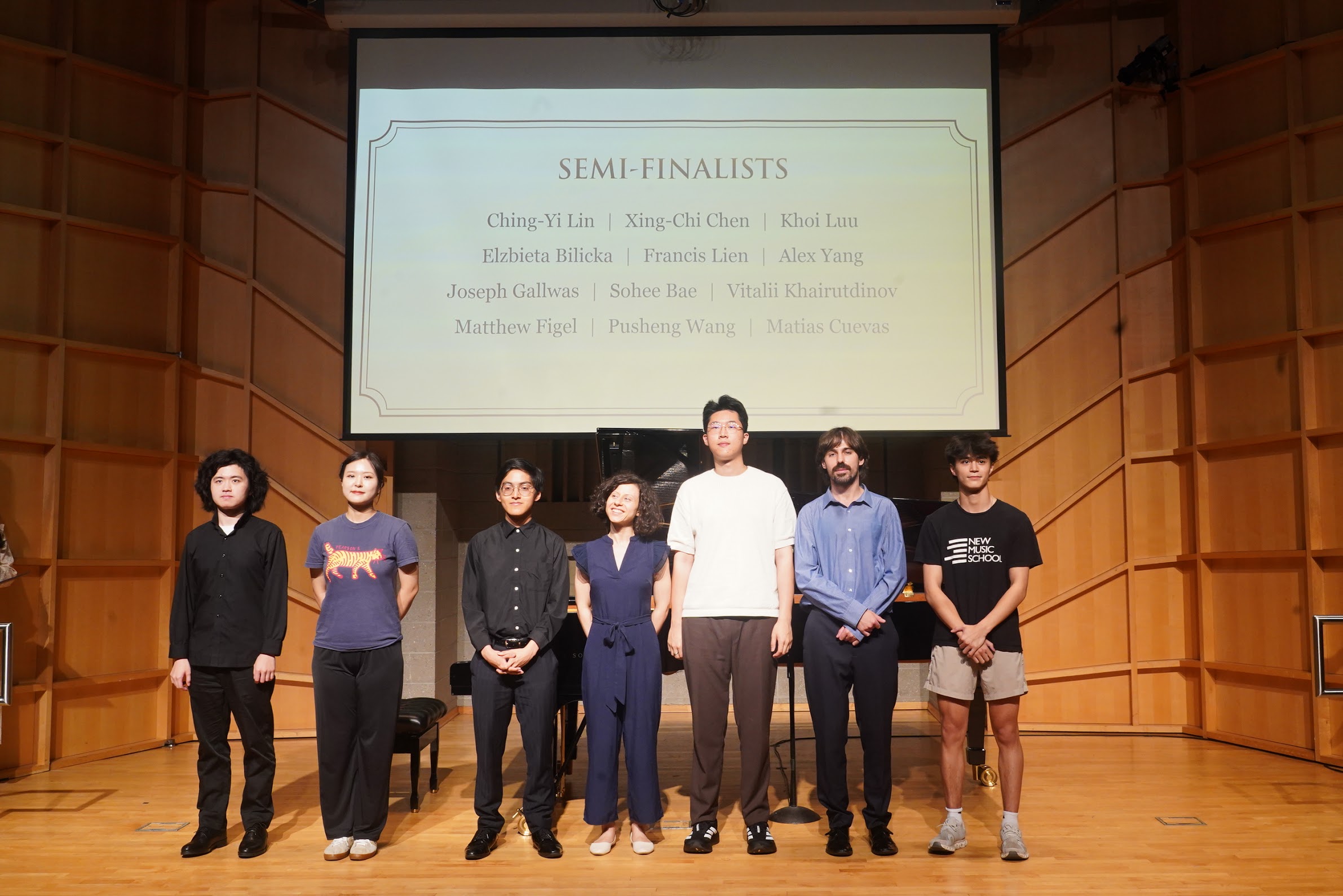
On September 3, the preliminary round of the 8th “New Tang Dynasty International Piano Competition” entered its second day at the Engelman Recital Hall at Baruch College in Manhattan, New York. Nine contestants participated in the competition that day. After two days of competition, a total of 12 contestants from 8 countries and regions emerged victorious and will advance to the next round on September 4.
The contestants moving on to the next round are:
– Joseph Gallwas (USA)
– Xing-Chi Chen (Taiwan)
– Alex Yang (Canada)
– Pusheng Wang (China)
– Matias Cuevas (USA)
– Khoi Luu (Vietnam)
– Sohee Bae (South Korea)
– Vitalii Khairutdinov (Russia)
– Francis Lien (Taiwan)
– Elzbieta Bilicka (Poland)
– Ching-Yi Lin (Taiwan)
– Matthew Figel (USA)
The contestants who participated in the preliminary round gained many insights. They expressed that this competition was extremely challenging. From deciding to participate after learning about the competition, to preparing, arranging schedules, and finally arriving at the venue for the competition, they went through various tests. Some felt a calling and a sense of mission. They said that being able to participate in such a competition was deeply inspiring.
One of the former contestants from Taiwan who currently teaches in the USA, Lin Ching-Yi, returned to the stage of the New Tang Dynasty International Piano Competition. His greatest feeling was not nervousness, but being “filled with energy,” making him want to play one piece after another.
Lin Ching-Yi believes that once a performer steps onto the stage, they must not merely “think” but truly “do.” After repeated practice and mastering various techniques required for performance, the most important thing during the live performance is to follow one’s inner self. As conveyors of music, the performer’s personality and traits are inherent parts of the music itself.
For Lin Ching-Yi, the essence of the competition lies in the transmission of classical music. He has a profound understanding of the idea that classical music roots from people praising God through music and expressing love and respect to others. Music is not just “for oneself,” but it involves dedication and connection. Such spirit is challenging to entirely replicate in today’s world.
Participant Fernando Ayhllon Flores from Mexico didn’t initially plan to take part in the New Tang Dynasty International Piano Competition. Two months ago, he first heard about the competition and was deeply moved by New Tang Dynasty’s emphasis on preserving the tradition of classical music, pursuing pure, good, and beautiful artistic ideals. He felt like he was “called by a higher power,” so despite challenges with time, finances, and life arrangements, he decided to come to New York, saying, “Here I am.”
For him, the real challenge of the piano competition is not just facing the judges but conquering oneself on the stage. Throughout the journey, insecurities, fear, and one’s beliefs and strength constantly clashed. He stated, “The most important thing in playing is not hitting the right notes but honestly surrendering oneself to the music,” adding, “With all the love, I make them (the judges) see: this is who I am at this moment, I’m here to give my all.”
Through this competition, his sense of mission regarding classical music became clearer: to learn and remain humble. In his eyes, classical music is an infinite world, and musicians should always stay open and continue to explore the beauty and wonders within it.
Ruan Lin-Jun from National Tsing Hua University in Taiwan believes that the New Tang Dynasty International Piano Competition’s emphasis on classical music plays a bridging role in itself. By focusing on works from the classical period, the competition allows more people to rediscover the importance of classical music. As performers delve deeper into composers’ lives, creative backgrounds, and beliefs, they can uncover a deeper layer of meaning behind the music.
She mentioned that many classical music composers themselves had profound faith, such as Bach, Liszt, and Beethoven. “They composed music not just for art’s sake, but some pieces were dedicated to glorifying God, offering their best works to Him.” Therefore, revisiting and studying these works today allows people not only to reconnect with classical music but also potentially understand the relationship between music and faith through the composer’s creations and life.