
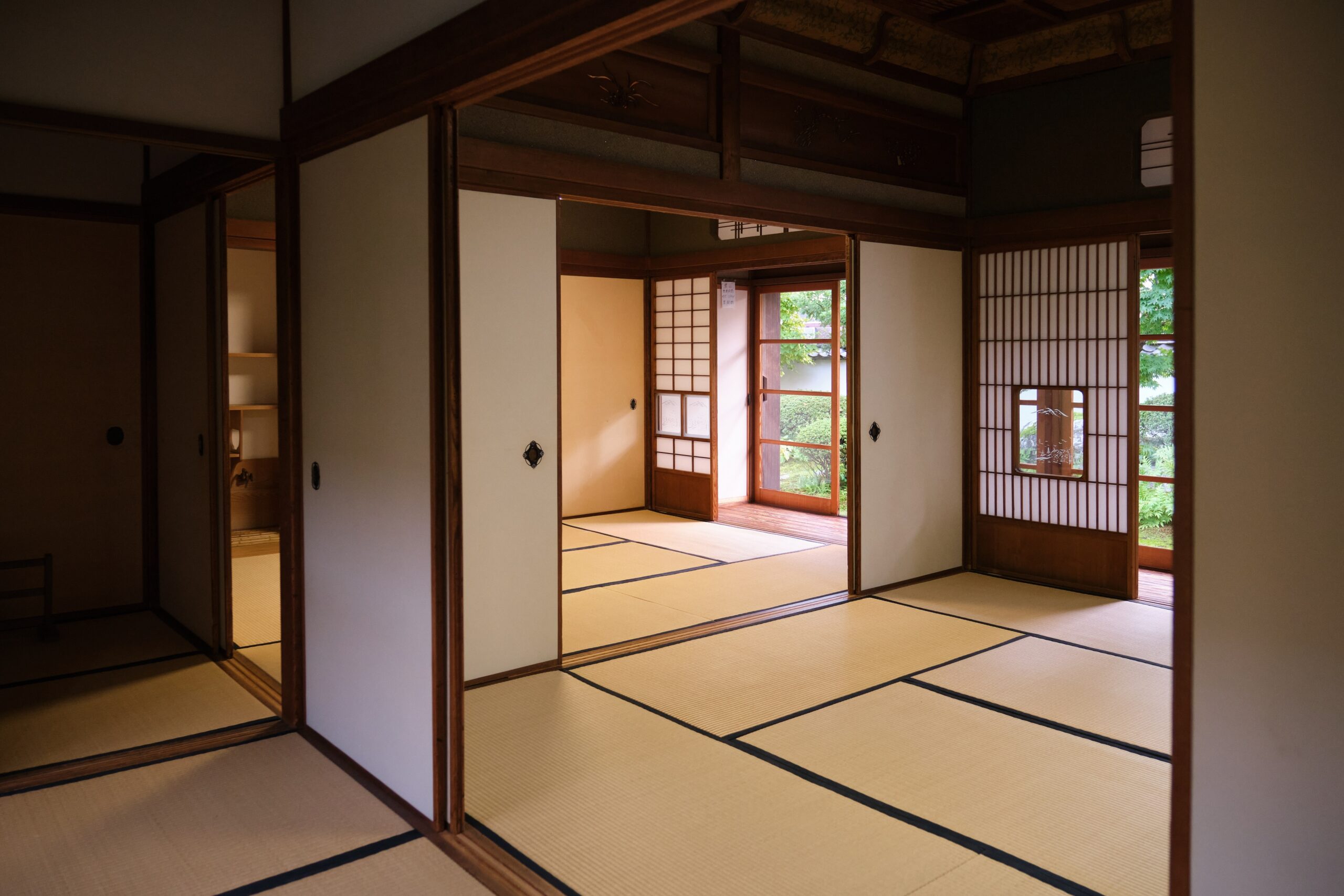
Traditionally, tatami has been an essential flooring material in Japanese-style rooms. Japanese people have been using this woven straw mat for over a thousand years. Even in modern society, tatami remains practical and continues to be used, but its materials have gradually modernized.
According to the Japan Living Guide website, the history of tatami can be traced back to the 8th century AD, at least existing in Japan during the Nara period. Initially, it was used only for the sleeping of nobles and the upper class. Around the 16th century, its usage evolved beyond just sleeping or sitting, and it began to be used as the material for covering the entire floor of a room.
During that era, tatami was mainly used by the upper class, and Japanese architectural styles were evolving into the traditional housing style known today. By the 17th century, tatami was widely used across all social classes, and laying tatami floors became a standard feature in most houses.
The traditional method of making tatami involves weaving a surface layer with rush grass (also known as igusa) to wrap around the inner layer stacked with rice straw cores. To maintain cleanliness, the edges of tatami are usually decorated with fabric trim. Newly made tatami emits a rich green color and an herbal fragrance, which fades over time.
With the changing times, the rice straw cores inside tatami have gradually been replaced by modern materials such as wood chips or polystyrene foam. Due to the susceptibility of tatami to damage and stains that are difficult to remove, as well as the need for regular replacement, the demand for these straw mats has decreased. However, many households still retain at least one tatami room at home.
In addition to being used as bedding, tatami is also commonly used as a flooring material for Japanese martial arts. Due to its impact resistance, tatami is used as a cushioning material for disciplines like karate, judo, and aikido. Stepping onto tatami is like a ritual entering a sacred martial arts arena.
As tatami has long been the main flooring material, it has become a standard unit for measuring room area. Japanese do not use meters or feet but use “jō” (the number of tatami mats) as the basis for calculating room area.
This measurement method is widely adopted by real estate agents and architects, even in rooms without tatami flooring, the area is often indicated in this way. For example, a “4.5 jō room” means that the space can accommodate 4.5 tatami mats.
However, the specific dimensions of tatami mats vary by region and do not have a unified national standard. For example, in Tokyo, the dimensions of tatami mats are typically 0.88 meters × 1.76 meters, while in the Kyoto region, they are 0.95 meters × 1.91 meters. Most tatami mats have a thickness of 5 or 6 centimeters.
As Japanese society becomes increasingly Westernized, residences with Western-style layouts and designs, especially wooden floors, are becoming more common. Designing a home with at least one tatami room cleverly blends traditional and modern, Japanese and Western styles, allowing people to enjoy the benefits of both. This type of room is called a “washitsu” in Japanese.
For many people, laying tatami is an excellent choice as it creates a tranquil home atmosphere, allowing people to comfortably sit and lie on it, with its soft and safe texture, making it ideal for children to play on. Nowadays, there are tatami mats designed specifically for placing on hardwood floors, allowing people to easily transform any room into a tatami room.
The maintenance of tatami differs from hardwood floors or carpeted floors. Their lifespan is usually 5 to 6 years. When signs of wear appear, they should be replaced or, in some cases, flipped for continued use.
Due to the rush grass material in tatami being prone to dirt, liquid, and other particles, combined with its sensitivity to humidity, long-term exposure to damp environments can lead to mold growth, making regular cleaning essential.
When cleaning tatami, a vacuum cleaner with a dedicated nozzle or a special tatami mop can be used. Wiping with a dry cloth is also an effective way to maintain its good condition.
After being passed down for centuries, tatami has become an indispensable part of Japanese culture. If you travel to Japan, you can see tatami mats in various places such as private homes, tea houses, restaurants, and traditional Japanese inns, where you can experience their soothing aroma, natural texture, and feel.