
A Chinese student studying in Canada has been arrested in the United States. The Federal Bureau of Investigation (FBI) stated that Weiheng Zeng, an undergraduate student at the University of Waterloo, admitted to being instructed by a contact from China to take photos of specific airplanes and tail numbers in exchange for payment. Currently, Zeng is charged with one count of making false statements to federal officials, and the allegations of potential espionage activities have yet to be determined by the court.
According to a report by the Canadian Broadcasting Corporation (CBC) on September 2, Zeng, born in 2004, resides in Cambridge, Ontario. He was arrested on August 23 when he drove through the Ambassador Bridge into the United States in Michigan. On September 1, he appeared in a federal court in Detroit and agreed to remain in custody pending trial.
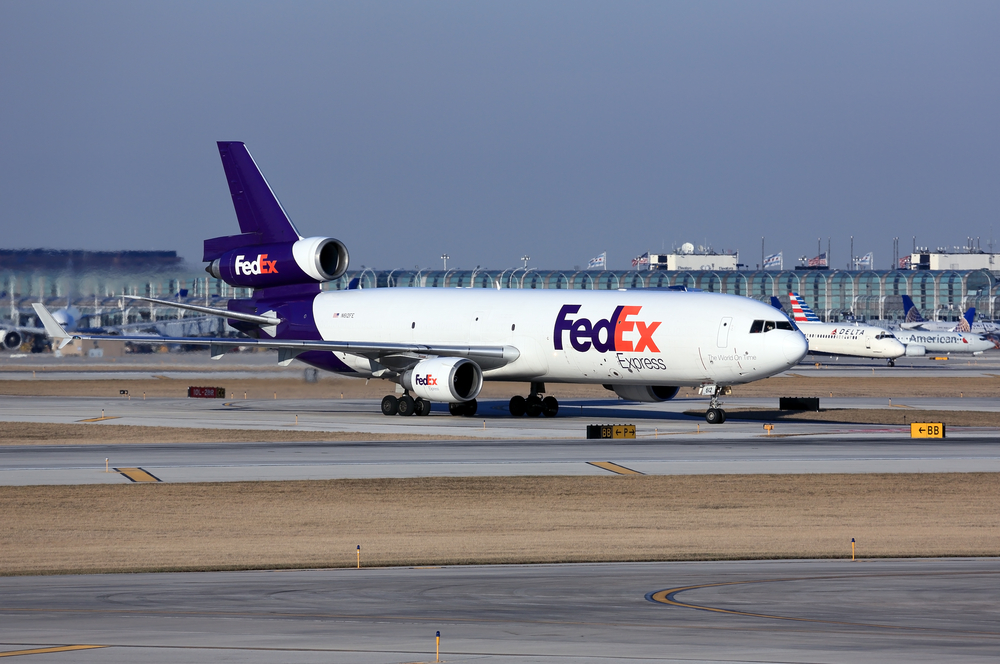
The criminal complaint submitted by the FBI to the court reveals that the investigation began on April 21 this year. On that day, at a Federal Express (FedEx) employee parking lot at Chicago O’Hare International Airport, staff noticed a man taking photos nearby.
Surveillance footage showed the man taking photos of airplanes and other areas of the airport parking lot, climbing onto a forklift to take pictures, and attempting to open locked FedEx delivery trucks and containers. The complaint stated that Zeng later admitted that climbing onto the forklift was “to find a better shooting angle.”
Investigators later linked the man to Zeng through a dark blue Chrysler Town & Country minivan with Ontario license plates found at the scene.
Four months later, Zeng drove the same vehicle back into the United States. He told customs officers that he was heading to Chicago and would return to Canada the same day but was then subjected to further examination. According to the complaint reported by the CBC, his statements during multiple interrogations were inconsistent.
When border officials checked Zeng’s phone, they found numerous photos of military aircraft. Initially, he claimed to be an aviation enthusiast, stating that the photos were related to tracking airplanes and that some information came from aviation tracking websites.
The FBI agents also mentioned in the complaint that Zeng had photos on his phone of himself and others dressed in tactical gear, holding gun-shaped firearms. Zeng claimed that the guns in the photos were airsoft guns used for survival games and denied receiving any military training.
As the questioning continued, Zeng later admitted that he was paid by someone to photograph specific airplanes and tail numbers.
The individual who directed Zeng to take photos is referred to as the “Chinese contact person” in court documents. Zeng stated that he met this person on a Chinese aviation enthusiasts’ forum in 2024 and suspected that the person might work for Chinese security agencies.
According to the complaint, this contact person would designate the airplanes and tail numbers that needed to be photographed, and Zeng would receive payment in Chinese yuan through bank transfers upon completion.
Zeng also mentioned that every four to five months, the contact person would send him a new Chinese telecom SIM card to insert into a Huawei phone for use. The arrangement, as stated in the complaint, was to bypass the Canadian mobile communication network and transmit information through the Chinese telecom network. After completing the tasks, he was instructed to destroy the SIM card, delete chat records, and photos.
In October 2025, the contact person requested Zeng to take photos inside a FedEx facility at Toronto Pearson International Airport. He was prevented from entering by employees, so he took photos outside the building and later sent them to the contact person, receiving around $200 as compensation.
During his initial court appearance at the federal court in Detroit, the prosecution requested Zeng to remain in custody, citing him being a foreign national and resident with limited ties to Michigan, thus posing a flight risk.
At his court appearance on September 1, Zeng agreed to remain in custody. He confirmed his identity through a Mandarin interpreter and stated that he understood he would stay detained pending trial.
The University of Waterloo informed CBC that they typically do not comment on ongoing criminal cases.
Zeng currently faces a formal charge of making false statements to federal officials and has not been charged with espionage. The contents related to receiving instructions from the Chinese contact person to photograph aircraft, receiving payment, and the possible connection of the contact person to Chinese security agencies, are all pending court review and confirmation.