
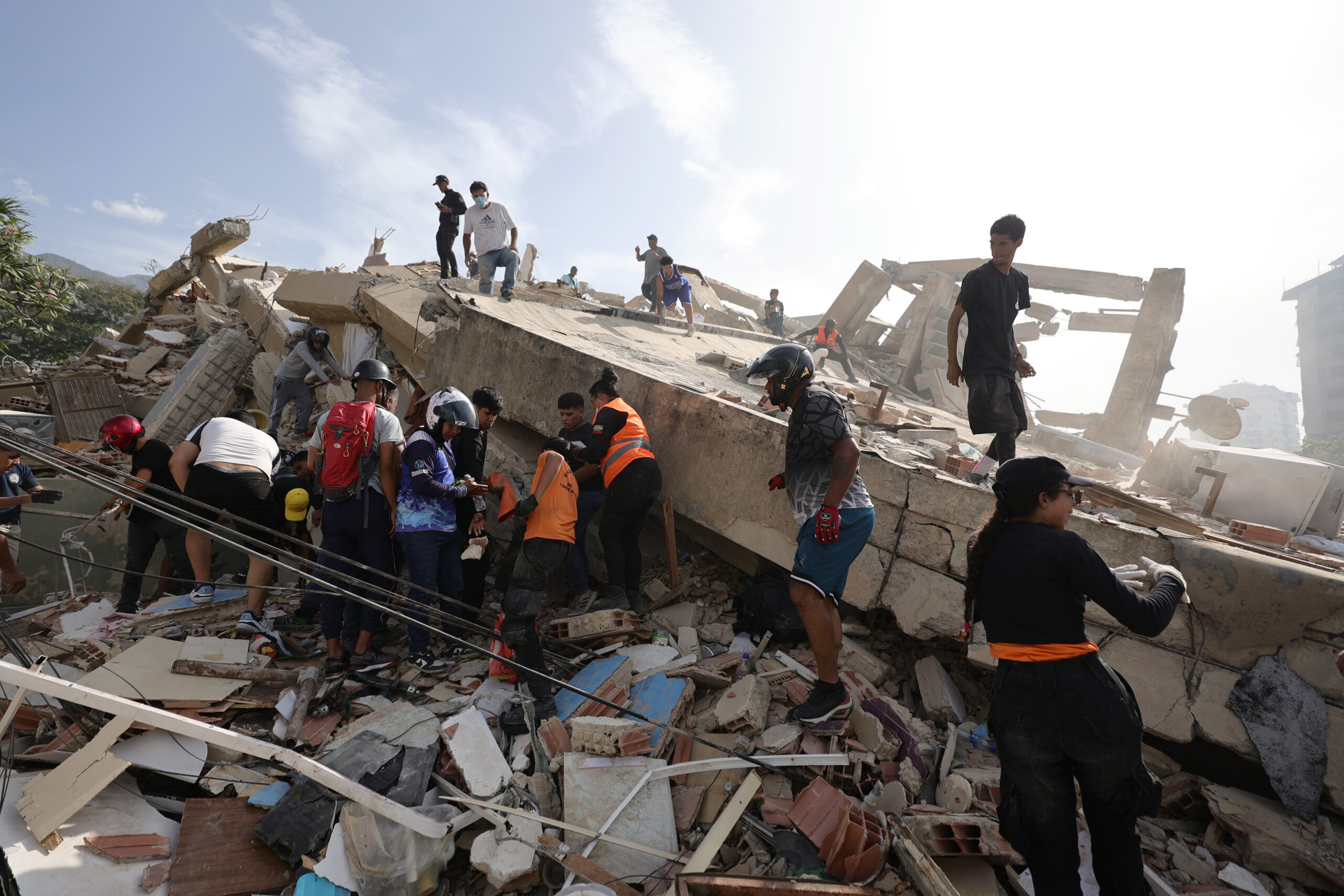
In recent times, the floods and mudslides that have occurred at the China-Nepal border have showcased terrifying scenes akin to doomsday. Such disasters are continuously unfolding worldwide, including earthquakes, tsunamis, typhoons, wildfires, and pandemics. Amidst this backdrop, a recent study has highlighted some relatively safer places that people may consider seeking refuge in.
While no country is deemed completely safe from various disaster risks, a study conducted by an international research team has identified locations with lower risks for people to consider in times of crisis.
Specifically, the researchers aimed to explore the safest places to seek refuge when facing threats such as nuclear war, near-Earth object impacts, large-scale volcanic eruptions, cyber attacks, high-altitude electromagnetic pulses, geomagnetic storms, and global pandemics.
The researchers categorized potential disaster scenarios into three types and attempted to assess the resilience of countries worldwide against various risks. These three scenarios include abrupt sun diminishment, infrastructure damage, and biological disaster risks.
The scenario of abrupt sun diminishment involves a reduction in sunlight reaching the Earth’s surface due to nuclear explosions, volcanic eruptions, or near-Earth object impacts.
In this scenario, researchers believe that countries in the Southern Hemisphere exhibit greater resilience against threats, as the region lacks nuclear-armed states and has fewer volcanoes. Islands capable of achieving food self-sufficiency with longer growing seasons also face relatively lower risks in reduced sunlight conditions.
The next scenario involves global infrastructure losses triggered by events like severe geomagnetic storms or cyber attacks. Countries that are not heavily reliant on complex supply chains show greater resilience in this aspect, while nations highly dependent on digital technologies in their infrastructure would suffer the most.
The researchers noted that agricultural regions with less reliance on pesticides and fertilizers tend to fare more robustly in the face of infrastructure collapse. Smallholders and organic farms are better positioned in such scenarios.
Regarding geomagnetic storms, countries in the Northern Hemisphere face the greatest threats due to their geographical location and heavy reliance on satellite technology, which is often vulnerable during intense geomagnetic storms.
The third scenario refers to biological disaster risks, such as the reemergence of pandemics. Countries that perform well in this scenario typically have more advanced healthcare systems and supply chains, are located on islands or in remote areas, or have implemented universal healthcare systems.
Combining the assessment of the above three scenarios, Australia emerges as the top-performing country – the most suitable place for people to seek refuge in, according to the researchers.
The researchers wrote in their report, “It is located in the Southern Hemisphere, far from nuclear conflicts (though allying with the United States may increase risks), has not experienced volcanic eruptions since the Holocene, and boasts vast inland territories (albeit a significant portion being desert) – if faced with an asteroid impact, people can migrate to this region.”
Furthermore, they highlighted that Australia is a major food-producing country with diverse climate zones, long growing seasons, crucial coal and natural gas infrastructure, expansive forests, and a Pacific coastline.
Apart from Australia, Argentina, Brazil, and New Zealand also demonstrate favorable performance – at least when compared to the entire Northern Hemisphere.
However, the researchers cautioned that despite the outstanding performance of countries like Australia, no country is entirely safe when confronted with threats in various scenarios.
The researchers emphasized the importance of maintaining trade and cooperation. “Even countries like Australia and New Zealand, if cut off from imports of medicines, fuel, and fertilizers, would likely face difficulties. In today’s globalized world, no country can truly stand alone.”
The aforementioned research findings were published on August 23 in the journal “Global Challenges.”
Coincidentally, Anglia Ruskin University in the UK previously studied the top five countries (regions) best suited for people to seek refuge in the event of doomsday disasters. New Zealand ranked first, while Australia ranked fourth. In this context, Australia refers to the southeastern island of Tasmania.