
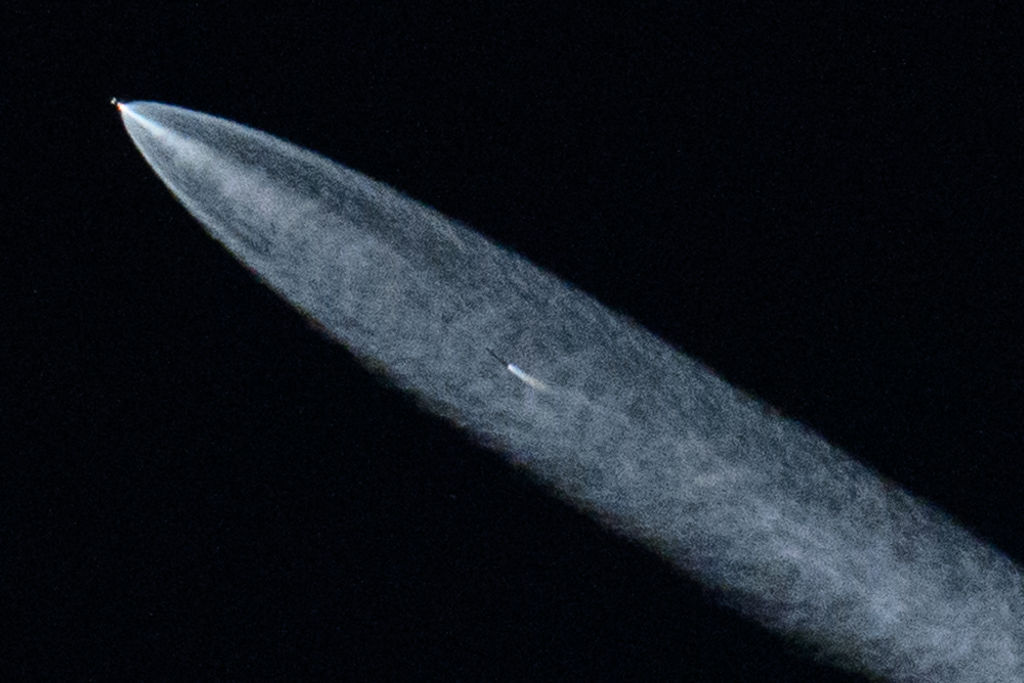
Russia is working on building a domestic Low Earth Orbit (LEO) satellite constellation in an effort to catch up with SpaceX’s Starlink, but progress has been repeatedly hindered. The latest tracking data shows that the second batch of satellites launched in July have failed to reach their intended orbit altitude, with at least 2 satellites continuing to descend and facing the risk of burning up upon reentry into the atmosphere.
The “Rassvet-3” satellite constellation developed by the Russian private aerospace company Bureau 1440 has undergone two launches so far: the first batch of 16 satellites lifted off on March 23, 2026, while the second batch of another 16 satellites was launched on July 19 via the Soyuz-2.1b rocket from the Plesetsk Cosmodrome.
In February of this year, Russia was fully cut off from unauthorized use of Starlink terminals, prompting the Kremlin to prioritize the “Rassvet Plan” as a top national priority.
Among the first batch of satellites, the 4th satellite (NORAD number 68363) failed to activate its propulsion system for unknown reasons and burned up in the atmosphere around June 6.
The situation for the second batch of satellites is also less than ideal. According to tracking data, some satellites did not perform effective orbit raising maneuvers after separating from the launch rocket. At least 2 satellites, including the 17th and 23rd satellites (NORAD numbers: 100083 and 100089), are maintaining an average orbit altitude of about 290 kilometers, with the lowest point around 277 kilometers, and their altitude continues to decrease with an accelerating descent rate. If they cannot raise their orbit, they may eventually reenter the atmosphere.
Currently, none of the satellites in the second batch have reached the targeted altitude of 800 kilometers; even the first batch of satellites launched over half a year ago are mostly operating at altitudes between 500 to 550 kilometers, with some even lower than 500 kilometers.
According to a report by Newsweek, John Hardie, the Deputy Director of the Russian Program at the Foundation for Defense of Democracies (FDD), stated that “It can be said with certainty that the failure rate of this program so far is apparently higher than the early failure rate of SpaceX’s first-generation Starlink.”
Russia has not yet publicly provided an explanation for the failures.
On the evening of August 15, Ukraine launched FP-5 “Flamingo” cruise missiles, attacking the Progress Rocket and Space Center in Samara, Russia. This center is a major production base for the Soyuz-2.1b rocket, which is used to launch the Rassvet-3 satellites.
Ukrainian observers pointed out that if the attack causes a prolonged impact on the Russian rocket production line, it could disrupt Bureau 1440’s plan to deploy around 300 satellites by the end of 2027, as well as potentially affecting other related space projects.