
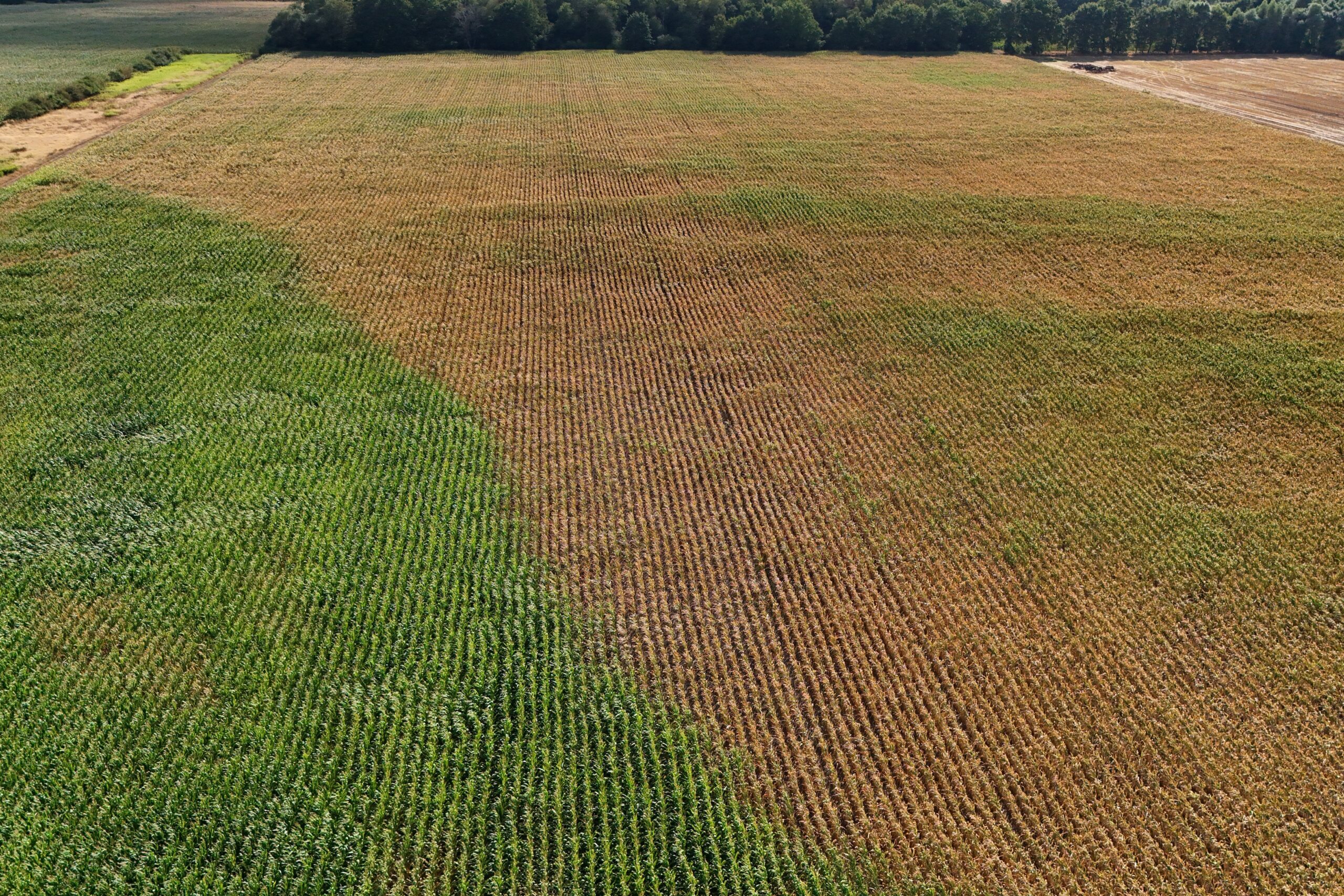
Facing the ongoing strengthening of this year’s “Super El Niño” phenomenon, also known as “Super Holy Child,” the global food system has demonstrated greater resilience than ever before. Historically high agricultural product inventories, advancements in agricultural technology, and the rise of major exporting countries such as Brazil and Russia are expected to mitigate a significant portion of the climate impact.
According to a report by Reuters, the Food and Agriculture Organization of the United Nations (FAO) and analysts have stated that since the 1980s, global agricultural production has been growing faster than consumption and population growth.
Factors driving these changes include higher-yielding crop varieties, more widespread use of fertilizers, and improvements in irrigation and crop protection technologies, leading to increased yields of major staple crops such as rice, wheat, corn, and soybeans.
However, climate threats remain severe. The drought brought by the El Niño phenomenon has already disrupted crop planting in vast areas of Asia, including India, Southeast Asia, and Australia.
India is experiencing insufficient monsoon rains, while Australia’s major wheat-producing regions face increased risks of drier weather, and the crops in Southeast Asian countries like Thailand and Indonesia are also suffering due to inadequate water supply.
Nevertheless, India’s sowing progress has largely returned to normal track after overcoming initial significant delays. Analysts point out that the rainfall in August and September will still be crucial for crop maturation and seed formation.
Chris Hyde, a meteorologist at the U.S.-based satellite data and imagery company SkyFi, warned, “Currently, it is expected to be one of the strongest El Niño events on record, possibly the strongest ever globally, meaning the significant impacts of the drought are yet to come.”
Historically, the severe El Niño events of 1997-1998 and 2015-2016 significantly reduced major crop yields, leading to food shortages and inflation, which hindered economic growth.
Unlike in the past, the current near-record high levels of food stockpiles provide an important cushion for the market.
India, which accounts for 40% of global rice exports, has a massive rice inventory that is even gradually depleting storage space, equivalent to more than a year’s worth of global rice exports.
Furthermore, China, the world’s largest producer and consumer of wheat, holds nearly half of the global wheat stockpiles. This means that even if major supplier countries like Australia see reduced wheat production due to drought, China’s ample reserves should help restrain its import demand.
Additionally, global palm oil inventories are currently close to historic highs, but Indonesia’s active promotion of biodiesel programs may lead to a decline in inventories in the coming months.
The rise of emerging export hubs has also increased global market supply. Since 1997-1998, Brazil has emerged as the world’s largest soybean supplier, with exports increasing by more than 13 times the previous level; Russia’s wheat exports have also grown from about 1 million tons during that time to 48 million tons last year.
Technological advancements serve as another crucial line of defense. Since 2015, drought-resistant hybrid maize has been widely adopted in Africa and the Americas, helping farmers maintain yields during droughts and unstable rainfall periods. Heat and drought-resistant wheat varieties are also increasingly popular in India and Australia, reducing the risks of significantly reduced production due to adverse weather.
Moreover, modern farmers have access to a range of digital tools that were almost unavailable during the 1997-1998 El Niño, including satellite crop monitoring, seasonal climate forecasts, high-resolution soil moisture maps, GPS-guided fertilization, and AI agricultural consultation platforms integrating weather, soil, and crop information.
Andrew Whitelaw from the Australian agricultural consulting agency Episode 3 pointed out, “Even under drought conditions, better irrigation management and crop science mean that we can still achieve yields available for market sale.”
He added, “While global food supply and prices may still be affected, we are better prepared than before, meaning that any disruptions are likely to be far less severe than what could have occurred in past decades.”
Maximo Torero, Chief Economist at the Food and Agriculture Organization of the United Nations, also stated, “Governments now have much better information at their disposal than in the past and can make preparations in advance. Our predictive capabilities and market transparency have both improved.”
However, conflicts in the Middle East and the Black Sea region add uncertainty to global food production. The February outbreak of the Iran War led to the closure of the Strait of Hormuz. Previously, about one-fifth of global oil and liquefied natural gas supplies were transported through this strait.
This crisis disrupted global fuel and fertilizer supplies, resulting in shortages of diesel and fertilizers. Torero noted that the Strait of Hormuz crisis has led to reduced use of agricultural inputs and increased risks due to rising fertilizer prices.
He said, “The situation will largely depend on how things unfold in the latter half of 2026.”