
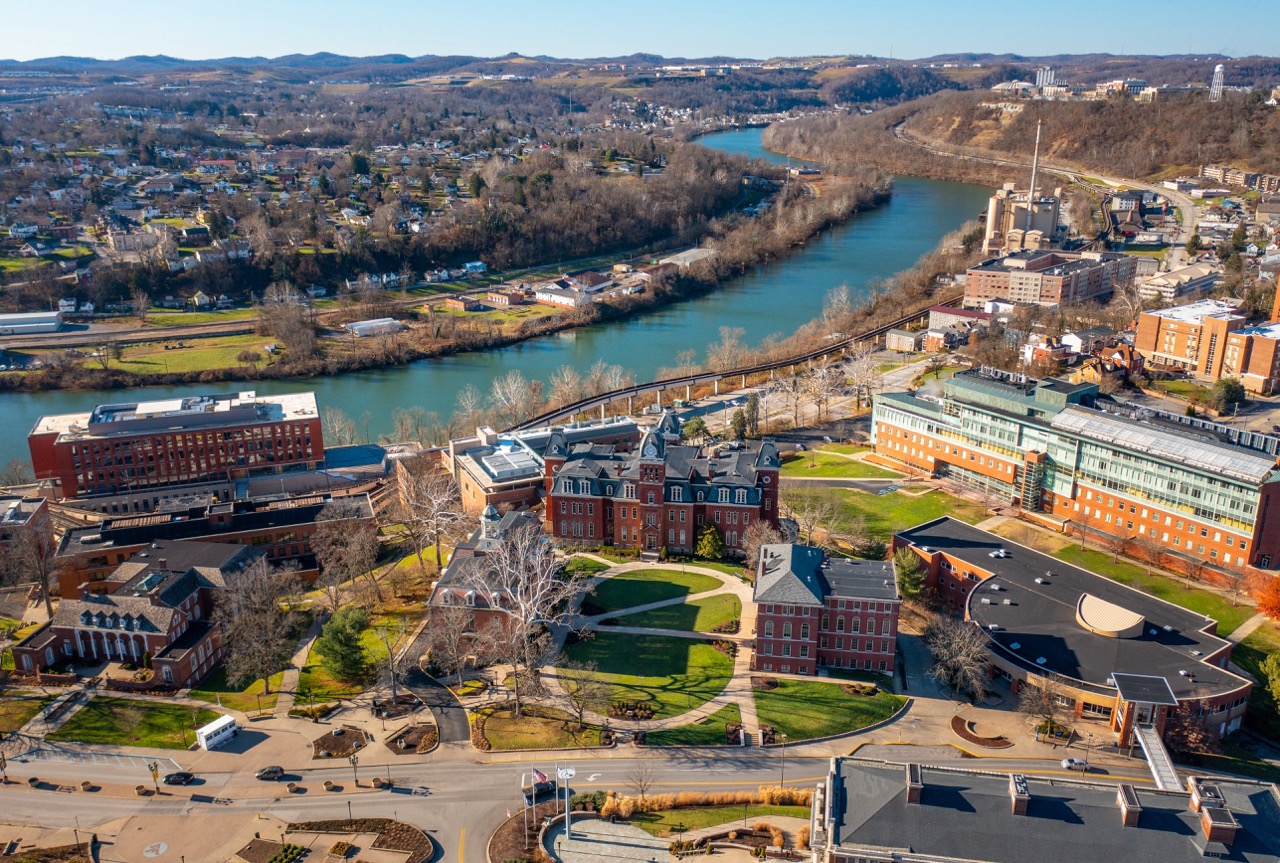
West Virginia University (WVU) in the United States has been conducting research on recovering rare earth elements from acid mine drainage (AMD) for many years. The university is now taking steps to commercialize this technology and expand it to other non-traditional mining sources. This technology holds the potential to not only address historical mining pollution but also develop domestic rare earth supply in the United States, reducing dependence on the Chinese supply chain.
The research at WVU began in 2016 with the team investigating rare earth elements in acid mine drainage and its treatment products with support from the Department of Energy. AMD is one of the environmental issues left behind by coal mining, containing various dissolved metals; researchers discovered that it also contains recyclable rare earth elements.
According to WVU, compared to some traditional rare earth sources in the United States, the rare earth element combination in some AMDs has a higher proportion of heavy rare earth elements and critical elements for magnets, including dysprosium, terbium, and yttrium, as well as light rare earth elements such as neodymium and praseodymium. These materials are widely used in high-performance magnets, electronic products, energy equipment, and defense systems.
Initially focused on environmental remediation, the research has evolved to explore how to recover economically valuable rare earth elements while treating polluted water. WVU has established pilot-scale recovery and processing facilities and demonstrated that AMD can serve as a sustainable domestic rare earth raw material source.
In 2022, WVU collaborated with the West Virginia Department of Environmental Protection (WVDEP) to establish the A34 AMD Rare Earth Extraction (AMDREE) processing facility in Mount Storm, West Virginia. WVU described A34 as the United States’ first integrated, pilot-scale AMD rare earth recovery facility aimed at verifying the feasibility and scalability of rare earth recovery from acid mine drainage under actual operational conditions.
A34 processes real acid mine drainage rather than just laboratory samples. WVU data indicates that the facility can integrate the rare earth recovery process into existing AMD water treatment systems, allowing for the recovery of rare earth materials while treating polluted water.
Importantly, the rare earth materials recovered by A34 exhibit significant characteristics of heavy rare earths and key elements for magnets. According to WVU’s data, yttrium accounts for about 29% of the total rare earth content in the AMD processed by the facility, while neodymium and praseodymium account for about 19%, dysprosium for 6%, and terbium for 1%; highlighting the prominent role of dysprosium, terbium, and yttrium in the overall value.
Following subsequent separation and refinement processes, the A34 project has successfully produced rare earth oxide products with purity exceeding 95%, demonstrating that this technology not only extracts rare earth from contaminated water but also prepares materials suitable for further processing.
In May 26, WVU officially announced the establishment of the Rare Earth Elements Initiative (WVU REE), aiming to integrate the research results of the past decade into a dedicated research, technology development, and industrialization platform.
One of WVU’s objectives is to leverage existing waste materials and mining byproducts within the United States to establish new rare earth raw material sources and reduce reliance on overseas supply chains. The United States currently heavily depends on imported rare earths, with China holding a significant position in the global rare earth supply chain, making finding domestic alternatives a key aspect of US critical mineral policy.
Apart from acid mine drainage, WVU is also exploring the recovery of rare earth elements from unconventional sources such as hard rock mines, mine tailings, red mud, and other industrial byproducts. This indicates that the research team aims to further apply the recovery technology developed in AMD to a wider range of existing mining waste and industrial materials.
To expedite the transition of technology from academic research to industrial applications, WVU has launched a for-profit startup called Mission Critical Materials (MCM), responsible for promoting the engineering, scaling, and deployment of related technologies. MCM currently positions itself as a materials company, primarily utilizing technology to recover rare earths from acid mine drainage and establishing a critical materials supply chain within the United States.
MCM’s business model does not involve reopening new mines but rather utilizing existing mine water treatment systems to incorporate rare earth recovery steps in the pollution control process. The concept is to deploy modular recovery equipment at different AMD treatment locations and subsequently concentrate recovered materials for further separation, refining, and processing.
If this model can be scaled up, it could address both issues by reducing acid drainage pollution left by historical coal mines and transforming mining waste that requires treatment into rare earth raw materials.
However, moving from experimental and demonstration facilities to large-scale commercial production will still take time. The rare earth concentration in AMDs is relatively low, and factors such as recovery costs, raw material supply, downstream separation and refining capabilities, as well as issues related to mining rights and material ownership in different regions, may influence the pace of commercialization.