
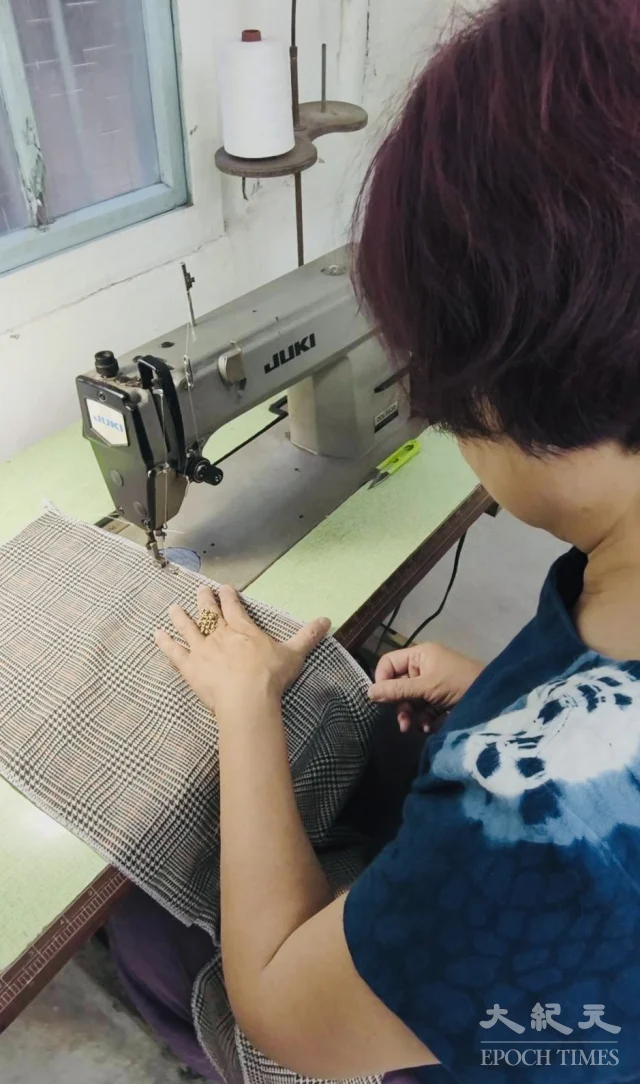
In the past, sewing machines were considered essential “big items” for marriages in Chinese households. Today, they have become a stress-relief tool for some young and middle-aged Chinese people. Some people make doll clothes for trendy dolls like LABUBU, while others cultivate sewing as a hobby for retirement. The smart features and material kits of sewing machines have also lowered the entry barrier.
The social media trend “Sewing for a good mood” has accumulated a viewing amount of 460 million times and nearly 1.8 million discussions. According to a report released in October by the business media “Most Business,” whether sewing machines can re-attract consumers no longer solely depends on the practicality of mending clothes but also relates to personalized creativity, leisure stress relief needs, and the lower operation threshold of products.
In China in the seventies and eighties of the last century, sewing machines, watches, and bicycles were once considered the “three major items” for marriage. At that time, with limited choices of ready-made clothes, families purchased sewing machines mainly for making clothes, mending bed sheets, and other household items, combining practicality and saving expenses. As the availability of ready-made clothes increased, buying clothes became more convenient, and sewing machines gradually faded out of people’s daily lives.
In recent years, handmade DIY has attracted the attention of some consumers. People share on social media their sewn hair ties, fabric bags, and coasters, exchange sewing techniques, and showcase clothing and dolls before and after transformations.
Zhang Yan, the chairman and CEO of Brother Industries, a Japanese sewing machine brand in China, pointed out that with the popularity of trendy dolls like LABUBU, many young people have started making doll clothes by hand or embroidering their own designs on dolls.
This has also changed the product positioning of sewing machines. In the past, consumers were more concerned about whether the machine could mend clothes; now, some new users are more interested in simple operation, making doll clothes, and whether the machine has embroidery and personalized design functions.
Zhang Yan described this shift as a redefining of the use of sewing machines. It is no longer just a tool for mending clothes but can also be an equipment to turn creativity into reality. For consumers seeking personalization, participating in the process of making by hand is part of the consumption experience itself.
Sewing machine users are not only young people. According to reports, some people around 50 years old, preparing for retirement or just retired, also learn sewing through senior university or community courses, seeing it as a hobby that can be cultivated long term.
While young people create doll clothes and trendy accessories, the retirement group learns fabric crafts. Despite the different ages and life stages, both groups give new uses to sewing machines.
To attract new users without sewing experience, manufacturers have added features to home sewing machines, such as automatic threading, speed adjustment, and preset stitching. Some models have embroidery functions and can be paired with mobile applications to convert hand-drawn patterns or images into embroidery files, making it easier for users to create personalized works.
Manufacturers and related businesses also offer kits containing basic materials such as needles, threads, fabrics, and zippers, as well as providing online tutorial videos, offline experience courses, or sewing classrooms. Consumers can start with simple projects like hair ties, small fabric bags, and storage bags, without having to buy tools and consumables themselves.
These accompanying kits lower the entry threshold, turning sewing from a craft that requires long-term learning to a leisure activity that can be attempted. However, the functions, operation difficulty, and prices vary among different models, and the smart features of sewing machines do not mean that all works can be easily completed.