
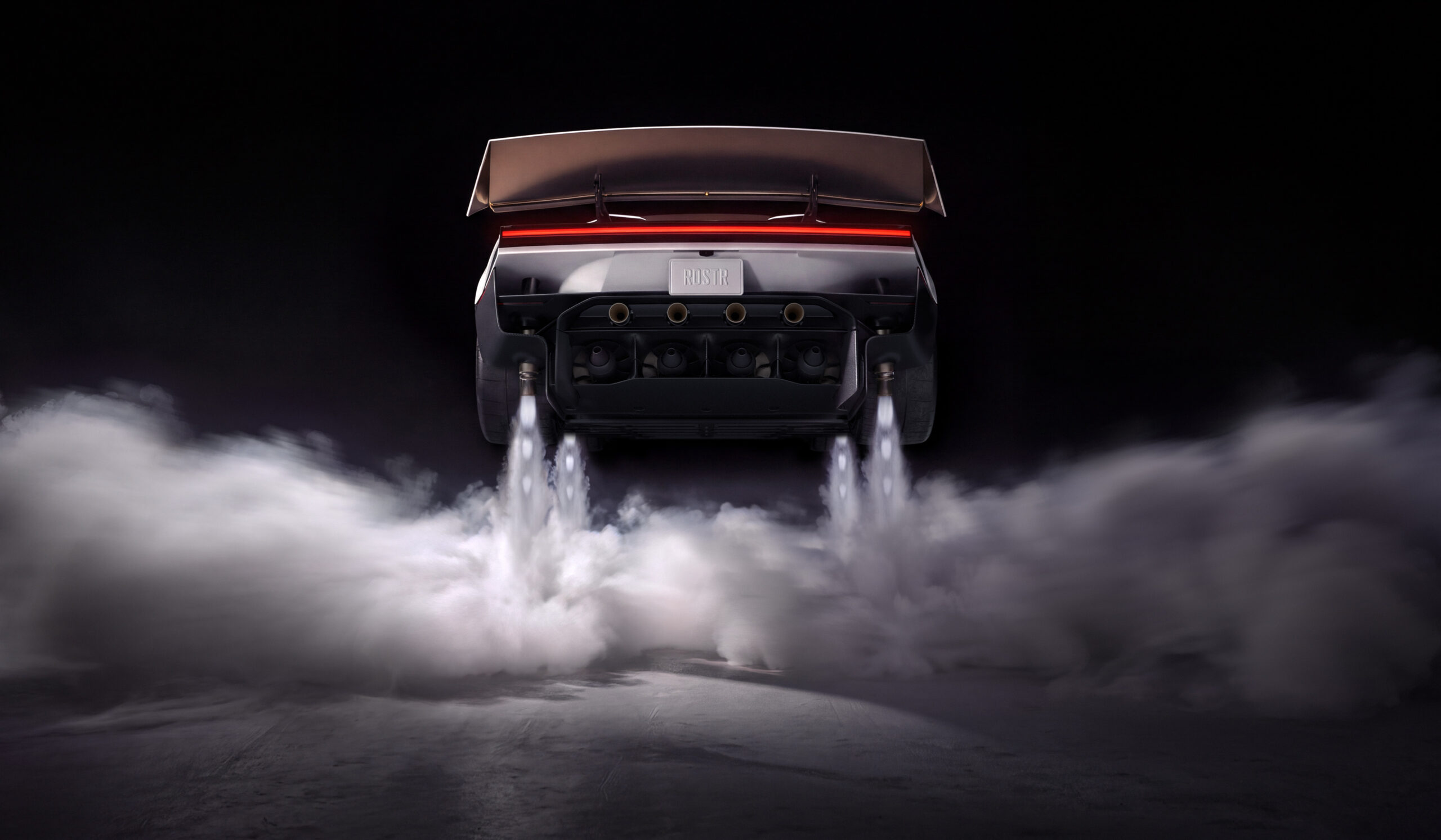
Tesla, the American electric car manufacturer, recently showcased new technologies such as driving upside down and brief flight capabilities on the new generation Roadster, becoming a hot topic. The state-run Chinese media People’s Daily published an article promoting the advantages of the Chinese auto industry in an attempt to downplay the impact of Tesla’s new technology, which sparked ridicule among many netizens.
Tesla unveiled the new electric supercar “Roadster Rocket” at an event in Texas, demonstrating features like driving upside down, brief vehicle airborne maneuvers, and aerial flips. The Roadster model is planned to begin production in 2028.
CEO Elon Musk posted on X saying, “Future demos of the Roadster will include flying over Snake River or the Grand Canyon and landing with the wheels on the ground at speeds exceeding half the speed of sound.”
The appearance of the “Roadster Rocket” exhibition has ignited discussions on Chinese social media platforms, becoming a trending topic.
Some netizens created AI videos showcasing the Roadster flying over toll booths in China. Others commented, “It’s hard to imagine flying car technology and brake pedal failure coexisting in an automotive era.”
Some netizens expressed skepticism about Chinese auto innovation, suggesting that the only things China may lead in innovation are “refrigerators, TVs, large sofas,” and a set of stoves, implying that the so-called “far ahead” is just self-congratulation.
—
Regarding the discussions sparked by Tesla’s demonstration of a flying car, on October 21, the state-run People’s Daily published a commentary article titled “Tesla Can Fly, Are We Being Left Behind?” The article noted that Tesla’s showcased technologies rely on a compressed air propulsion system to achieve short-term airborne maneuvers and aerial flips, but uncertainties remain regarding regulations, safety certifications, and practical applications. The article also mentioned that Tesla’s production plans need further verification.
The article acknowledged Tesla’s contribution to the Chinese auto industry through its Shanghai factory, citing the “catfish effect” that drives Chinese car companies to accelerate innovation. The article also highlighted achievements of Chinese auto companies, such as BYD’s speed records, CATL’s supercharging batteries, and Huawei’s smart driving technologies, emphasizing China’s competitiveness in the electrification and intelligentization fields in the auto industry.
After the publication of the People’s Daily article, the comment section saw a lot of sarcastic remarks. Some netizens bluntly said, “People’s Daily’s comment is: don’t praise others a bit, don’t criticize ourselves a bit” and “Even though we lost, we won!!!”
Regarding the relationship between technological innovation and industrial competition, some netizens questioned, “If Tesla doesn’t open source, could Chinese electric cars develop so rapidly?”
Some netizens sarcastically pointed out that the selling point of domestic electric cars in China seems to focus on features like “refrigerators and sofas,” rather than more groundbreaking technologies. A portion of netizens expressed hope to see actual progress in product quality and core technology in Chinese electric cars.
—
In the comment section, apart from discussing the feasibility of flying cars, some netizens extended the conversation to work conditions, cost of living, and public services.
One netizen wrote, “Weekends off, work conditions, fuel prices, can we shake off these burdens? There must be a way to win with every loss.”
Another netizen expressed, “I don’t care if a car can fly or how good its quality is, after all, it’s just a means of transportation. I just want to know when ordinary people can live better lives.”
Some lamented, “It’s a miracle if you forget to turn off the comment section.”