
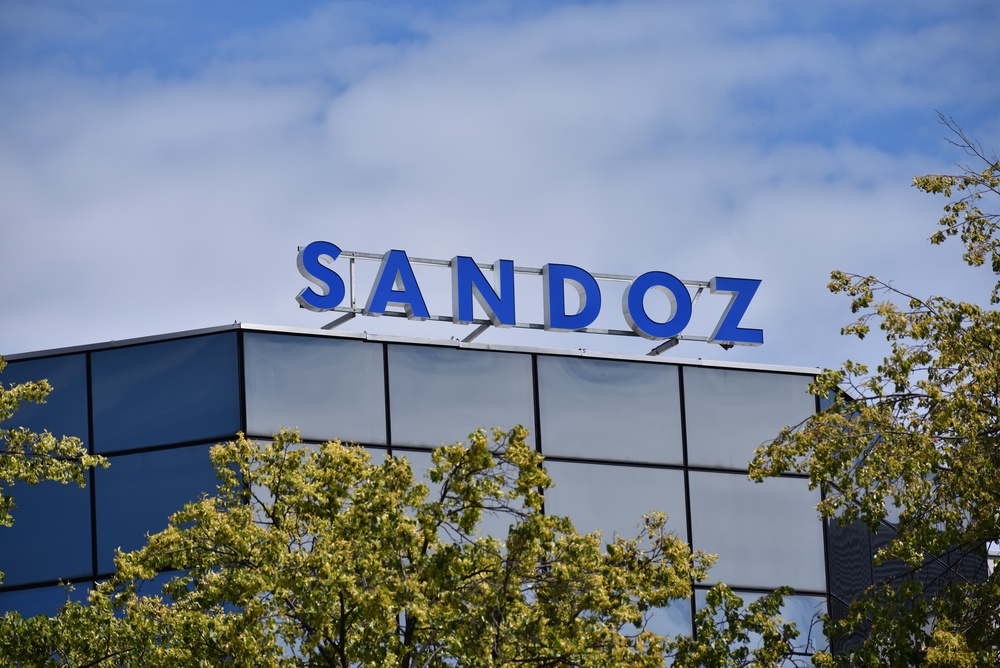
Europe’s last large factory with complete penicillin production capacity is under the impact of low-priced products from China. In just 6 years, Chinese products have increased their share of penicillin and its derivatives imports into the EU from 44% to 86%. Despite Europe having invested substantial funds to preserve this factory, its operator now demands the EU to investigate whether there is any dumping behavior in Chinese products.
According to a report by Reuters on Wednesday (October 21), this factory is located in Kundl, Austria, operated by the Swiss pharmaceutical company Sandoz, and is currently the only large factory in Europe that can independently produce the key raw materials for penicillin and complete the finished product manufacturing.
In recent years, other pharmaceutical companies in Europe have gradually closed production lines or shifted production to lower-cost Asian countries. As a result, the Kundl factory has become an important base for Europe to maintain local penicillin production capacity.
EU statistics show that China’s share of penicillin and its derivative products imports into the EU increased from 44% in 2019 to 86% in 2025. Sandoz estimates that as much as 90% of the active ingredients of antibiotics globally are produced outside Europe, mainly from China, or manufactured by India using Chinese raw materials.
Chinese manufacturers supply antibiotic raw materials at lower prices, while European companies need to bear higher energy, labor, and production costs, leading to increasingly intense price competition between the two sides.
Data from the International Energy Agency shows that in 2025, the average electricity price for energy-intensive enterprises in Europe is nearly 50% higher than in China. The energy consumption of the Kundl factory is equivalent to the entire city of Innsbruck with a population of over 130,000.
The manager of the Kundl factory, Stephanie Jedner, warns that if the factory closes, Europe will lose its local production capacity for this key medication and become even more reliant on China.
Sandoz believes that European countries overly prioritize the lowest price when procuring drugs, making it difficult for local manufacturers to compete with Chinese products.
In March this year, Sandoz filed a complaint with the European Commission, alleging that the amoxicillin active pharmaceutical ingredients produced in China receive government subsidies and are sold to Europe below production costs, requesting an anti-dumping investigation to be initiated.
According to reports cited by Reuters, the EU may soon launch an investigation, but the specific timing remains uncertain due to other cases waiting to be processed.
The Kundl factory currently employs over 2,000 people. Approximately 3 years ago, Sandoz invested 200 million euros to expand local production facilities, including 50 million euros in public funds, increasing capacity by about 20%.
When the European Commission approved the aid provided by the Austrian government in 2023, it referred to the Kundl factory as the EU’s last base with complete amoxicillin production capacity. In 2022, several European countries experienced an amoxicillin shortage due to an increase in respiratory tract infection cases. The COVID-19 pandemic also exposed Europe’s reliance on Asian manufacturers in the pharmaceutical supply chain.
Subsequently, the EU began to promote local production of critical drugs and raw materials in Europe, aiming to reduce dependence on overseas supply chains.