
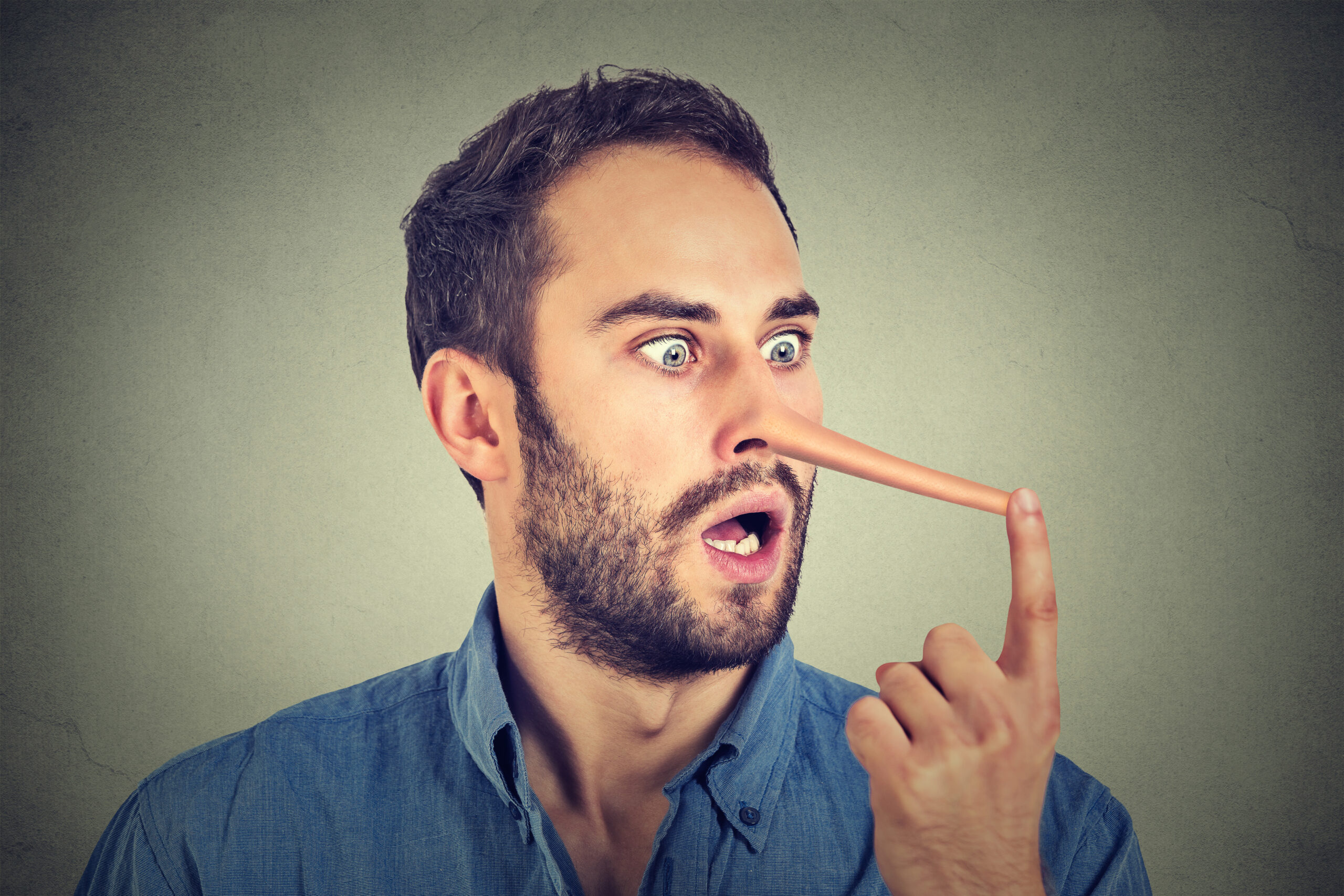
In the midst of frequent fraud incidents, encountering situations where someone is lying in daily life is also not uncommon. However, when people lie, they don’t have noses like Pinocchio, the protagonist of the fairy tale “The Adventures of Pinocchio”, that grow long, making it difficult to detect. So, can people really perceive if someone is lying? Let’s see what the experts have to say.
Nadja Heym, an associate professor of personality psychology and psychopathology at Nottingham Trent University in the UK, wrote that when it comes to detecting lies, most people’s performance is only slightly better than random guessing.
She mentioned that we often rely on stereotypes to judge whether someone is lying, such as avoiding eye contact or appearing nervous, but these are not reliable indicators of deceptive behavior. Empathy can influence our ability to understand and interpret the intentions and actions of others, sometimes helping us to uncover lies.
Certain personality traits, such as schizotypy, neuroticism, or lower agreeableness, can also affect how we interpret others’ behavior and may lead us to develop cognitive biases, mistakenly believing that others are lying even when they are not, thus becoming more distrustful of others.
Heym wrote that in a group, a highly persuasive narrative often has more influence than objective evidence itself, so much so that we may no longer seek counter-evidence.
Once we notice inconsistencies and become suspicious, we tend to look for evidence that confirms our own viewpoint while disregarding evidence to the contrary. This situation is known as “confirmation bias”.
We often judge others based on whether their behavior aligns (and confirms) with our preconceived expectations, rather than determining if they are actually wrong. These expectations may be further influenced by stereotypes or manipulated by the spread of misinformation.
Heym pointed out that suspicion is highly contagious. Humans tend to learn through social interactions. Therefore, when a few people express doubts about someone, this consensus can create a force that prompts others to also view the person through the same “colored glasses”.
Furthermore, the “snowball effect” triggered by group discussions may amplify people’s skepticism, even if the evidence does not increase, the level of confidence in their judgments continues to strengthen.
In addition, “groupthink” may also come into play. Groupthink is a psychological phenomenon where the pursuit of harmony, consensus, or cohesion within a group overwhelms critical thinking and objective evaluation of various alternative solutions.
Group members may suppress internal doubts, avoid raising objections (for fear of suspicion or exclusion), and instead comply with the gradually forming consensus within the group, even if this consensus is flawed.
Moreover, “groupthink” can lead to overconfidence – groups may develop a “illusion of invulnerability”, mistakenly believing that their decisions are more accurate than they actually are. This often results in poor decisions, erroneous judgments, collective failures, and even catastrophic disasters.
For example, in a situation like the American reality show competition “The Traitors”, once the group suspects someone, its members may reinforce each other’s views, overlooking innocent evidence and ultimately leading to the expulsion of loyal players.
This illustrates that social influence sometimes outweighs factual evidence in judgments.
Heym mentioned that stress, anxiety, and facing false accusations may trigger some unusual behavior in innocent individuals, such as appearing nervous, defensive, or inconsistent in speech and action, which people often mistakenly link to deception.
In the process of trying to explain, these innocent individuals may become incoherent, leading to contradictory statements and further increasing suspicion.
Ironically, the psychological burden brought about by suspicion may sometimes make innocent individuals appear more suspicious than actual deceivers.
Heym stated that the key to success often lies not in being able to detect lies, but in understanding social dynamics, group influence, and cognitive biases.
The program “The Traitors” shows that when making judgments, people often rely more on trust, familiarity, confidence, and emotions rather than reliable evidence.
In this sense, it not only reveals the nature of deception but also profoundly reflects the operation of human psychology and the various cognitive biases we possess.
Although most people find it difficult to detect others’ lies, well-trained and experienced experts may be able to judge whether someone is lying based on their body language.
Scott Taylor, a former security expert who has worked with the FBI, previously shared 12 key signs that someone may be lying, including increased blinking, licking lips, difficulty swallowing, touching the face, shifting body posture, lowering the chin, and blushing.
As experts teach you how to judge whether others are lying based on body language.