
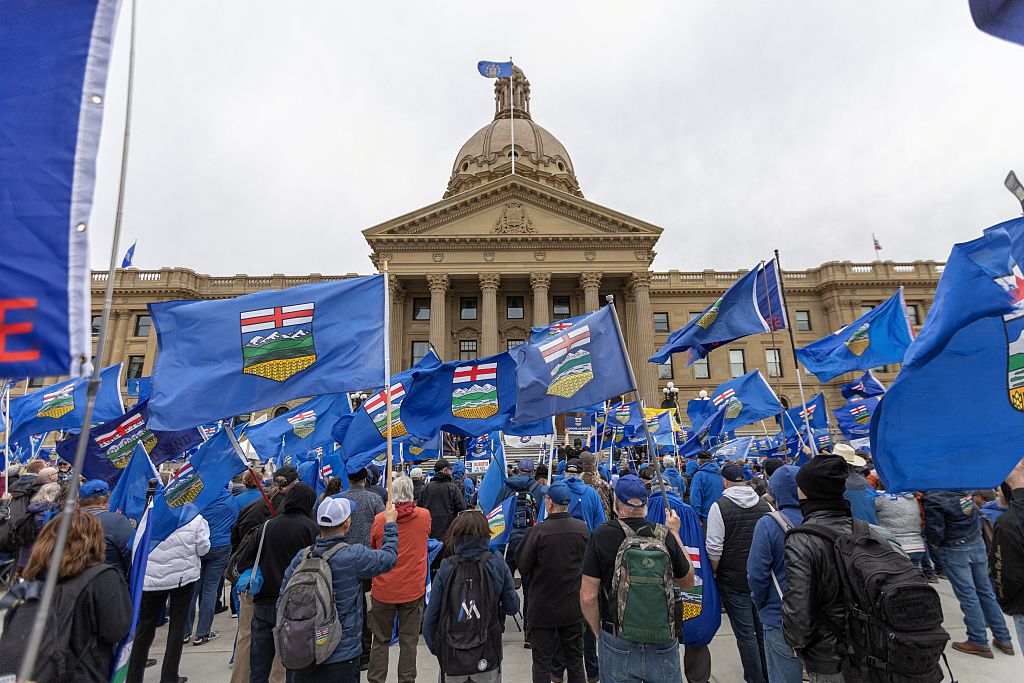
On Monday, October 19th, in the referendum held in the province of Alberta, Canada, the option for “Alberta should continue to be a province of Canada” received overwhelming support from the majority of voters.
The Alberta Election Commission began announcing the vote counting results late Monday night, with about 76% of voters supporting Alberta maintaining its status as a province of Canada, rejecting the initiation of a legally binding independence referendum process.
Apart from the independence issue, the other 9 questions mainly involved immigration and constitutional powers, including whether to grant the provincial government greater control over immigration policies, whether to charge fees for certain non-permanent residents for using public healthcare and education services, and whether to promote constitutional reforms and adjust the power distribution between the provincial and federal governments.
According to the law, the ballots must be manually counted item by item. Elections Alberta stated that the vote counting for the other 9 questions may continue until Wednesday, with the official results expected to be announced on that day; the specific time will depend on the closing times of polling stations and the progress of the vote counting.
As of Tuesday morning, based on unofficial preliminary statistics from the Alberta Election Commission, the counted votes showed 1,318,449 in support of staying in Canada and 428,879 in support of initiating the future independence referendum legal process.
During the announcement of the voting results, the camp supporting staying in Canada cheered, while the camp supporting independence looked solemn.
In January of this year, a poll conducted by Ipsos showed that about one-third of residents supported independence, but when faced with the costs and consequences of independence, only half of those interested in independence were truly determined to take action.
Alberta Premier Danielle Smith announced in February the holding of the referendum, and after a court ruling deemed the separatist direct referendum petition invalid, she added the independence issue to the ballot, making it a total of 10 questions.
She had mentioned that if the other 9 questions were passed, it would allow the public to express their stance and provide a public opinion basis for further negotiations between the provincial government and Ottawa.
The tensions between Alberta and the federal government have a long history. In the 1980s, the National Energy Program implemented by then-Prime Minister Pierre Trudeau sparked strong backlash from the local oil and gas industry. In recent years, some residents have also expressed dissatisfaction with federal energy policies, public health restrictions during the pandemic, and other policies.