
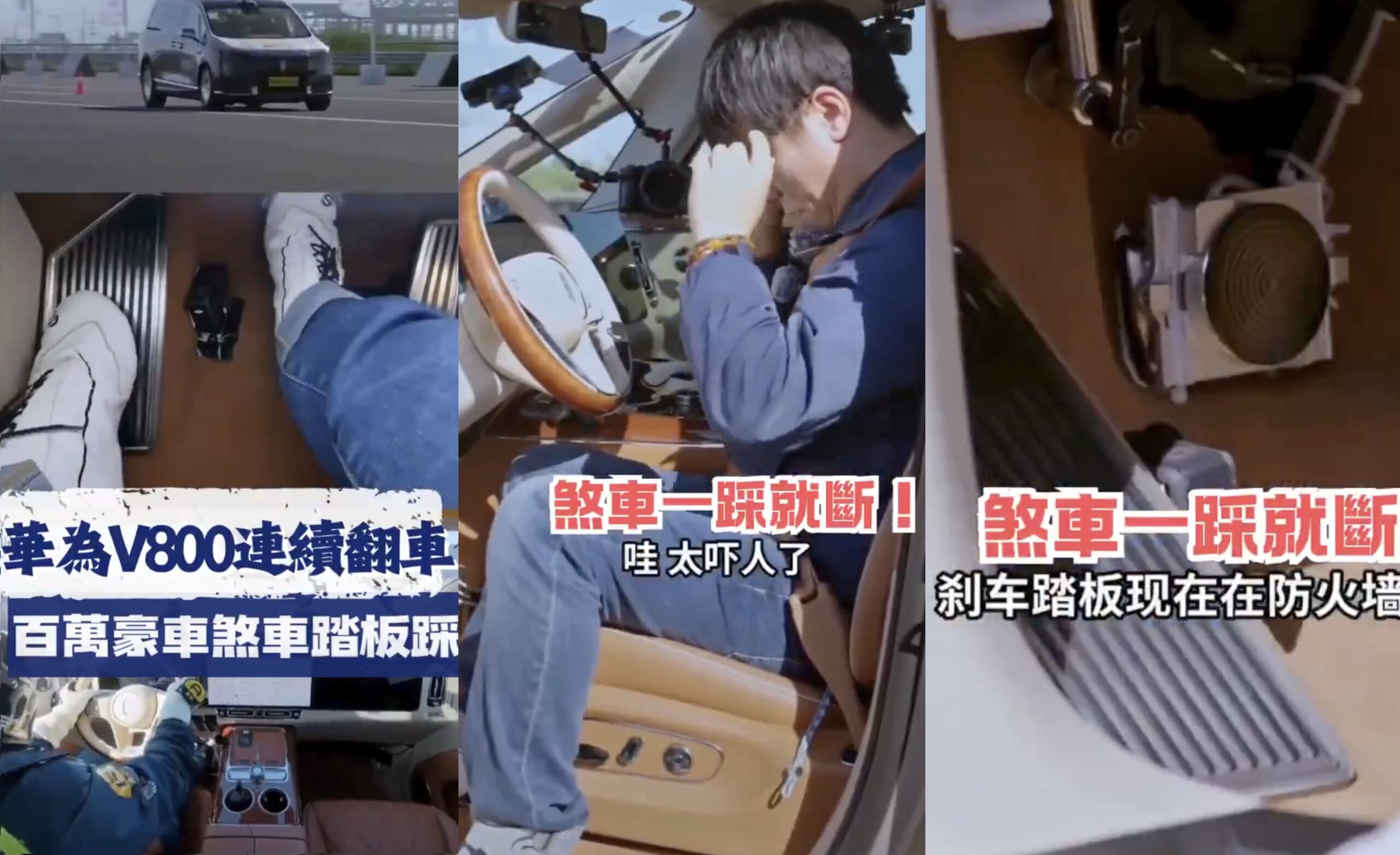
On October 20, 2026, during the controversy over the brake pedal bracket fracture issue involving the luxury brand Zunjie jointly created by Huawei and Jianghuai Automobile, the Chinese Ministry of Industry and Information Technology (MIIT) stated that some automotive companies have been criticized for hastily launching new products without thorough testing and verification, sparking discussions.
MIIT held a press conference at the State Council Information Office on the afternoon of October 20, emphasizing that in recent years, the speed of product iteration in the Chinese automotive industry has accelerated, leading to instances where companies have rushed to introduce new products without adequate testing and verification.
The ministry announced plans to enhance the management of automotive product innovation design and R&D testing, improve related technical requirements, expedite the revision of standards for product reliability, environmental adaptability, and intensify supervision and inspections to prevent inadequately tested products from entering the market.
Although no specific companies were named by MIIT, speculations arose due to the ongoing fallout from the Zunjie V800 brake pedal bracket fracture incident, with many wondering if the mentioned automakers included Zunjie Automobile.
Subsequently, the topic labeled as “MIIT confirms some automotive products have insufficient verification” became a top trending discussion on Weibo.
Netizens expressed their opinions, questioning MIIT’s indirect approach and urging for transparency in naming the companies involved, to hold them accountable for their own issues.
Renowned automotive expert and race car driver Wu Pei posted, “Who do you think MIIT is referring to?”
Automotive blogger Zun Chuanchuan remarked, “MIIT mentioned that some companies have rushed to launch new products without thorough testing and verification. Who could they be referring to, possibly Power?”
Another automotive blogger, Da Ze Technology Show, suggested, “As long as there is evidence, listing out these companies’ products should not be a problem!”
On October 8, the automotive information platform “Car Understand” released a test video showing three Zunjie V800 vehicles experiencing brake pedal bracket fractures during emergency braking from 100 kilometers per hour, raising concerns about the safety of the vehicles’ braking systems.
That evening, Zunjie Automobile issued a statement explaining that while they had not officially acknowledged any quality or design issues with their products, they would optimize the related components’ design and offer free upgrades for delivered units. They also committed to conducting a systematic review and strengthening the design verification, test boundaries, and production quality management of the relevant components.
On October 10, several government departments jointly issued a notice demanding enhanced management of automotive product innovation design and R&D testing. The party-owned newspaper “People’s Daily” on the 11th interpreted the new regulations, insisting on rejecting “quick cars” and emphasizing that brake pedals should never break during driving.
On October 13, Zunjie Automobile released a third-party static testing report, stating that the V800 brake pedal met industry standards. They also pledged to provide free brake pedal upgrades for owners in November.
Subsequently, Dongchedi’s automotive safety content responsible person, who participated in the tests, Kenshi Higashimon, questioned on his Weibo account whether static loading could reflect the dynamic impacts during emergency braking of real vehicles. He suggested that companies with testing facilities, vehicles, equipment, and testers should randomly select mass-produced cars for continuous emergency braking tests at 100 kilometers per hour to verify actual vehicle performance.
On October 15, MIIT, the Cyberspace Administration of China, and the State Administration for Market Regulation announced the establishment of a joint investigation team to probe into the issue. The investigation will cover aspects such as product design, test conditions, and quality control management.
In response, Zunjie issued a statement affirming their willingness to cooperate with the investigation team, demonstrate support for the healthy development of the new energy vehicle industry.