
Recent Rise in Global Energy Prices Triggering Economic Impact and Mass Protests in Europe
The surge in global energy prices due to the Russia-Ukraine conflict and Middle East tensions has been impacting European economies significantly, leading to widespread public protests in various countries. As the crisis of cost of living intensifies, support for right-wing populist parties in Europe is on the rise.
According to the European Commission, trade disruptions and market turbulence in the energy sector since the outbreak of the US-Iran conflict in February this year have resulted in around 100 billion euros (approximately 112 billion US dollars) of economic losses for Europe, with natural gas prices rising by about 140% and diesel prices doubling.
France recently witnessed some of the most severe social unrest in decades. What started as peaceful demonstrations in high schools in the northern suburbs of Paris escalated quickly into street riots. On October 17, luxury stores in cities like Paris and Marseille were looted, and a group of masked rioters even set fire to the over century-old town hall of Limoges.
A 21-year-old protester from the city of Nantes in western France, Quentin Leviloux, expressed, “Why am I here? It’s simple, I find the current cost of living truly terrifying.”
In the face of the grim situation, French President Emmanuel Macron acknowledged in a national address on Sunday (18th) that the protesters’ demands regarding the cost of living are legitimate but vehemently condemned violence, stating, “We must not mix them with those who are engaged in destructive, looting, and arson.”
In Milan, Italy, protests erupted over the poor quality of public services and rising prices, leading to clashes between police and demonstrators. In the port city of Gela at the southern end of Sicily, farmers organized a convoy protest, displaying banners that read, “We cultivate the land, we harvest debt.”
Arcangelo Gambino, a representative of farmers in Caltanissetta province, Italy, lamented, “We are completely at a standstill, with fuel costs more than doubling.”
In Lisbon, Portugal, tens of thousands took to the streets to protest against low wages and rising housing costs, while in Spain, nationwide demonstrations were sparked by increasing rent prices and prompted an early general election next month. Belgium and Albania also witnessed waves of protests one after another.
Political analyst Gilles Ivaldi pointed out that concerns about purchasing power have become the “primary driver of populist politics in Europe.”
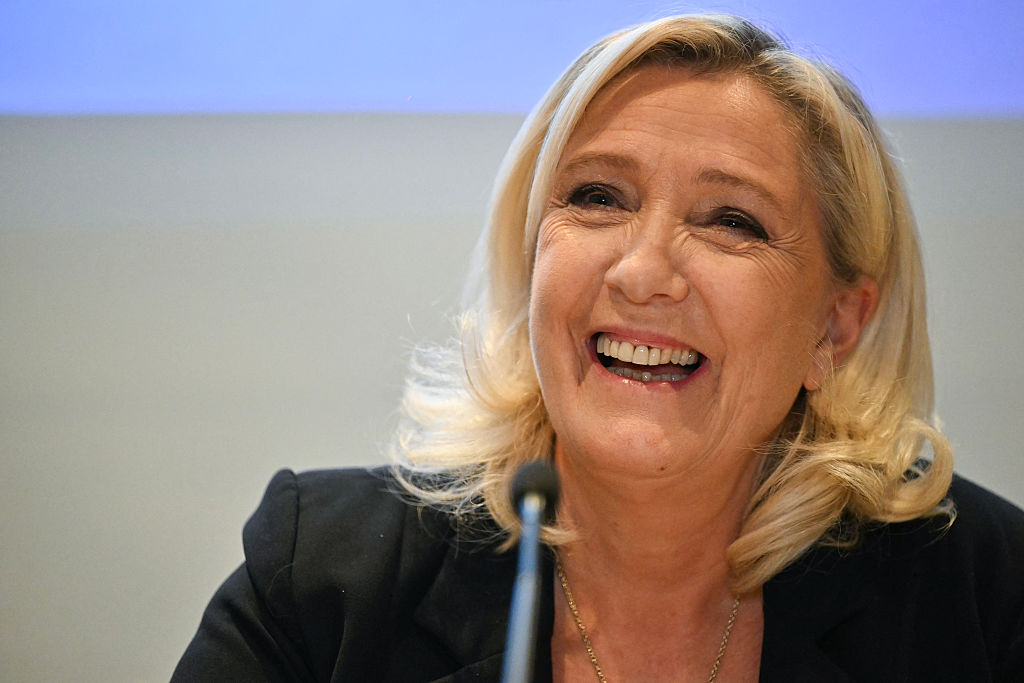
France is set to hold presidential elections next April. Leader of the far-right party National Rally (RN), Marine Le Pen, has garnered increased voter support with a significant rise in polls by proposing substantial cuts to fuel value-added tax.
Following significant gains in local elections, the Alternative for Germany (AfD) party is currently leading in national polls in Germany. A survey released this month revealed that the cost of living has been the top concern for Germans for the fifth consecutive year.
Germany’s inflation rate soared to a near three-year high in September, with energy prices experiencing a 14.9% inflation rate. AfD strongly criticizes Chancellor Friedrich Merz’s current policies and maintains its lead in national polls.
To alleviate domestic prices, an increasing number of far-right and far-left political figures advocate for restoring energy connections with Russia, further challenging the mainstream European consensus supporting Ukraine.
The AfD in Germany is pushing for the revival of energy cooperation with Russia, arguing that Berlin’s support for Ukraine is unnecessary self-harm at a time when Europe’s largest economy and numerous energy-intensive companies are struggling.
In Italy, the new far-right party National Future, led by former army general Roberto Vannacci, advocates for the resumption of natural gas trade with Russia.
Meanwhile, in Poland, a staunch ally of Ukraine, the far-right Confederation of Polish Crown (KKP) leader Grzegorz Braun also calls for the re-purchase of Russian oil and gas.
In conclusion, faced with geopolitical upheavals and political pressure arising from high prices, European governments are confronting severe tests in balancing economic growth, inflation control, and social stability.
(Adapted from reports by Reuters)