
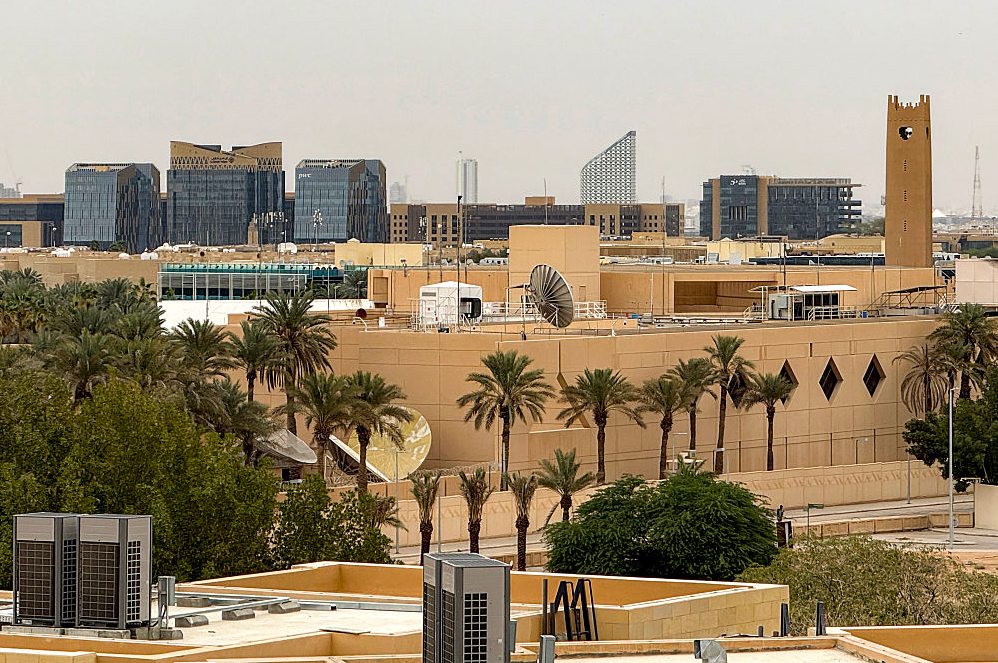
Saudi Arabia witnessed consecutive attacks on airports and oil fields on Wednesday, October 21st, resulting in 3 deaths and 10 injuries. As the attacks by Houthi militants in Saudi Arabia escalated, the United States State Department ordered the evacuation of some government personnel and their families stationed in Saudi Arabia.
Reports suggest that the U.S. evacuation operation may extend to other Middle Eastern countries. Four U.S. officials informed Reuters that diplomatic facilities in other Gulf countries will also require the evacuation of personnel’s families.
According to Agence France-Presse, some American embassy personnel and their families in the UAE, Jordan, Qatar, and Bahrain are also being evacuated. However, State Department spokesperson Tommy Pigott denied reports of an expanded evacuation, emphasizing that the current evacuation order only applies to Saudi Arabia.
Pigott stated on social platform X, “The U.S. State Department has issued an evacuation order targeting non-emergency mission American government employees and their families in Saudi Arabia.”
He emphasized, “Houthi militants, backed by Iran, have increasingly targeted Saudi Arabia with hostile actions, including attacks on civilian airports and other critical infrastructure, resulting in civilian casualties and severe disruptions to transportation.”
Pigott further added, “The safety and security of State Department personnel and their families remain our top priority.”
The U.S. embassy in Riyadh issued a security alert on the same day, warning of potential further attacks by Houthi militants in Saudi Arabia. In early March of this year, the U.S. embassy in Riyadh and the Central Intelligence Agency (CIA) outpost inside the embassy were also targeted in drone attacks.
In late February, following the U.S. and Israel’s conflict with Iran, Iran had attacked American facilities in the Middle East, leading the U.S. to evacuate a large number of diplomatic personnel at that time, gradually returning some personnel in recent months.
In the early hours of Thursday, the Saudi Civil Aviation Authority announced that King Fahd International Airport in Dammam was attacked on Wednesday night, resulting in one resident’s death and 8 injuries. The airport also suffered property damage that is still being assessed.
According to the Associated Press, flight tracking service Flightradar24 on X stated that flights have been rerouted to avoid the airport. Saudi authorities have not disclosed the identity of the attackers, and Houthi militants have not commented on the attack.
On the same day, Saudi air defense intercepted a drone attempting to attack the Shaybah oil field of Saudi Aramco.
The Saudi Ministry of Energy stated that debris from the interception fell outside the oil field facilities, causing a contractor’s vehicle to catch fire, resulting in 2 deaths and 2 injuries.
The two deceased individuals were citizens of the Philippines and Nepal, while the injured were citizens of Pakistan and India. The Saudi Ministry of Energy confirmed that the incident did not affect the operation of the oil field.
Throughout this month, Saudi Arabia has faced daily unmanned drone and missile attacks from Houthi militants, including a significant attack on Riyadh International Airport on October 10th, where a Houthi missile hit the airport, leading to at least 13 deaths and over 300 injuries, marking the deadliest attack in Saudi Arabia in over a decade.
On October 13th, the Saudi Aramco headquarters in Dhahran, eastern Saudi Arabia, was also attacked, causing a fire in an administrative building. The Ministry of Energy stated at the time that the fire was contained and did not result in casualties.
The Yemeni civil war began in 2014, with a Saudi-led coalition supporting the internationally recognized government of Yemen since 2015. After years of intense clashes, a ceasefire agreement was reached in 2022. Although the agreement expired in October of that year, a de facto ceasefire was maintained until the escalation of hostilities in recent months.
Reuters highlighted that the ongoing regional conflicts have disrupted global energy trade and impacted the economies of Gulf countries.