
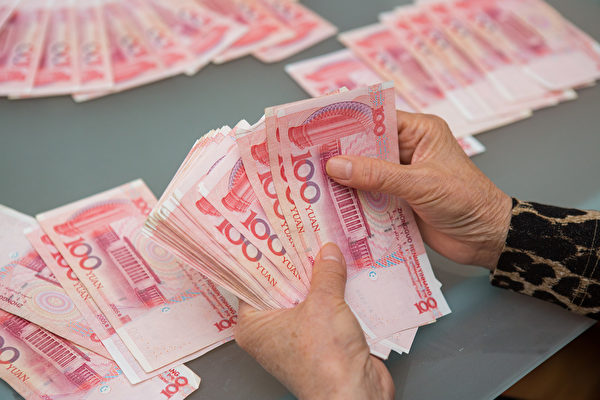
On October 22, 2026, Dongmu New Materials Group Co., Ltd. (Dongmu Stock) announced that the government of Songnan Town, Baoshan District, Shanghai owed its subsidiary company 31.2 million yuan in relocation compensation. In response, the company decided to take legal action against the Songnan Town government, which has been accepted by the court.
Dongmu Stock issued a public notice on October 22 regarding the contract disputes involving Shanghai Fuchi House Demolition and Compensation Contract and Changchun Dongmu Sale and Purchase Contract. The announcement stated that on October 21, 2026, Shanghai Fuchi received a notification from the People’s Court of Baoshan District, Shanghai, indicating that the court had accepted the case for trial. Shanghai Fuchi High-Tech Co., Ltd. (Shanghai Fuchi) is the plaintiff in this case and a subsidiary of Dongmu Stock.
The lawsuit was initiated due to Shanghai Fuchi not receiving a total of 31,200,345.20 yuan in relocation compensation and corresponding overdue payment interest.
According to the announcement, on December 30, 2021, Shanghai Fuchi signed an agreement with various departments, including the government of Songnan Town, Baoshan District, titled “Shanghai Fuchi High-Tech Co., Ltd. Agreement on Early Termination of Lease Relationship and Relocation Compensation.” The agreement stipulated a total compensation amount of approximately 82.25 million yuan for decoration, relocation of facilities, and materials. However, as of the announcement date, Shanghai Fuchi had yet to recover 31.2003 million yuan in relocation compensation. The company believed that the failure of the Songnan Town People’s Government to pay the compensation as agreed constituted a serious breach of contract, leading to significant economic losses for Shanghai Fuchi.
In mainland China, cases where companies sue local authorities are not uncommon, known informally as “citizens suing officials.” However, since the Party, government, and judiciary are all under the control of the Chinese Communist Party, such cases usually do not end favorably, with entrepreneurs often facing false accusations and imprisonment.
An example is the case of Ma Yijia from Guizhou, who was arrested after demanding the payment of 220 million yuan in construction fees owed by the Shuicheng District government in Liupanshui City.
Ma Yijia’s company had undertaken projects for the local government since 2016, including poverty alleviation relocation projects, kindergartens, elementary schools, museums, and resorts. Due to prolonged non-payment by the district government, Ma Yijia’s company was unable to pay material suppliers and workers, leading to debt collection harassment.
In late 2023, the district government proposed settling all debts for 12 million yuan, but Ma Yijia and her legal team found the amount unacceptable and rejected the offer.
As a result of Ma Yijia’s company and legal team filing a report to the higher authorities, between November and December 2023, the local public security department arrested Ma Yijia, her lawyers, and legal assistants on charges of “provocation and troublemaking.”
In February 2024, several mainland and Hong Kong media outlets, including China Business Journal, reported the incident. The news of a local government owing money but arresting the creditor on criminal charges quickly went viral and raised public outcry, with many questioning the government’s practice of using criminal means to pressure debtors to abandon their rights.
Following public scrutiny, the verified construction fees and overdue amounts in the projects were determined to be approximately 118 million yuan, and the authorities promised to clear the debt according to regulations. Ma Yijia and her legal team were subsequently released.
Aside from personal risks, suing local officials could strain the relationship between companies and the government or regulatory authorities. Therefore, unless it involves core interests like substantial assets or survival, most companies carefully consider the local business environment before pursuing legal action. Even if a company wins a lawsuit, enforcing it can be challenging, making it harder for authorities to compensate the company.
Dongmu Stock also reminded investors in its public notice that should they lose the lawsuit involving Changchun Dongmu, the company would make provisions for unrecovered payments in accordance with relevant accounting standards, reducing total profits accordingly.
According to the stock and financial investment software provider Tonghuashun, on October 21, 2026, Dongmu Stock closed at 22.9 yuan per share, a 0.39% increase from the previous trading day.
Over the past 20 days of trading, Dongmu Stock’s share price has decreased by 14.26%. The highest closing price was recorded on September 18 at 28.08 yuan per share, while the lowest was on October 15 at 21.59 yuan per share.
Public records show that Dongmu New Materials Group Co., Ltd. was established on July 11, 1994, through the reorganization of China Ningbo Powder Metallurgy Factory, founded in 1958. Headquartered in Ningbo, Zhejiang, it is the first foreign-controlled company listed on the Shanghai Stock Exchange in China. The company is a leading enterprise in China’s powder metallurgy new materials industry, with products covering automotive, new energy, consumer electronics, and actively expanding into emerging sectors such as humanoid robot axial flux motors, AI server heat dissipation materials, 3D printing, and SOFC (solid oxide fuel cell) interconnects.