
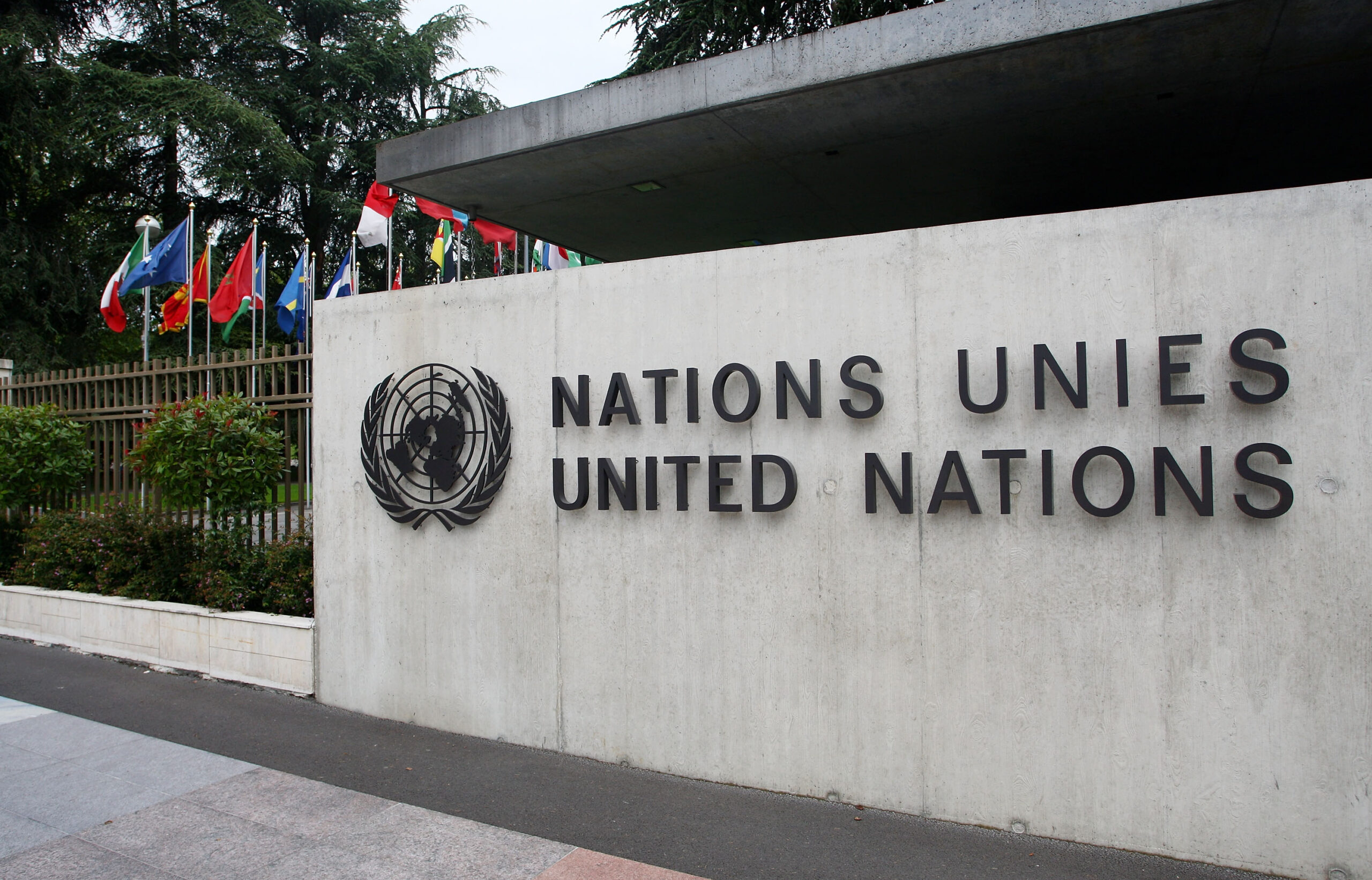
The United Nations Institute for Disarmament Research (UNIDIR) announced on Tuesday, October 20th, that it will launch the first multinational forum within the United Nations system specifically dedicated to discussing military artificial intelligence (AI) on Thursday, October 22nd. This initiative aims to address concerns from the public regarding the rapid development of this technology and its potential threats to humanity.
Robin Geiss, the Director of UNIDIR based in Geneva, issued a warning during a press conference at the United Nations on Tuesday, stating, “The era of machine warfare is rapidly approaching. The question before us is simple: Do we want machines to target and kill humans?”
Geiss highlighted that AI is rapidly integrating into various military aspects such as intelligence analysis, target identification, drones, cyberattacks, and information warfare. He emphasized that the decision-making process is increasingly being accelerated to machine speed, narrowing human judgment, including in the nuclear domain.
He pointed out that the essence of the military AI competition is a race for speed to shorten the time from target discovery to firing. It is currently challenging to determine how much time remains before machines surpass human control and at which point we may truly lose control. Geiss highlighted that addressing this uncertainty is the key issue at hand.
He cautioned that many AI systems operate opaquely, which increases the risk of misjudgment and accidental escalation of conflicts. Furthermore, as AI tools become more accessible, the threshold for conducting complex military operations decreases, making it possible for non-state actors to engage in such military actions.
Geiss mentioned that there has been a longstanding reluctance among various parties to discuss safety barriers for AI. However, with the growing capabilities and impact of AI, there is a rising awareness that humanity is at a crossroads and actions must be taken, particularly in the realm of military AI.
Against this backdrop, the “AI, Peace, and Security Excellence Center” under UNIDIR, in collaboration with Switzerland and Pakistan, initiated this forum, bringing together participants from various sectors including governments, industries, civil society, and academia. This forum is currently the only multi-stakeholder platform within the United Nations system focusing on AI research from international peace, security, and military perspectives.
In June of this year, the “AI, Peace, and Security Excellence Center” was established in Geneva.
The forum’s work is divided into three main directions:
The first direction is to establish a “Responsible Business Conduct Framework.” Geiss stated that businesses’ decisions in the design and development phase determine whether the military capabilities empowered by AI are reliable, predictable, and compliant with international law.
This framework will provide practical, voluntary guidelines based on international law and human rights protection. Additionally, UNIDIR will engage in consultations with defense technology companies, software developers, subcontractors, and investors this week.
The second direction involves developing an “AI Security Glossary.” Currently, there is a significant variance in understanding key concepts like “autonomous” and “security” among various parties, impacting mutual trust and cooperation. Therefore, a unified definition is necessary.
The third direction focuses on addressing the risk of non-state armed groups’ misuse of AI. Geiss warned that such groups are already utilizing AI to assist in operational planning, execution, and logistical support.