
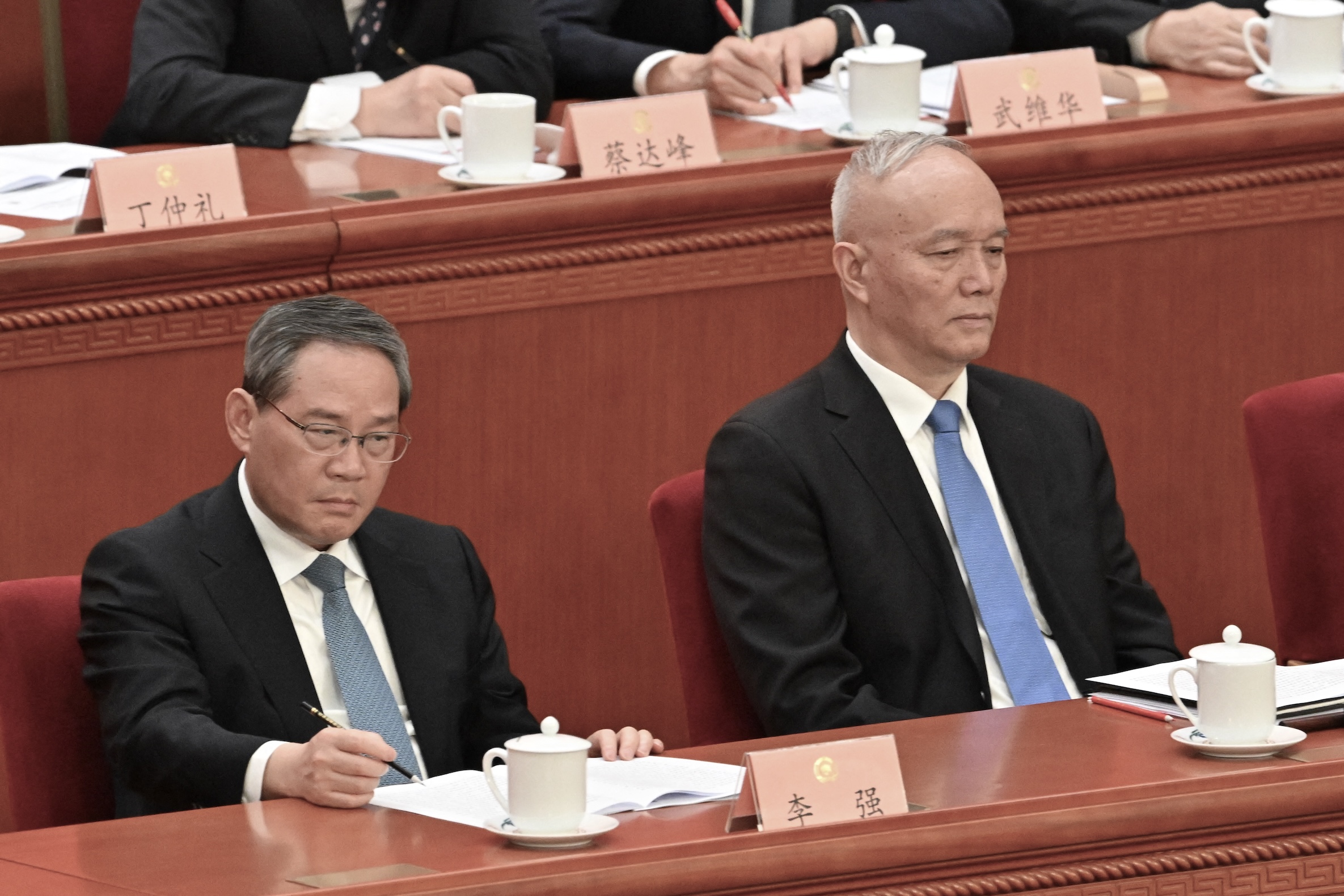
Prior to the Fifth Plenary Session of the 20th Central Committee of the Communist Party of China, there has been a surge of high-profile activities by Li Keqiang, a member of the Politburo Standing Committee and Premier of the State Council of China, sparking speculations and rumors about his potential succession.
Li Keqiang previously served as Xi Jinping’s chief of staff, and has held key positions in Zhejiang, Jiangsu, and Shanghai, with close ties to the political and business circles in these regions. His rise to the position of the second most powerful figure within the Chinese Communist Party at the 20th Party Congress, coupled with Xi Jinping’s various personnel changes and purges, suggest a complex and intense power struggle at the top levels of the CCP regarding Li Keqiang’s potential succession.
Official reports from the CCP indicated that Li Keqiang officially visited Uzbekistan from October 17 to 18, holding talks with Prime Minister Aliyev and meeting with President Mirlaev. He then visited Tajikistan from October 18 to 20, meeting with President Rahmon, Prime Minister Rasulzoda, and attending the 25th meeting of the Council of Heads of Government of the Shanghai Cooperation Organization.
Following his visit to Tajikistan, Li Keqiang is scheduled to travel to Russia from October 20 to 22 to hold the 31st regular meeting with Russian Prime Minister Mishustin.
Additionally, Li Keqiang attended the opening ceremony of the China Import and Export Fair in Guangzhou on October 14, delivered a keynote speech, and participated in a symposium. He also gave a video speech at the opening ceremony of the new China-North Korea Yalu River Bridge on October 15, met with the Botswana President who was visiting China, and held talks with the Togolese Minister Chairman of the Conference in Beijing, among other engagements.
As the Fifth Plenary Session approaches, Li Keqiang’s high-profile activities have garnered attention. Especially notable was his positioning during the National Health and Health Conference in Beijing from October 12 to 13, where it was observed that Xi Jinping walked ahead with Li Keqiang closely following, while other Politburo Standing Committee members lagged behind. This seating arrangement led to speculation about Li Keqiang’s rising status and potential succession.
Speculations and rumors have surfaced, suggesting that Li Keqiang is slated to succeed as the President and General Secretary of the Communist Party at the 21st Party Congress in 2027, with Ding Xuxiang as the Premier, and the uncertainty of Xi Jinping’s position within the Standing Committee.
Amid these speculations, questions have been raised about the age proximity between Li Keqiang and Xi Jinping, casting doubt on the notion of generational transition advantage. The dynamics of power succession within the Chinese leadership, especially with regard to potential successors like Li Keqiang, remain complex and intricate.
It has been reported that Xi Jinping’s administration has taken certain measures to secure its power base and potential succession strategies, with implications for figures like Li Keqiang. The intricate web of political maneuvers and behind-the-scenes actions within the CCP leadership underscores the high-stakes power struggles at play.
(Continued in next comment)