
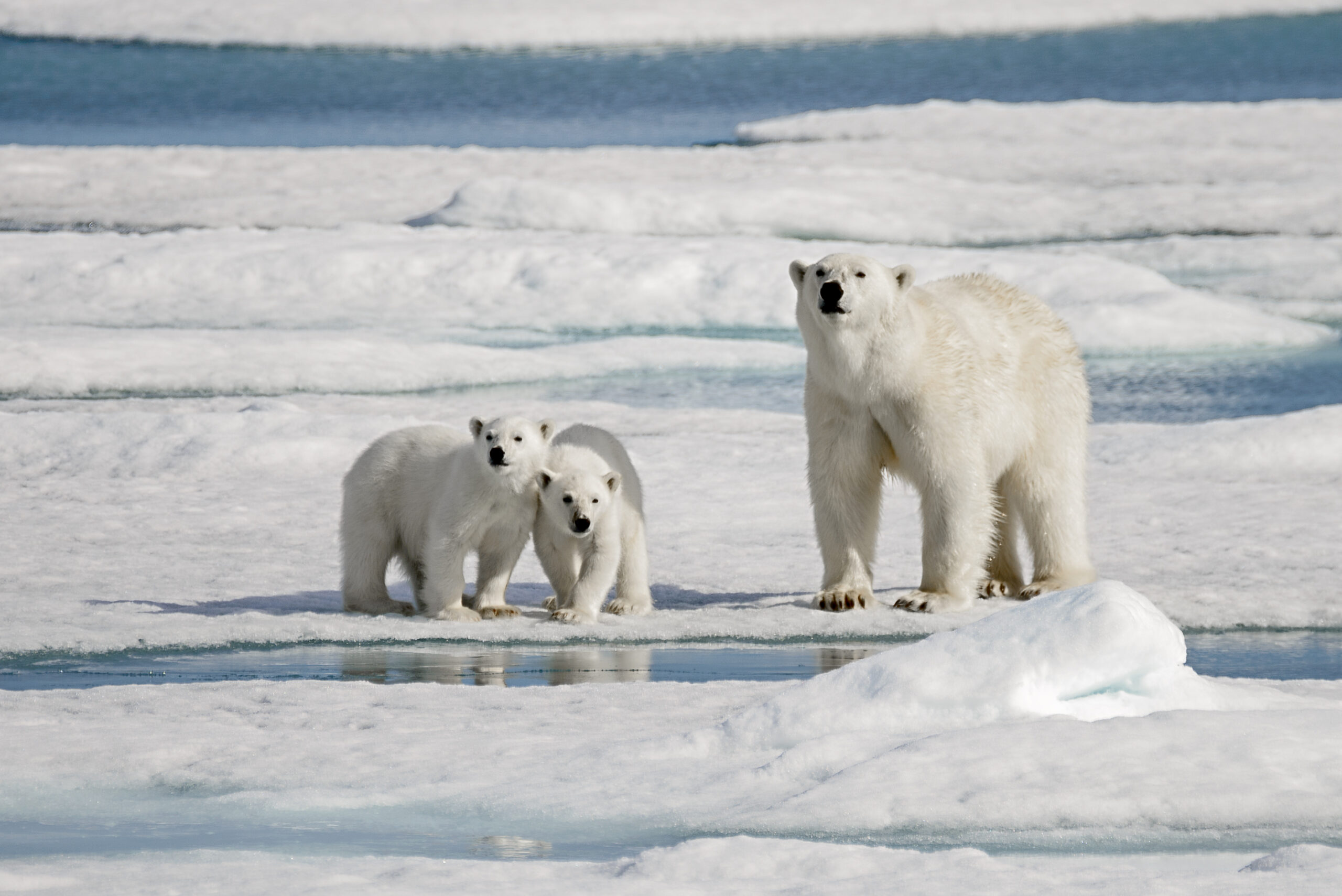
In Norway, waking up a sleeping polar bear may result in a fine. A crew member in the Svalbard archipelago of Norway was fined 50,000 Norwegian krone (approximately $5,255) for intentionally disturbing a polar bear resting on the shore by sounding the ship’s foghorn.
The incident took place in early August when a ship was passing through the Lomfjorden in the Hinlopenstretet strait, about 620 miles (998 kilometers) from the North Pole. The crew spotted a polar bear asleep on the shore, and one crew member used a foghorn to wake it up, prompting the polar bear to leave.
Upon learning of the incident, other crew members reported it to the Svalbard Governor’s Office.
Regulations in Svalbard prohibit unnecessarily disturbing, enticing, or chasing polar bears. It is stipulated that between July and February of the following year, no one should approach a polar bear closer than 300 meters (984 feet); during the breeding season from March to June, the prohibited distance increases to 500 meters (1,640 feet).
Polar bears have been protected under international law since 1973. The most recent scientific survey in 2015 indicated that there are around 260 polar bears on the island.
The Governor’s Office determined that the individual’s actions constituted disturbance to the polar bear and were intentional. They were fined 50,000 Norwegian krone for violating section 30, paragraph 1a of the Svalbard Environmental Law. The person accepted the punishment and paid the fine. The office did not disclose the identity or nationality of the crew member involved.
In January of this year, scientists noted that the polar bears in Svalbard are in good health, not only being robust but also appearing more “plump” than before, surprising researchers.
A research team led by Jon Aars, a senior scientist at the Norwegian Polar Institute, tracked the weight and size of nearly 800 polar bears in Svalbard from 1992 to 2019. They found that overall, the bears are in good condition, capable of survival, and able to continue raising their cubs.
The team discovered that these polar bears seem to have adapted to the shrinking sea ice range, and with reduced sea ice, prey is concentrated in smaller areas, making it easier for the polar bears to hunt.
Aars told CBS, “I’m quite surprised. Since I began studying, there has been a significant decrease in sea ice. Some people had predicted that polar bears should have been in a survival crisis by now.”
This article is based on a report by CBS.