
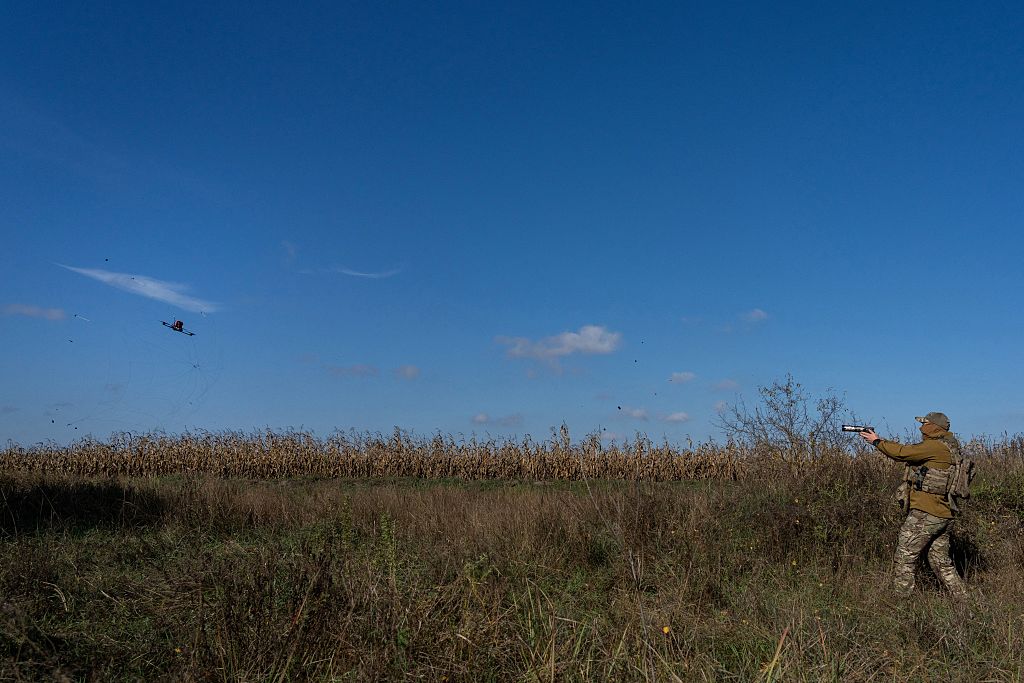
Since the outbreak of the Russia-Ukraine conflict in 2022, facing the increasing threat of frequent drone intrusions and “hybrid warfare,” several European governments have begun or are considering breaking away from the traditional reliance on military and police joint defense. They are authorizing private and state-owned operators of critical infrastructure such as electricity and railways to participate in intercepting, electromagnetic interference, and even shooting down drones.
As winter approaches, European energy agencies have warned that hybrid attacks on the power grid or infrastructure could lead to the risk of power outages affecting millions of people.
Secretary-General of the European electricity industry association (Eurelectric), Kristian Ruby, warned of possible heating interruptions this winter due to hybrid attacks, which theoretically and increasingly in reality could happen.
To address the threat of drone intrusions, France has taken the lead in promoting legal amendments and security measures. In August this year, the French National Assembly passed a law authorizing approved operators of critical infrastructure and contractors to detect, interfere with, and shoot down drones near designated facilities.
This law is a response to incidents of drone intrusions over critical facilities and military locations, including the event in December 2025 when a drone flew over the Ile Longue nuclear submarine base near Brest in northwestern France.
A senior French official involved in the project stated that with the increasing popularity and accessibility of drones, security concerns have been steadily rising over the past decade. France aims to equip facilities on an expanded list of sensitive facilities with countermeasure systems by 2027.
The French government plans to provide a list of approved systems to operators of critical infrastructure, including Electricité de France (EDF) and the national railway company (SNCF), covering electronic jammers, drone interception equipment, and other devices to address various environments and scenarios.
The Paris region competitiveness cluster responsible for implementing government test programs, Systematic Paris-Region, confirmed that the evaluation work started in the summer has already listed three system integrators and 17 anti-drone systems for assessment.
Due to the impracticality of having trained personnel at every facility, France is working towards automating the countermeasure process as much as possible, allowing infrastructure security personnel to activate automated countermeasure systems with just a “push of a button” in the future.
In August, a drone carrying explosives was discovered near a Ukrainian cargo plane at Leipzig/Halle Airport in Germany. The German government held Russia responsible for this “hybrid attack,” but Moscow denied involvement.
In Germany, anti-drone operations still fall within the jurisdiction of the police. However, the Interior Ministry told Reuters that they are exploring how operators of critical infrastructure and third parties can actively counter drone threats within the legal framework.
Austria’s Defense Minister Klaudia Tanner announced in September plans to authorize operators of critical infrastructure, including major energy companies, to intercept drones identified as threats, stating, “The nation cannot solely rely on its own efforts to protect every facility.”
Poland has taken further steps by establishing no-fly zones for drones around critical energy facilities. Specialized safety units working for operators have been authorized to destroy, incapacitate, or take control of drones that breach the no-fly zones, with joint exercises being conducted with military and police units.
European utility companies have focused on enhancing network security for years, preparing to restore services after disruptions rather than proactively preventing attacks. For these companies, gaining the authority to shoot down drones signifies a significant shift. However, clarifying legal responsibilities for secondary damages arising from this remains a core challenge for nations.
Despite the increasing maturity of automated countermeasure technology in Europe, the establishment of legal regulations remains relatively slow. Two sources from NATO’s Eastern Europe energy transmission companies pointed out that without judicial precedents or clear legal exemptions, many operators remain cautious about taking proactive countermeasures, fearing high liability costs for potential casualties or damages on the ground.
Some countries are still cautious about authorizing corporate defense rights. CEO of the Finnish national grid (Fingrid), Asta Sihvonen-Punkka, emphasized that the responsibility for addressing threats around critical infrastructure should remain with the Finnish government and armed forces. Transferring such authority to power operators would be a “very, very big change” requiring careful legal assessments.
Jari Stenius, head of security at Finnish energy company Fortum, also stated that energy companies should focus on energy production, with security threats being handled by the military and police.
Meanwhile, there is a noticeable increase in demand from private enterprises for anti-drone equipment. German defense giant Rheinmetall reported that inquiries and demand from private infrastructure operators for anti-drone systems have rapidly increased, with defense companies evaluating the fast-growing market.