
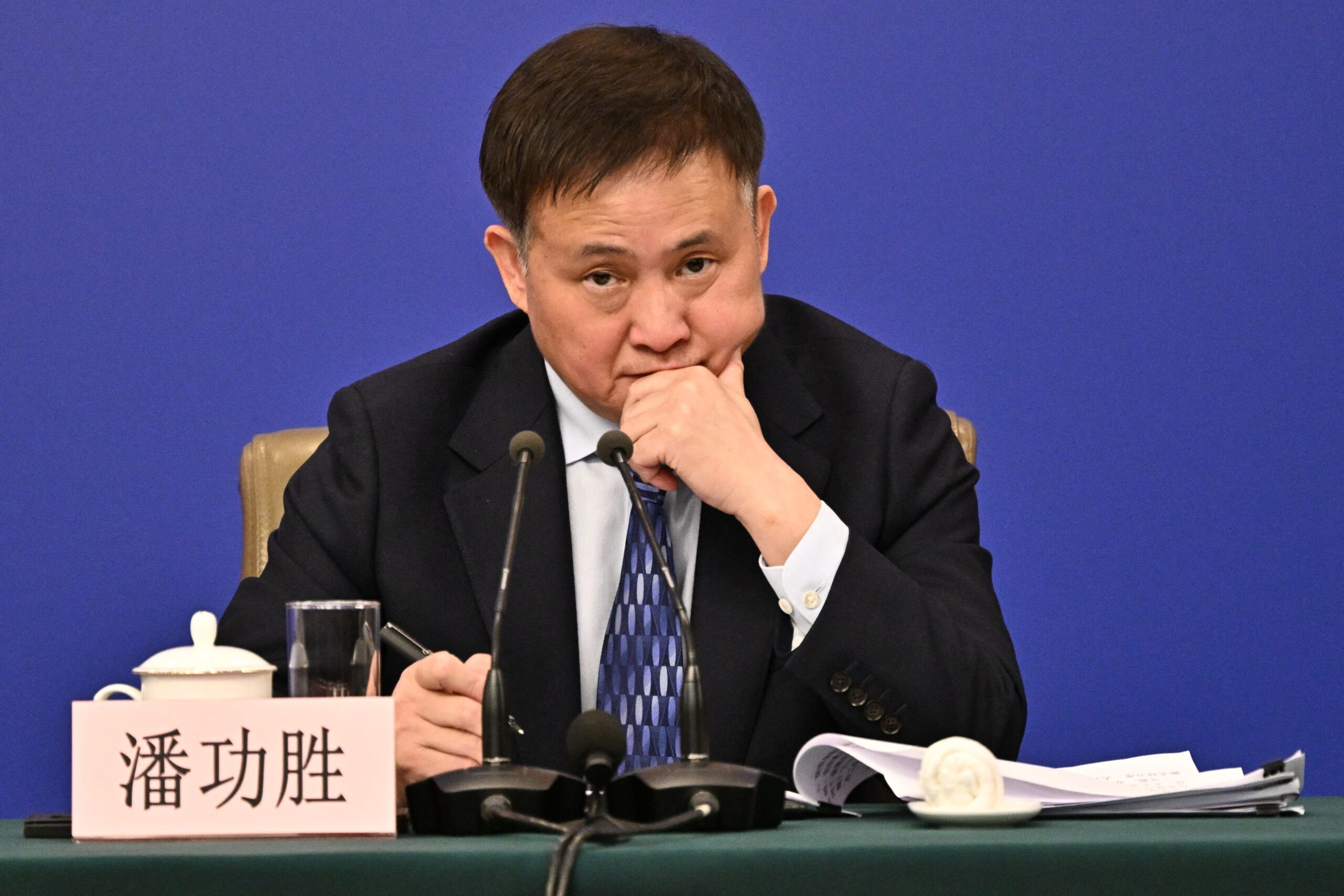
On October 19, 2026, Pan Gongsheng, the governor of the People’s Bank of China, announced new financial policies at the Financial Street Forum. These policies include studying the possibility of replacing the seven-day reverse repurchase rate with an overnight reverse repurchase rate, as well as establishing liquidity support tools for non-bank financial institutions in the bond market. These measures involve adjustments to the monetary policy framework and risk prevention in the bond market, raising the question of the extent to which the central bank should intervene when financial institutions face liquidity pressures.
Currently, the seven-day reverse repurchase rate stands at 1.4%, while the widely referenced overnight reverse repurchase rate in the market is 1.25%. According to calculations by Citic Securities, if the main open market operations switch from seven days to overnight, and the overnight rate remains at 1.25%, the central bank’s DR001 interbank funding rate may decrease from 1.4% to 1.25%, equivalent to an “indirect interest rate cut” of 15 basis points.
However, this assessment is not definitive. Pan Gongsheng only mentioned that the central bank will “study the opportune moment” to make the switch, without committing to a specific timetable. Therefore, the adjustment itself does not necessarily equate to an interest rate cut.
Analysts from French bank Societe Generale and Tianfeng Securities suggested that this may be a transitional period lasting several months, during which the central bank will need to conduct more frequent liquidity operations using the new benchmark to gauge market reactions. This means that the so-called “indirect interest rate cut” is currently more of a market speculation on interest rate differentials rather than a confirmed policy outcome.
China International Capital Corporation’s senior strategist Xing Zhaopeng pointed out that while the adjustment will significantly alter China’s monetary policy framework and market operations, the specific levels of the new policy rates remain unclear. This uncertainty poses risks for traders who rely on short-term rates to assess financing costs, bond valuations, and bank liability costs.
Of particular concern is the liquidity support tool in the bond market. According to official statements, this tool will be activated when asset management institutions face systemic liquidity risks or when the bond market experiences a “redemption-sell-off” negative cycle. The eligibility criteria, coverage scope, and activation criteria for this tool have not been publicly disclosed, raising questions about how risks will be assessed and handled.
Pan Gongsheng positioned this tool as a mechanism to stabilize the bond market and enhance macro-prudential management. However, the lack of details on eligible collateral, discount rates, support scale, and activation procedures leaves uncertainties regarding its implementation.
Some observers view China’s adjustment of the interest rate framework as a move to align with major central banks like the Federal Reserve. By adopting overnight rates as the primary policy rate, China aims to better anchor short-term interest rates in the monetary market, potentially facilitating the internationalization of the Renminbi.
Nevertheless, the structure of China’s financial system differs from that of the West. Non-bank institutions such as bank wealth management products and mutual funds play significant roles in the bond market, and their redemption pressures could transmit to the banking system through bond sales. The simultaneous expansion of marketization and safety nets, such as the expansion of the Standing Lending Facility coverage and the support tools for non-bank institutions, may not automatically lead to more efficient capital allocation.
Amid China’s economic growth of 4.5% year-on-year in the third quarter, higher than market expectations, the central bank does not face immediate pressure to significantly loosen policies. Therefore, if the central bank proceeds with the proposed adjustments at this juncture, it raises questions about whether these measures could transition from rare liquidity backstops during times of stress to normalized implicit bailouts.
In the short term, investors should refrain from automatically interpreting the “overnight rate” as an interest rate cut or viewing “liquidity support” as a risk-reducing measure. The key lies in unanswered questions regarding the official announcement and normalization of the overnight reverse repurchase rate below 1.4%, the potential for regular and expanded overnight operations, and the clear criteria, discount rates, and caps for the non-bank redemption support tools.
For now, these new policies should be seen as attempts by the People’s Bank of China to navigate the challenges between monetary policy transmission inefficiencies and bond market vulnerabilities. It could be a systemic upgrade or merely a way to package future rescue costs into macro-prudential reforms.