
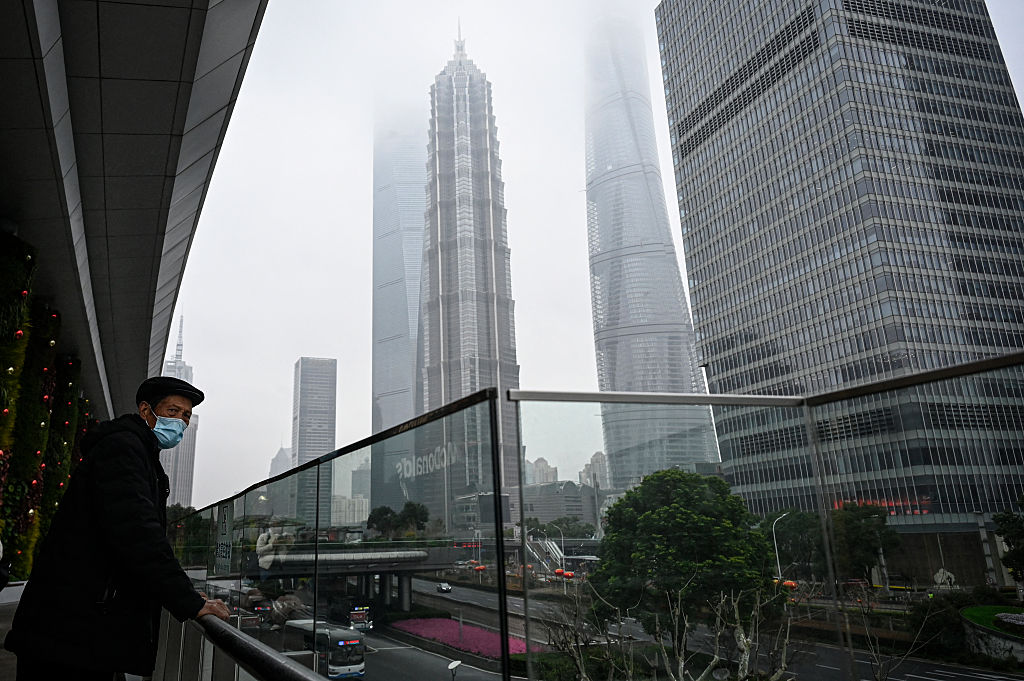
Shanghai office buildings still have a vacancy rate of 24.4% in the third quarter of 2026, with rent continuing to decline. In the previous second quarter, Shanghai had the highest vacancy rate among 20 cities globally compared by the real estate service provider CBRE.
According to a report from “Nikkei Chinese website” on October 20th, CBRE compared the office building vacancy rates of 20 cities globally in the second quarter of this year, with Shanghai at 24.5% topping the list, and Beijing at 17.9% ranking eighth.
Compared with the fourth quarter of 2019, Shanghai’s vacancy rate has increased by 5.1 percentage points, higher than New York’s 3.8 percentage points, London’s 2.6 percentage points, and Tokyo’s 0.7 percentage points.
CBRE’s report for the third quarter shows that the vacancy rate of office buildings in Shanghai has slightly decreased by 0.1 percentage point from the second quarter, to 24.4%, still close to one-fourth.
As of the end of the third quarter, the quoted rent for office buildings in Shanghai was 7.7 RMB per square meter per day, a decrease of 0.6% compared to the previous quarter; the effective rent, taking into account rent-free periods and other incentives, was 5.1 RMB per square meter per day, a decrease of 0.8%.
Approximately 257,000 square meters of office buildings entered the market in the third quarter, with a cumulative addition of nearly 1 million square meters in the first three quarters. CBRE said that the market is expected to continue the trend of “trading volume for price” in the short term.
In the Shanghai office market, there have been cases of landlords offering rental discounts to attract tenants. According to a report from “Economic Observer,” some Class A office rents had dropped to levels seen around ten years ago.
An employee of an office building in Lujiazui mentioned that tenants have increased bargaining power, and in order to retain high-quality clients, landlords may offer discounts upon lease renewal, though this is usually not disclosed and done on a case-by-case basis.
The report also quoted Xie Chen, head of research at CBRE China, who mentioned that some landlords may provide shared office spaces as additional benefits to tenants, with some tenants requesting these benefits to be included in their lease agreements.
Earlier reports from April indicated that commercial properties in Shanghai’s Hongqiao Business District were being rented out with “zero deposit” offers.
Landlords have also shared their experiences of rent reductions on social media platform Weibo. A Weibo user “Like a Fig Fruit” mentioned renewing their office property lease in Lujiazui with a 3% rent decrease, stating “as long as it’s not vacant, I am satisfied.”
Regarding the continuous increase in office building supply, another Weibo user “Cozy under the Blanket” questioned: “With such a high office vacancy rate in Shanghai, why continue construction?”
“Nikkei” listed the departure of foreign enterprises, reduced investments, and mainland companies decreasing office space leasing as contributing factors to the high vacancy rate in Shanghai. Meanwhile, the phenomenon of some office buildings in Lujiazui being empty but still illuminated at night has raised concerns.
According to Central News Agency, a mainland Chinese social media blogger visited an office building near the Oriental Pearl Tower at night, capturing at least five empty offices with only the ones near the window lit up. “Nikkei” also mentioned that some office buildings in Lujiazui remain lit at night despite having no tenants, with the light directed towards the exterior of the building rather than the office area, possibly to create a nighttime scenic effect.
An Shanghai financial scholar Peng Hai (pseudonym) interviewed by The Epoch Times in April mentioned that in the past, the offices in Lujiazui and Hongqiao were occupied by a large number of foreign enterprises and financial institutions, but now some private enterprises have relocated their headquarters functions to cities with lower costs, and financial institutions are also downsizing office space. He believes that the rent decrease reflects a weakening demand for corporate leasing.
The issue of office vacancies is not only limited to coastal cities like Shanghai but also seen in inland cities.
“Nikkei” reported that in a Chongqing office building, an office of approximately 200 square meters is vacant, with some floors with open rooms showing signs of wear and tear. Outside the door, rental notices read “Discounted Prices” and “Negotiable,” with vacant rooms on each floor.
Another Chongqing office building, with over 60 floors, remains unfinished due to financial difficulties of the developer, only lower floors equipped with commercial facilities, while upper floors remain unoccupied with the building dark at night. “Nikkei” analyzed that if oversupply of office spaces continues, the downward pressure on rents may further affect other office properties.