
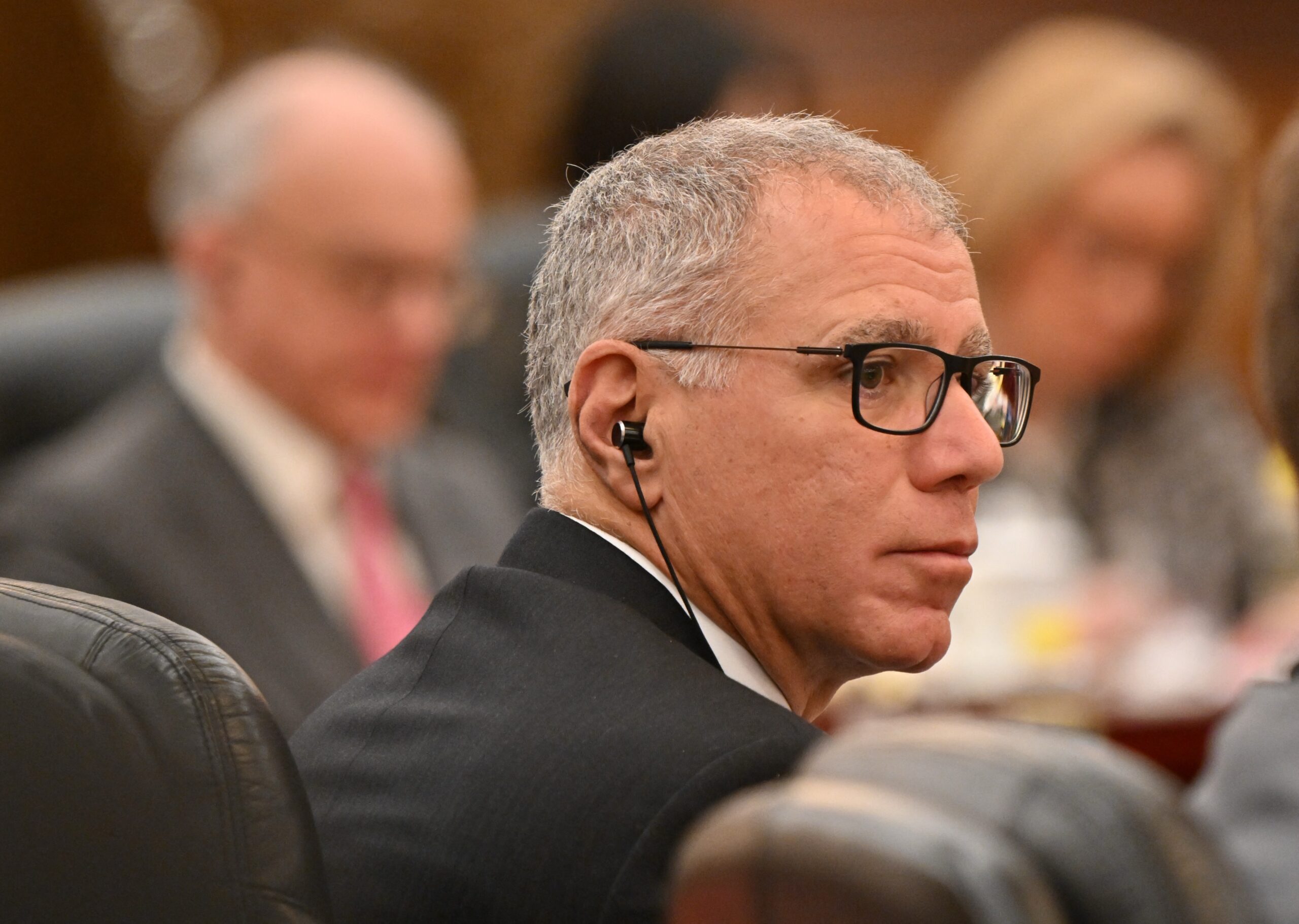
On Tuesday, October 20th, at the HSBC Future Forum in Dubai, Georges Elhedery, the CEO of HSBC, stated that in order to mitigate the impact of the Iran conflict, the Gulf region is investing in alternative logistics routes, which could make the Strait of Hormuz “less critical” in about 5 years.
Before the conflict, about one-fifth of global crude oil and liquefied natural gas (LNG) trade had to pass through the Strait of Hormuz. However, this conflict has led to a global realization of the heavy reliance on this strait and has prompted Gulf countries to invest resources in the construction of energy pipelines leading to ports.
Elhedery expressed, “We believe that the region can recover and continue to grow, which also means significant investment is needed.” He added, “Of course, we hope this conflict can be resolved… but the Strait of Hormuz may become less critical in about five years.”
On the same day, during an interview with CNBC, he emphasized, “Despite conflicts in the Middle East, we continue to see a significant influx of talent into the region. Because this area is very conducive to business, business-friendly, vibrant and energetic, both the public and private sectors have investment capabilities.”
He also mentioned that the past six to eight months have been very challenging for many in the Middle East. “We hope and pray that this conflict can end, as the economic impact of this conflict is global, putting pressure on many countries and regions.”
HSBC released a report on Monday citing data from the Middle East Economic Digest (MEED), stating that the Middle East, North Africa, and Turkey currently offer individual projects worth $872 billion, a part of a larger reserve of infrastructure projects totaling $1.4 trillion, for which projects have been planned but not yet awarded.
Recent surveys conducted by HSBC on over 1,600 business leaders and approximately 820 global institutional investors indicate that these stakeholders still view the Gulf region as an attractive investment hub.
However, the World Bank predicted last week that due to the war, the economies of the Middle East, North Africa, Afghanistan, and Pakistan (MENAAP) region will contract by 2.1% in 2026, with a rebound expected in 2027 as trade routes reopen and hydrocarbon production gradually normalizes.
Furthermore, Elhedery was scheduled to attend the flagship investment event in Saudi Arabia, the Future Investment Initiative (FII), which was planned to take place next week in Riyadh but was postponed to 2027 after the Iran-backed Houthi militants attacked Riyadh.